
Article by
Jake Blasco, SHSS, B-2 Licensed Contractor
Jake Blasco is a Senior Home Safety Specialist® (SHSS), B-2 Licensed Residential Remodeling Contractor, and Grab Bar Specialist serving homeowners throughout Southern California. He specializes in aging-in-place modifications, grab bar installation, bathroom safety upgrades, accessibility remodeling, fall prevention solutions, and ADA-inspired home modifications. Through Blueprint Kitchen & Bath Design Studio, Jake helps seniors, veterans, and individuals with mobility challenges remain safe, independent, and comfortable in their homes. His expertise includes bathroom safety assessments, walk-in shower conversions, accessible design, railings, ramps, and other home accessibility solutions that improve quality of life while supporting long-term independence.
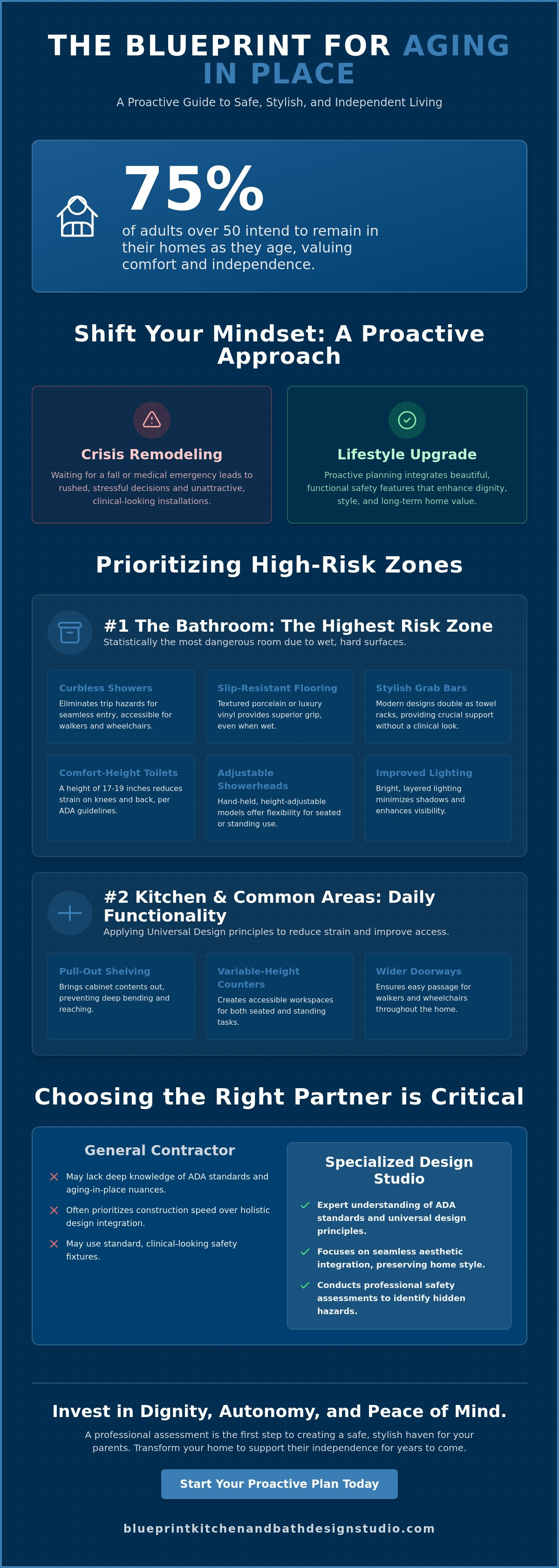
According to AARP, 75% of adults over 50 intend to remain in their current homes as they age. This desire for independence is a beautiful goal, but it often creates a quiet, persistent anxiety for their adult children. You want your parents to stay where they feel most comfortable; however, the fear of a fall or the complexity of technical safety standards can feel heavy. It is common to worry that necessary safety upgrades might make a warm family home feel like a cold medical facility.
We understand that you need solutions that provide protection without sacrificing the house's aesthetic soul. This guide will show you how home modification for aging parents can be a sophisticated, proactive transition rather than a reactive necessity. You will discover a clear priority list for essential modifications and gain the confidence to choose a specialized contractor. We will explore how to transform a residence into a safe, stylish haven that preserves your parents' autonomy and restores your peace of mind.
Key Takeaways
- Understand why home modification for aging parents is a strategic investment in dignity and long-term physical autonomy rather than just a medical necessity.
- Learn how to secure high-risk zones like the bathroom by integrating functional upgrades like curbless showers and slip-resistant flooring that blend with your home's style.
- Discover universal design principles that improve kitchen accessibility and reduce physical strain during daily routines.
- Find out why a professional safety assessment is crucial for identifying hidden hazards that often go unnoticed during a standard DIY walkthrough.
- Identify the specific criteria for selecting a specialized design partner who understands the nuances of ADA standards and seamless aesthetic integration.
The Philosophy of Aging in Place: Why Home Modification is an Investment in Independence
Aging in place is more than a design trend; it is a strategic approach to maintaining long-term physical autonomy. The Philosophy of Aging in Place centers on the ability to live in one's own home safely and comfortably, regardless of age or mobility level. This concept is deeply personal. For many seniors, their home represents a lifetime of memories and a sense of belonging that a care facility simply cannot replicate. By choosing home modification for aging parents early, families can preserve this emotional connection while ensuring the environment supports changing physical needs.
Proactive planning is the key to a successful transition. Waiting for a fall or a medical emergency often leads to "crisis remodeling," where decisions are made under extreme stress and tight deadlines. Research from the NAHB in 2026 shows that 73% of contractors have seen an increase in requests for aging-in-place features, reflecting a growing awareness that preparation is better than reaction. A well-designed home bridges the gap between clinical safety requirements and high-end residential style. It creates a space that feels like a sanctuary rather than a hospital ward.
To better understand this concept, watch this helpful video:
Shifting the Mindset: From Medical Necessity to Lifestyle Upgrade
Modern accessibility hardware doesn't have to look clinical. Today's fixtures, such as sleek grab bars and curbless showers, integrate seamlessly with contemporary home styles. This shift in perspective transforms the conversation from what a person can no longer do to what they can achieve with the right support. By investing in Aging in Place Remodeling in Redlands, you are choosing a lifestyle upgrade. These changes empower your parents to navigate their daily routines with confidence, dignity, and grace.
The Long-Term ROI of Accessibility Remodeling
Beyond the emotional benefits, there is a clear financial logic to these updates. The cost of a comprehensive home modification for aging parents is often significantly lower than the cumulative monthly expenses of assisted living facilities. Additionally, universal design features like wider doorways and slip-resistant flooring increase the resale appeal for a broad demographic, including young families. Future-proofing the home ensures it remains functional for multi-generational use. It protects your family's most significant asset while providing a safer environment for everyone who visits.
Prioritizing the High-Risk Zones: Essential Bathroom Safety Modifications
The bathroom is statistically the most dangerous room in the house for seniors. Wet surfaces, hard fixtures, and the need for complex physical transitions create a high risk of injury. When planning a home modification for aging parents, this space requires immediate attention. Effective design goes beyond simple aesthetics; it prioritizes stability and ease of movement. For instance, replacing traditional towel racks with decorative grab bars provides necessary support without the clinical appearance of industrial rails. These specialized fixtures are engineered to support significant weight while maintaining the home's sophisticated design.
Slip-resistant flooring is another non-negotiable element. Traditional polished tile becomes incredibly hazardous when wet. We recommend textured porcelain or high-performance luxury vinyl with a high coefficient of friction. Additionally, height-adjustable features, such as hand-held showerheads and comfort-height toilets (17-19 inches per ADA guidelines), accommodate varying mobility levels. These details ensure that the home remains a place of comfort and independence for years to come. If you're ready to start this transition, our expert aging-in-place design team can help you balance these safety requirements with your personal style.
The Critical Role of Professional Grab Bar Installation
True safety depends on structural integrity. A grab bar is only as strong as its mounting point. Professional installation ensures that bars are secured into solid wood blocking behind the wall rather than just the drywall. This level of precision is vital for the following areas:
- Entry points: Providing a steady handhold when stepping into the shower or tub.
- Toilet transfers: Assisting with the physical strain of sitting and standing.
- Shower stability: Offering a continuous point of contact while navigating wet surfaces.
You can learn more about how Professional Grab Bar Installation in Redlands, CA combines structural safety with elegant design.
Curbless Showers and Walk-in Tubs: Eliminating the Threshold
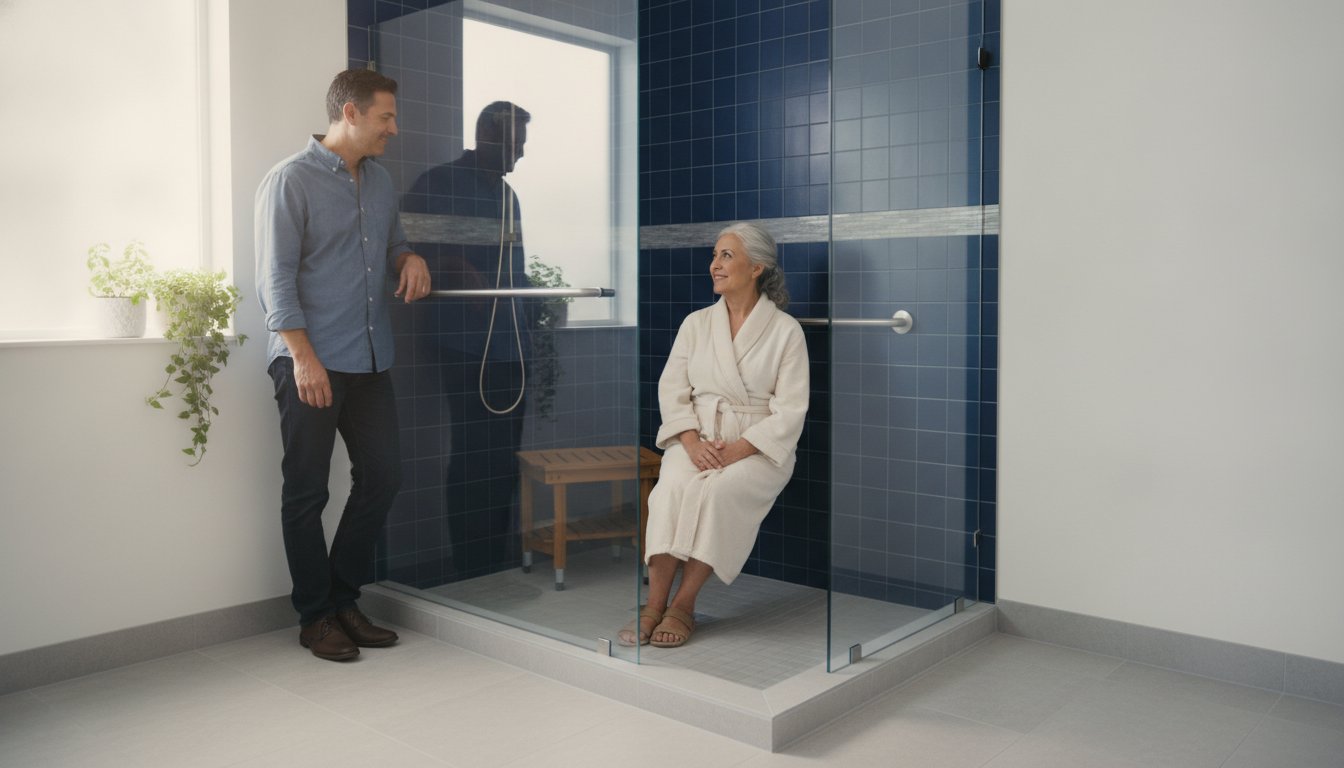
Removing the physical barrier of a shower curb is one of the most impactful changes you can make. Curbless showers allow for a seamless transition, making the space accessible for walkers or wheelchairs. This modification involves specialized drainage systems and floor pitching to prevent water from escaping the wet zone. Alternatively, walk-in tubs provide a soaking experience with the added security of a watertight door. Both options significantly reduce the effort required for daily hygiene. Implementing Bathroom Safety Upgrades in Redlands, CA ensures that these high-traffic areas remain functional as mobility levels change.
Enhancing Daily Functionality: Kitchen and Common Area Adaptations
While the bathroom requires immediate safety intervention, the kitchen and common areas dictate the quality of daily life. A comprehensive home modification for aging parents applies universal design principles to ensure these spaces remain accessible and efficient. The goal is to reduce physical strain and eliminate the subtle obstacles that often lead to fatigue or minor accidents. When the heart of the home is properly adapted, your parents can continue to enjoy the rituals of cooking and entertaining without the frustration of physical barriers.
Visibility is a primary concern in common areas. Age-related vision changes often require higher lumen levels and better color contrast to navigate safely. Installing under-cabinet task lighting in the kitchen provides focused illumination for food preparation, while motion-activated pathway lights along hallways help prevent stumbles during evening hours. These small, thoughtful additions provide a sense of security that extends through every hour of the day.
Managing transition points between rooms is equally important for long-term stability. Even a small half-inch lip between a hallway and a living room can cause a stumble for someone using a walker. By identifying these "hidden hazards" during the design phase, we can create a floor plan that flows logically and safely. This methodical approach ensures that every movement through the house is supported by a stable, predictable environment.
Accessible Kitchen Design: Lowering Barriers
The kitchen should adapt to the user rather than forcing the user to adapt to the layout. Installing pull-down shelving in upper cabinets and motorized cabinet lifts brings storage within easy reach, eliminating the need for dangerous step stools. We also recommend varying countertop heights. Including a lower section of counter allows for seated food preparation, which is essential for preserving energy and reducing back strain. Hardware choices also matter. Switching to lever-style faucets and D-shaped cabinet pulls ensures that those with arthritis can operate the kitchen with minimal effort and maximum comfort.
Improving Mobility: Doorway Widening and Flooring
Standard residential doorways are often too narrow for comfortable navigation with assistive devices. We prioritize doorway widening to achieve the standard 32-inch clear width requirement for wheelchair and walker access. This modification prevents scraped knuckles and frustrating bottlenecks in high-traffic areas. Flooring choices also play a critical role in mobility. We remove thick-pile carpeting, which creates trip hazards and significant resistance for wheels, in favor of low-profile, slip-resistant surfaces. Lowering thresholds creates a seamless, one-level living experience that allows for fluid, confident movement throughout the entire home.
Navigating the Process: How to Conduct a Senior Home Safety Assessment
Families often approach home safety with a DIY walkthrough, yet familiarity can lead to oversight. You might walk past a loose transition strip every day without noticing it; however, for a parent with limited depth perception, that strip is a significant fall risk. A professional assessment provides the objective clarity needed to identify these hidden hazards. It moves beyond a simple "fix-it" list to create a comprehensive strategy for long-term safety. A thorough home modification for aging parents begins with this objective, expert eye.
Prioritizing changes is essential for managing both disruption and budget. By evaluating your parents' specific mobility profile, we can determine which modifications require immediate action and which can be phased in over time. This methodical approach ensures that the most critical risks, such as bathroom stability or entryway access, are addressed first. If you are ready to identify the specific needs of your space, you can schedule a professional home safety assessment to begin the planning process.
The Room-by-Room Safety Checklist
An effective assessment follows a logical path through the home, starting from the outside and moving inward. Key areas of focus include:
- Exterior: We evaluate the adequacy of pathway lighting, the need for home access ramps, and the application of non-slip treatments on porch steps.
- Landscaping: Transitioning to a low-maintenance yard reduces physical strain and enhances safety; you can visit Nu Scape Designs to see examples of accessible outdoor spaces tailored for Southern California homes.
- Entryways: This involves checking threshold heights to ensure they are under a half-inch and verifying that all doors have accessible lever-style handles.
- Stairways: Essential safety features include dual handrails that extend beyond the top and bottom steps, along with high-contrast nosing to improve visibility.
Working with an SHSS Certified Specialist
The Senior Home Safety and Grab Bar Specialist designation represents a high-stakes niche of expertise. Unlike a general contractor who might focus on aesthetics alone, an SHSS specialist evaluates the delicate interaction between the user and their environment. They analyze gait, reach, and balance to ensure every installation is placed with clinical precision. This level of detail is what makes a home modification for aging parents truly effective.
This process results in a professional report that serves as a roadmap for your project. This document is also valuable for coordinating with medical providers or occupational therapists. It ensures that every modification is backed by data and tailored to specific physical requirements. By choosing a specialist, you gain a partner who prioritizes long-term well-being and physical autonomy.
Choosing the Right Partner: Why Specialized Design Studios Outperform General Contractors
Selecting a partner for home modification for aging parents requires a significant shift in perspective. While a general contractor is often skilled at standard residential construction, they may lack the specialized training required for high-stakes accessibility projects. There is a fundamental difference between "making it work" and "designing it right." A generalist might install a grab bar where it's convenient for the existing wall studs, but a specialist understands that its placement must be clinically precise to support a specific mobility profile. Missing these nuances can lead to features that are technically present but functionally useless or, in some cases, unsafe.
Specialized studios prioritize the delicate balance between the hardware of safety and the heart of the home. They understand that these modifications aren't just structural changes; they are empowering lifestyle upgrades. By choosing a partner who masters the intersection of ADA standards and high-end residential design, you ensure that your parents' home remains a place of beauty and dignity. This expertise prevents the cold, clinical atmosphere that many families fear when beginning this journey. True professional thoroughness means considering every detail of a user's routine to create a narrative of independence and peace of mind.
Design-Build vs. General Contracting
A design-build studio offers a cohesive approach that general contractors simply can't match. We ensure that safety features don’t compromise home aesthetics by integrating them into the initial design phase. For example, a curbless shower installation is treated as a high-end luxury feature rather than a medical necessity. You benefit from having a single point of contact from the initial safety assessment through to the final installation. This streamlined process requires specialized tools and materials, such as specific waterproof membranes for curbless entries and heavy-duty blocking for grab bars, which are often outside the scope of standard residential repair tasks.
Blueprint Kitchen and Bath: Your Local Accessibility Experts
We are deeply committed to the well-being of our neighbors in Redlands, Yucaipa, and the San Bernardino communities. Our local knowledge is vital, as we understand the unique architectural styles and structural challenges common in Inland Empire homes. We combine the technical precision of SHSS certification with the aesthetic eye of a high-end kitchen and bath design studio. This dual expertise allows us to create spaces that are as safe as they are stunning. We don't just follow codes; we listen to the personal significance of your home and your parents' lifestyle. Taking the next step toward long-term peace of mind is simple. We invite you to schedule a professional home safety assessment to discover how we can transform your space into a lasting haven of independence and comfort.
Securing Independence and Peace of Mind
Creating a home that supports aging is about more than just hardware; it's about preserving dignity and lifestyle. You've learned that proactive modifications in high-risk zones like the bathroom can prevent future crises. By focusing on universal design in common areas, you ensure that every room remains accessible and welcoming. Making the decision to pursue home modification for aging parents is a profound act of love and foresight that protects your family's most cherished asset and your own peace of mind.
At Blueprint Kitchen and Bath, we specialize in bridging the gap between clinical safety and high-end residential design. As SHSS Certified Senior Home Safety and Grab Bar Specialists, we bring technical precision to every project. You don't have to navigate this transition alone. Whether we're installing a curbless shower or widening doorways, our goal is to provide seamless integration. We proudly serve families throughout Redlands, Yucaipa, and the Inland Empire. Schedule Your Professional Home Safety Assessment with Blueprint Kitchen and Bath today. You can give your parents the gift of a safer home while maintaining the style they love.
Frequently Asked Questions
How much do home modifications for seniors typically cost?
Investment levels vary based on the scope of the project and the specific structural needs of the house. Minor hardware updates and lighting improvements are accessible starting points for many families. Mid-range additions such as a straight staircase stair lift typically cost between $2,200 and $8,500 in 2026. Major structural changes like a residential elevator can range from $30,000 to over $60,000. Every home modification for aging parents requires a custom assessment to determine the specific requirements of the space.
Does Medicare or insurance cover the cost of home modifications?
Standard Medicare does not typically cover home modifications because they are classified as home improvements rather than durable medical equipment. However, veterans may qualify for Specially Adapted Housing (SAH) grants, which provide up to $126,526 for FY2026. Rural homeowners aged 62 or older might access USDA Section 504 grants of up to $10,000 for essential safety repairs. Some Medicaid Home and Community-Based Services (HCBS) waivers also provide assistance, though waiting lists are common.
What are the most important modifications to start with?
The bathroom should always be the first priority because it is the highest-risk area for falls and serious injuries. Focus on eliminating high thresholds in the shower and installing stable, weight-bearing handholds. Once the bathroom is secure, address the primary entryways to ensure easy access for walkers or wheelchairs. Improving lighting in hallways and transition points is another critical early step to prevent stumbles during the night.
Can I install grab bars myself to save money?
Professional installation is vital to ensure that safety fixtures can support the necessary weight-bearing loads. While DIY kits are available, they often rely on simple anchors that may fail under sudden pressure. A specialist ensures that every bar is secured directly into structural wall blocking. This level of precision is essential for preventing the fixture from pulling away during a fall, which could lead to a more severe injury.
How long does a typical aging-in-place remodel take?
The timeline for a home modification for aging parents depends on the complexity of the design. Simple hardware installations or the setup of a modular ramp can often be completed in a single day. More extensive structural changes, such as widening doorways or a full accessible bathroom remodel, typically require several weeks. This timeframe allows for proper planning, permitting, and the careful execution of specialized safety standards.
Will these modifications decrease the value of my home?
Modern accessibility features often increase a home's resale appeal by future-proofing the space for a broad demographic. Universal design is a growing trend that attracts multi-generational families and buyers who are planning for their own long-term needs. When these safety upgrades are executed with high-end materials and thoughtful design, they feel like premium architectural enhancements. They add functional value without compromising the home's aesthetic character.
What is the difference between ADA compliant and Universal Design?
ADA standards are a set of legal requirements designed for public and commercial spaces to ensure accessibility for all individuals. Universal Design is a broader philosophy focused on creating environments that are naturally usable by everyone, regardless of their age or physical ability. In a residential setting, we use ADA guidelines as a framework to achieve a seamless, aesthetically pleasing result. This approach ensures the home is safe for seniors while remaining comfortable for children and guests.
How do I talk to my parents about making safety changes to their home?
Frame the conversation around maintaining independence and physical autonomy rather than focusing on their limitations. Explain that proactive safety changes prevent a forced move to a care facility and allow them to stay in the home they love. It's helpful to focus on how these upgrades make daily life easier and more comfortable for everyone who visits. Involving them in the design process helps them feel empowered rather than sidelined.


