

Article by
Jake Blasco, SHSS, B-2 Licensed Contractor
Jake Blasco is a Senior Home Safety Specialist® (SHSS), B-2 Licensed Residential Remodeling Contractor, and Grab Bar Specialist serving homeowners throughout Southern California. He specializes in aging-in-place modifications, grab bar installation, bathroom safety upgrades, accessibility remodeling, fall prevention solutions, and ADA-inspired home modifications. Through Blueprint Kitchen & Bath Design Studio, Jake helps seniors, veterans, and individuals with mobility challenges remain safe, independent, and comfortable in their homes. His expertise includes bathroom safety assessments, walk-in shower conversions, accessible design, railings, ramps, and other home accessibility solutions that improve quality of life while supporting long-term independence.
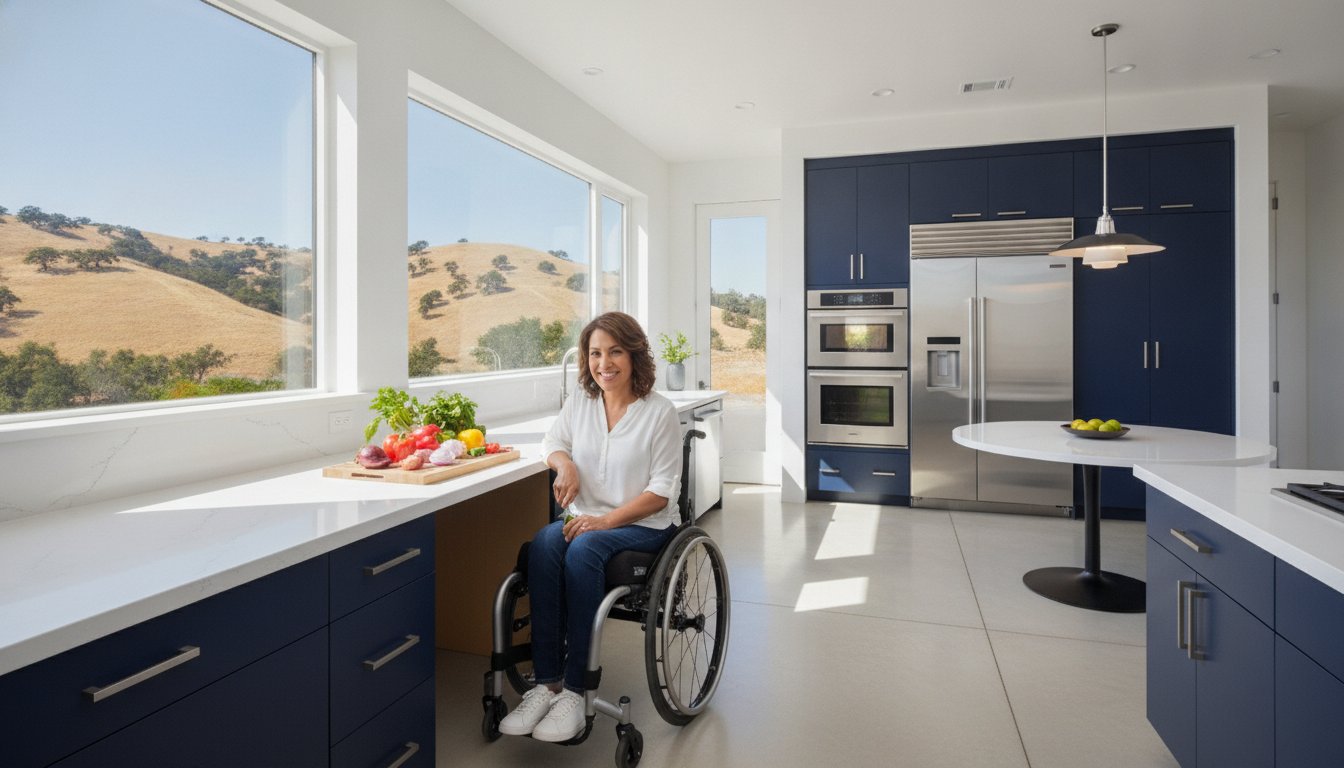
An accessible kitchen isn't a compromise on style; it's a precision-engineered workspace that enhances both safety and sophisticated design. You shouldn't have to choose between a home that looks beautiful and one that supports your daily movement. Many homeowners worry that a kitchen remodel for wheelchair accessibility will result in a cold, clinical environment that feels like a hospital. We understand that your kitchen is the heart of your home, and maintaining your dignity and independence shouldn't come at the cost of your personal aesthetic.
In this guide, you'll learn how to transform your kitchen into a functional sanctuary where you can cook and clean without assistance. We'll break down the technical requirements, such as the 34-inch maximum countertop height and the vital 60-inch turning radius, while showing you how to integrate these features seamlessly into a modern layout. We will explore the specific measurements, smart storage solutions, and layout strategies that ensure every appliance and surface is within reach. This overview provides a clear path toward a kitchen that balances clinical precision with the warmth of a high-end home.
Key Takeaways
- Learn how to implement the 60-inch turning radius and wider doorways to ensure effortless maneuverability for any wheelchair user.
- Discover the ideal ergonomics for a kitchen remodel for wheelchair accessibility, including lowering countertops to a 28-34 inch range and providing necessary knee clearance.
- Master the "Reach Zone" strategy to keep your essential items between 15 and 48 inches high, ensuring everything you need is always within easy grasp.
- Identify the safest appliance upgrades, such as induction cooktops and side-swing ovens, that eliminate reach-over hazards and prevent accidental burns.
- Understand the importance of working with an SHSS Certified specialist to navigate local building codes while maintaining a high-end, modern aesthetic.
Planning the Layout: Maneuverability and the 60-Inch Rule
The foundation of a successful kitchen remodel for wheelchair accessibility begins with movement. In a standard kitchen, the "Work Triangle" connects the sink, stove, and refrigerator to minimize walking steps. For a seated user, this concept shifts toward functional "Work Stations." Each station should be a self-contained zone where tasks like chopping or washing are completed without constant maneuvering. This approach follows fundamental accessible housing principles, which prioritize ergonomics and clear floor paths over traditional walking-based designs.
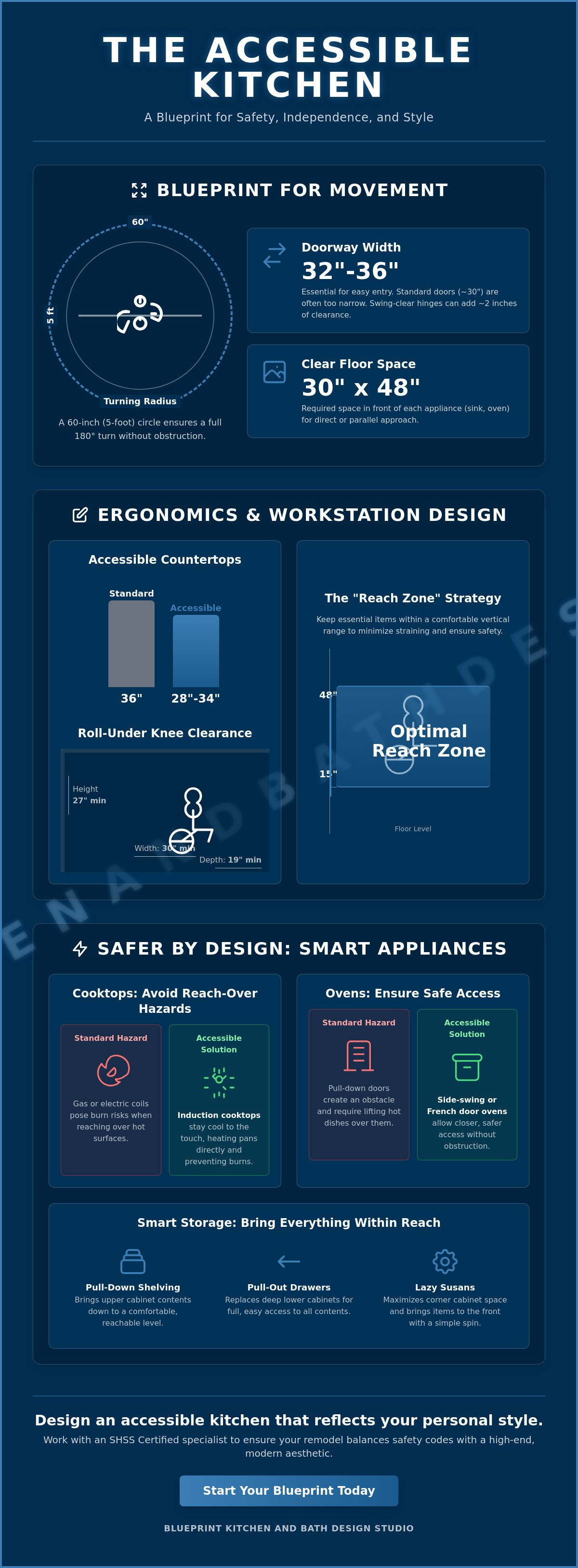
A critical metric in this planning phase is the 60-inch turning radius. This five-foot circle provides enough space for a wheelchair to make a full 180-degree turn without hitting cabinetry or appliances. It creates a sense of freedom, allowing the user to transition between tasks with ease and dignity. By prioritizing this open floor space, you ensure that the kitchen remains usable for both seated and standing family members, as the wider paths benefit everyone's mobility and safety.
To better understand this concept, watch this helpful video:
The Importance of Clear Floor Space
Achieving a full 60-inch circle isn't always possible in smaller homes. In these cases, a T-shaped turning space serves as a reliable alternative. This layout allows for a three-point turn, providing the necessary clearance within a tighter footprint. To maximize this area, we often recommend removing central kitchen islands that act as obstacles. Instead, we focus on providing a 30-by-48 inch clear floor space at every major appliance. This ensures that a wheelchair user can approach the sink or oven head-on or from a side-parallel position, depending on their physical preference. This precision in planning prevents the frustration of getting stuck in a corner or being unable to reach a critical tool during meal preparation.
Doorway Widening and Entry Points
Entryways are frequently the first barrier to independence. While a standard 30-inch door might seem adequate, it rarely accounts for the width of the wheelchair plus the space needed for the user's hands on the wheels. We prioritize doorway widening for wheelchair access to a minimum of 32 to 36 inches. This adjustment should be integrated into the initial demolition phase of your kitchen remodel for wheelchair accessibility to ensure structural integrity and a seamless finish.
If a full frame expansion isn't feasible, swing-clear hinges can be a cost-effective solution. These specialized hinges move the door entirely out of the opening when opened to 90 degrees, granting nearly two extra inches of vital clearance. This small change makes a significant difference in the daily flow of the home. By addressing these entry points early, you create a home that feels open and welcoming rather than restrictive.
Accessible Countertops and Sinks: Ergonomics for Seated Users
While a standard 36-inch countertop serves standing users well, it often creates a physical barrier for those in a seated position. A thoughtfully planned kitchen remodel for wheelchair accessibility replaces these uniform heights with surfaces tailored to the user's reach. The ADA Standards for Accessible Design specify that at least one section of the countertop should have a maximum height of 34 inches above the finished floor. Many homeowners find that a range of 28 to 32 inches offers even better comfort for manual tasks like chopping or stirring, depending on their specific chair height and physical needs.
True accessibility requires more than just lowering the surface; it demands clear knee and toe clearance. To allow a wheelchair to pull up flush against a workstation, the design must provide an open space at least 27 inches high, 30 inches wide, and 19 inches deep. This roll-under capability transforms the kitchen from a series of obstacles into a functional environment where the user can work with full stability. If you're managing a household with both seated and standing members, multi-level countertops offer a seamless solution that respects everyone's needs without sacrificing modern aesthetics.
The sink is another area where precision is vital. Standard basins are often 8 to 10 inches deep, which forces a seated user to reach uncomfortably high and deep, straining the shoulders and back. Selecting a shallow sink basin, typically 5 to 6 inches deep, significantly reduces this physical tax. When you consult with a specialist in accessible kitchen design, you'll find that these small adjustments in measurement yield the greatest gains in daily independence.
Designing the "Roll-Under" Workstation
Safety is the primary focus when creating open space beneath a sink or cooktop. It's essential to insulate hot water pipes or install a protective panel to prevent contact burns on the user's legs. To increase versatility, we often incorporate pull-out cutting boards at various heights. These create temporary, sturdy workspaces that can be tucked away when not in use. Pairing these stations with single-lever or touchless faucets ensures that water control is effortless, even for those with limited grip strength or manual dexterity.
Countertop Materials and Edge Profiles
Material choice impacts both maintenance and safety. Non-porous surfaces like quartz are ideal because they resist staining and are simple to sanitize with minimal effort. We recommend rounded bullnose edges rather than sharp, squared corners to prevent bruising or injury during movement. For users with low vision, using high-contrast colors between the countertop and the floor or cabinetry helps define the edges of the workspace, providing a clearer visual map of the kitchen's layout and preventing accidental spills.
Storage Solutions: Bringing Everything Within Reach
Efficiency in a kitchen remodel for wheelchair accessibility is defined by how effortlessly a user can access their tools and ingredients. Traditional cabinetry often forces a seated user to reach into dark, deep corners or stretch toward high shelves, both of which can lead to physical strain or loss of balance. To eliminate these hazards, we focus on the "Reach Zone." This is the optimal vertical space between 15 and 48 inches from the floor where high-frequency items like plates, spices, and daily cookware should be stored. By centering your kitchen's organization within this window, you ensure that every essential item is available without the need for assistance.
A detail frequently overlooked in standard renovations is the modification of toe kicks. Most stock cabinets feature a four-inch toe kick, which is insufficient for a wheelchair user. We recommend increasing the toe kick height to nine inches and deepening it to six inches. This adjustment allows the wheelchair's footrests to clear the base of the cabinetry, enabling the user to sit much closer to the workspace. This small structural change significantly improves posture and extends the user's functional reach across the countertop. To further enhance access, we replace traditional lower cabinet doors with deep, full-extension drawers. These drawers bring the entire contents of the cabinet out into the light, removing the need to bend or reach into cramped spaces.
For homeowners seeking additional inspiration for durable cabinetry that complements an accessible layout, you can learn more about X Cabinet & Stone and their approach to custom, mountain-durable design.
Smart Cabinetry Modifications
Corner cabinets are often wasted space, but they can be transformed with the installation of "Lazy Susans" or pull-out kidney-shaped shelves. These mechanisms provide 360-degree access to heavy pots and pans with a simple rotation. We also prioritize the use of D-shaped cabinet pulls rather than traditional knobs. These pulls are much easier to hook with a finger or a prosthetic, providing a secure grip for those with limited manual dexterity. For upper storage, lowering wall cabinets by approximately three inches can bring the bottom shelf into a much more manageable range for a seated person.
Pantry and Appliance Garage Design
While walk-in pantries offer significant space, pull-out pantry towers are often the superior choice for wheelchair users. These towers slide out to reveal items from both sides, ensuring nothing gets lost in the back. We also incorporate "appliance garages" situated directly at counter height. These specialized compartments house heavy items like stand mixers or blenders, allowing them to be slid forward for use rather than lifted. Integrating LED strip lighting inside these cabinets and pantries further enhances safety by ensuring every label and tool is clearly visible, even in the evening hours.
Appliances and Safety: Preventing Burns and Falls
Selecting the right appliances is a critical step in a kitchen remodel for wheelchair accessibility. Traditional appliances often present hidden hazards for seated users, from the reach-over required for a standard oven to the deep bending needed for a dishwasher. To ensure long-term independence, we prioritize hardware that minimizes physical strain and maximizes safety. For example, side-swing ovens are far superior to traditional drop-down models. A side-swing door allows a wheelchair user to pull up directly beside the oven cavity, which eliminates the dangerous reach-over required by a hot, heavy door. This modification provides a stable, clear path for transferring hot dishes to the countertop.
Cooking surfaces also require a specialized approach. Induction cooktops are the safest choice for a wheelchair-accessible kitchen because they use electromagnetic energy to heat only the cookware. The surface itself remains cool to the touch, which significantly reduces the risk of accidental burns if a user's arm or hand rests on the cooktop while reaching for a utensil. Similarly, dishwasher drawers are a functional upgrade over standard machines. These units sit higher and pull out like a standard drawer, removing the need to reach deep into a dark tub or bend at awkward angles to load the bottom rack.
While many designers focus solely on cabinetry, the ground beneath your wheels is just as vital for safety. Kitchens are high-traffic splash zones where spills are common. We apply the same logic used in slip resistant bathroom flooring installation to the kitchen environment. Choosing materials with a high coefficient of friction ensures that both wheelchair tires and the shoes of family members maintain a secure grip, even when the floor is damp. If you're ready to modernize your home, our team can help you design a safer, more accessible kitchen today.
Appliance Placement Strategy
Positioning is just as important as the appliance itself. Microwaves should never be placed above the range; instead, we mount them below the counter or install microwave drawers for easy, seated access. For refrigeration, French-door models with bottom-mount freezers are ideal because they keep fresh foods at eye level. Most importantly, all appliance controls should be located at the front of the unit. This prevents the user from having to reach over hot burners or moving parts to adjust settings, ensuring every control remains within the safe reach zone.
Kitchen Safety and Fall Prevention
Lighting and texture play a massive role in preventing accidents. We recommend matte-finish flooring to reduce glare from overhead lights, which can be disorienting for those with low vision. Strategically placed grab bars, finished to match your modern hardware, provide extra stability near heavy-use areas like the pantry or refrigerator. Finally, we upgrade the space to "layered lighting." By combining bright task lighting under cabinets with recessed ceiling lights, we eliminate shadows on work surfaces, making it easier to see sharp knives and boiling water during meal prep.
Choosing a Specialist for Your Redlands Kitchen Remodel
Executing a kitchen remodel for wheelchair accessibility requires more than a general knowledge of construction. It demands a deep understanding of mobility challenges and the specialized building codes specific to the Inland Empire. Navigating the requirements in Redlands, Riverside, and San Bernardino can be complex, as residential accessibility standards often differ from commercial ADA rules. Our team at Blueprint Kitchen and Bath Design Studio acts as a pragmatic expert, bridging the gap between clinical safety requirements and the aesthetic desires of a luxury home renovation. We ensure that every structural change is both technically proficient and emotionally intelligent, respecting the personal significance of your home.
A successful remodel isn't just about meeting a checklist of measurements; it's about creating a seamless integration between the user and their environment. We follow a methodical, unhurried process that begins with a thorough mobility assessment. This allows us to identify specific functional challenges before presenting a structured, professional solution. By prioritizing your long-term well-being and physical autonomy, we transform the kitchen into a space that promotes dignity and peace of mind for every member of the household.
Why Certification Matters
The difference between a general contractor and an accessibility specialist lies in specialized training. As SHSS Certified Senior Home Safety Specialists, we understand the precise physics of wheelchair movement and the ergonomic needs of seated users. This certification ensures that every grab bar installation and cabinet height adjustment meets rigorous safety standards, preventing costly mistakes that a generalist might overlook. You can see the impact of this specialized knowledge by reviewing our local aging in place remodeling Redlands success stories, which showcase how we blend medical necessity with sophisticated design.
Getting Started with Blueprint
Your journey toward an accessible home begins with a comprehensive home safety assessment. During this initial meeting, we evaluate your current kitchen layout against your specific mobility needs, often coordinating with occupational therapists or rehab services to ensure the design is perfectly tailored to your range of motion. We then guide you through the selection of materials and appliances, ensuring every feature provides a practical benefit to your daily routine. If you are ready to reclaim your independence and modernize your home, Contact Blueprint Kitchen and Bath Design Studio today to begin your consultation.
Reclaim Your Independence and Design Your Future
Transforming your kitchen into a functional sanctuary is a journey toward long-term autonomy and peace of mind. By prioritizing precision-engineered layouts like the 60-inch turning radius and integrating ergonomic roll-under workstations, you create a space that respects your movement. Choosing specialized appliances and slip-resistant surfaces ensures that safety is never an afterthought; it becomes a seamless part of your home's modern aesthetic. Every modification, from wider doorways to lowered counters, serves the goal of making your daily routine effortless and dignified.
Investing in a kitchen remodel for wheelchair accessibility is an empowering lifestyle upgrade that preserves your physical autonomy. As an SHSS Certified Senior Home Safety and Grab Bar Specialist serving the Inland Empire for years, Blueprint Kitchen and Bath Design Studio brings a unique perspective as a specialized division of A&M Rehab Services. We balance technical proficiency with a mission-driven focus on your long-term well-being. Schedule Your Professional Accessibility Assessment today to see how your home can adapt to your evolving needs. You deserve a kitchen that supports your lifestyle, providing the freedom to cook and live with total confidence.
Frequently Asked Questions
What is the ADA requirement for a wheelchair-accessible kitchen?
The primary ADA standards for residential best practices include a maximum countertop height of 34 inches and a 60-inch turning radius for full maneuverability. These requirements ensure that a seated user has enough room to rotate 180 degrees without obstruction. Additionally, a kitchen remodel for wheelchair accessibility must provide knee and toe clearance under sinks and cooktops, typically requiring a space 27 inches high, 30 inches wide, and 19 inches deep.
How wide should kitchen aisles be for a wheelchair?
Kitchen aisles should be at least 40 inches wide for pass-through layouts and 60 inches wide for U-shaped designs. These measurements provide the necessary clearance for a wheelchair to navigate between cabinets and appliances without impacting the user's hands or the chair's frame. Maintaining a minimum unobstructed path of 36 inches throughout the rest of the home ensures a consistent flow of movement and safety.
Can I make my existing kitchen cabinets wheelchair accessible without replacing them?
You can often modify existing cabinetry by installing pull-down shelving systems in upper cabinets and replacing lower doors with full-extension drawers. Another effective strategy involves removing the base cabinet doors and floor under the sink to create the necessary knee clearance for a "roll-under" workstation. These retrofits improve the "Reach Zone" efficiency, keeping essential items between 15 and 48 inches high without the cost of a full cabinet replacement.
What is the best countertop height for a wheelchair user?
The ideal countertop height for a seated user typically ranges between 28 and 34 inches above the finished floor. While 34 inches is the standard maximum for accessibility, many individuals find that a lower surface around 30 inches provides better leverage for manual tasks like cutting or mixing. Installing multi-level countertops is a practical solution that accommodates both seated and standing family members in a shared household.
Does a wheelchair-accessible kitchen remodel decrease home value?
An accessible kitchen remodel often increases home value and marketability by incorporating "Universal Design" principles that benefit users of all ages and abilities. Features like wider aisles, lever-style hardware, and better lighting are highly desirable in the modern real estate market, especially as the "Aging in Place" trend grows. These modifications are viewed as high-end upgrades that enhance the home's longevity and inclusive appeal rather than clinical necessities.
How much does it cost to widen a kitchen doorway for a wheelchair?
The cost to widen a doorway depends heavily on whether the wall is load-bearing and if electrical or plumbing lines require relocation. While expanding a frame to the recommended 32 to 36 inches is a significant structural task, it's a vital investment for seamless entry. In some cases, installing swing-clear hinges provides a more cost-effective alternative by moving the door entirely out of the opening to gain nearly two inches of extra clearance.
What are the safest flooring options for a wheelchair-accessible kitchen?
The safest flooring options for a kitchen remodel for wheelchair accessibility are slip-resistant materials with a matte finish. Matte surfaces are essential because they reduce glare from overhead lighting, which helps users with low vision or depth perception issues navigate safely. We prioritize flooring with a high coefficient of friction to ensure that wheelchair tires maintain a secure grip, even in areas prone to spills or moisture.


