
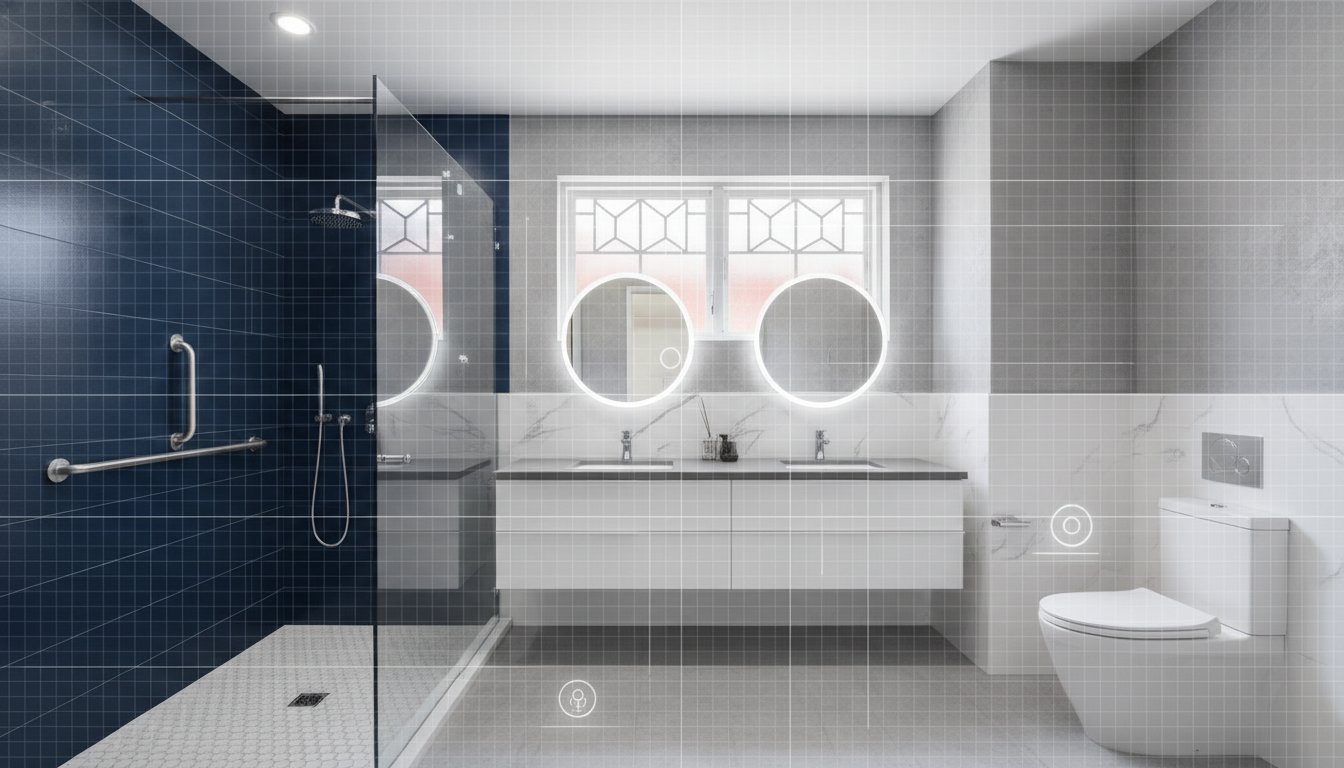

Article by
Jake Blasco, SHSS, B-2 Licensed Contractor
Jake Blasco is a Senior Home Safety Specialist® (SHSS), B-2 Licensed Residential Remodeling Contractor, and Grab Bar Specialist serving homeowners throughout Southern California. He specializes in aging-in-place modifications, grab bar installation, bathroom safety upgrades, accessibility remodeling, fall prevention solutions, and ADA-inspired home modifications. Through Blueprint Kitchen & Bath Design Studio, Jake helps seniors, veterans, and individuals with mobility challenges remain safe, independent, and comfortable in their homes. His expertise includes bathroom safety assessments, walk-in shower conversions, accessible design, railings, ramps, and other home accessibility solutions that improve quality of life while supporting long-term independence.
Did you know that over 30% of falls among seniors occur in the bathroom, contributing to the 14 million falls reported by older adults in the U.S. every year? It's a sobering statistic that often leaves families feeling caught between the desire for independence and the fear of a life-altering accident. Many homeowners worry that a bathroom safety assessment home evaluation will result in a space that looks more like a hospital ward than a private sanctuary. You likely want to protect your loved ones while maintaining the aesthetic integrity and comfort of your home.
This guide bridges the gap between clinical necessity and high-end design. You'll learn how to identify hidden hazards and implement life-saving modifications that offer both stability and style. We provide a clear, professional checklist for evaluating your space, from the precision of grab bar placement to the benefits of slip-resistant flooring. By the end of this article, you'll have a structured plan to transform your bathroom into a secure environment that prioritizes long-term dignity and peace of mind.
Key Takeaways
- Understand why familiar environments often hide the greatest risks and how a proactive audit preserves your long-term independence.
- Learn the specific dimensions required for safe navigation, including the 32-inch doorway rule and the hidden dangers of decorative bath mats.
- Discover how to conduct a professional bathroom safety assessment home evaluation by testing fixture stability and measuring bathtub threshold hurdles.
- Identify the ideal 17-19 inch "comfort height" for toilets and the necessary clearance for accessible vanities to reduce daily physical strain.
- Learn to prioritize high-impact modifications, such as curbless showers and professional grab bar installation, for a result that is both safe and aesthetically pleasing.
Why a Bathroom Safety Assessment is Your First Step to Independence
A bathroom safety assessment home evaluation serves as a specialized health audit for your living space. Most homeowners view their bathrooms through a lens of comfort and routine. This familiarity often leads to the "Invisible Hazard" concept, where we overlook the slight slickness of floor tiles or the height of a bathtub wall. These daily obstacles eventually become significant risks as mobility needs evolve. A professional audit strips away this familiarity to reveal exactly where your environment might fail you during a moment of fatigue or imbalance.
According to the CDC, approximately 235,000 people are injured in bathroom falls each year. While 90% of adults aged 65 and older wish to remain in their homes, only 10% of residences possess the necessary features to support them. A professional assessment identifies these gaps before an accident occurs. This proactive approach offers a much higher return on investment than reactive emergency repairs or medical bills. To better understand the environmental risks, refer to a comprehensive guide to fall prevention which details how structural changes can mitigate danger.
The Emotional and Practical Benefits of Early Assessment
Addressing safety concerns early significantly reduces "fall anxiety" for both seniors and their family members. This fear of falling often causes individuals to limit their daily activities, which can lead to muscle weakness and a further loss of independence. By implementing modifications like slip-resistant flooring or a curbless shower installation, you preserve your personal dignity. These changes ensure you can manage your own hygiene without constant supervision, effectively preventing a premature move to an assisted living facility. Proactive upgrades are a lifestyle investment that prioritizes your autonomy.
When Should You Conduct Your First Home Safety Audit?
You should consider a formal audit the moment you notice "yellow flags" in your daily routine. These subtle signs include holding onto the sink for balance or using towel racks as makeshift grab bars. Towel racks are not designed to support body weight and can easily pull away from the wall, causing a dangerous fall.
A SHSS Certified Specialist looks beyond the surface during a bathroom safety assessment home visit. They evaluate the "10-year outlook" of your home's accessibility. This involves checking if walls have the proper blocking to support grab bar installation or if doorway widening is necessary for future mobility aids. Their expertise ensures that modifications are both structurally sound and aesthetically pleasing, avoiding the clinical appearance of a hospital room while providing professional-grade protection.
Evaluating Entryways and Environmental Hazards
The path into the bathroom is just as critical as the fixtures inside. During a bathroom safety assessment home evaluation, the first physical barrier often encountered is the doorway. Standard residential doors are frequently too narrow for mobility aids, creating a point of friction that can lead to scrapes or falls. Ensuring a clear, unobstructed entry is the foundation of a safe environment.
Doorway and Maneuvering Space Checklist
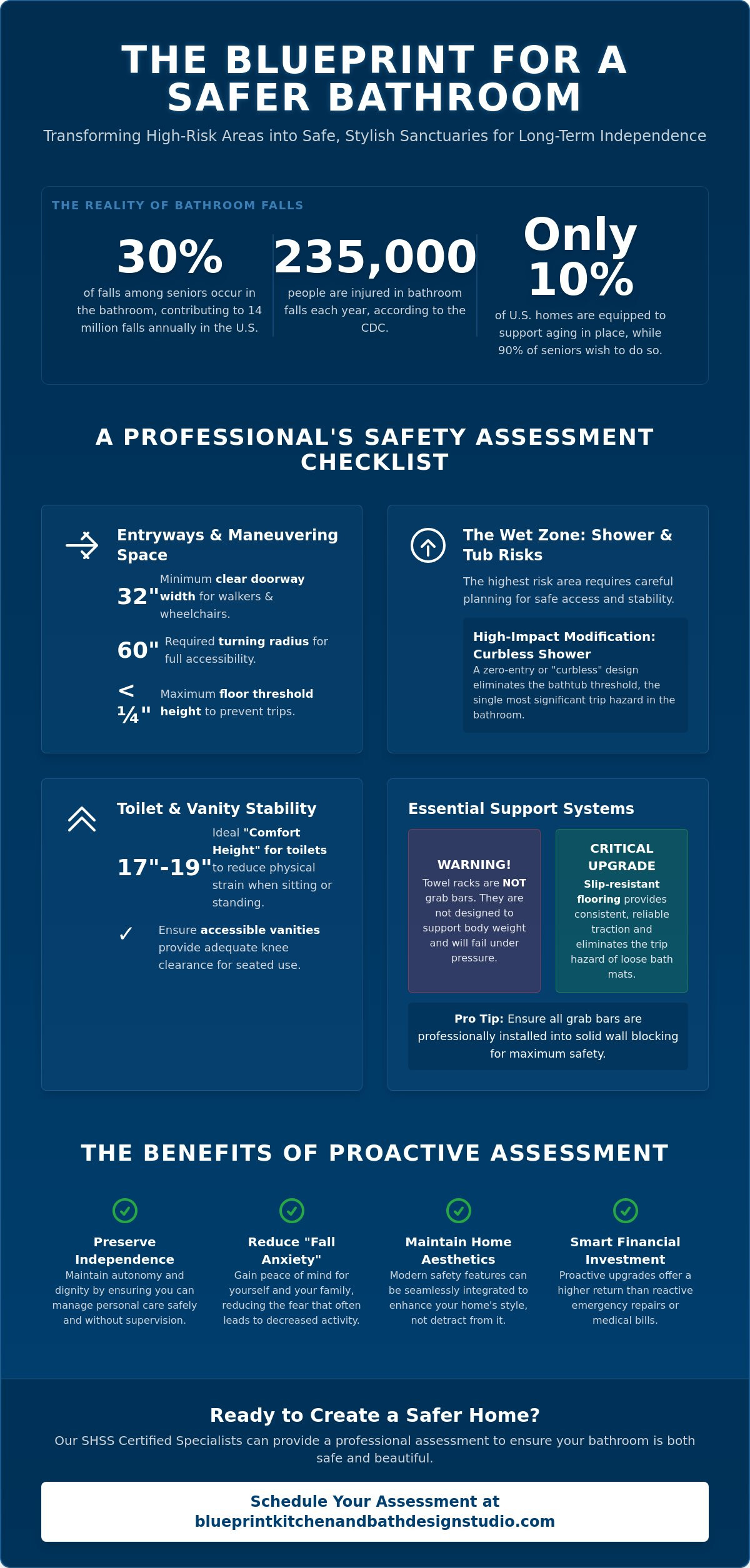
When measuring for accessibility, it's essential to distinguish between frame width and clear width. The frame width is the distance between the side jambs, but the clear width is the actual space available when the door is open at a 90-degree angle. For walkers and wheelchairs, a minimum clear width of 32 inches is the industry standard. If your current entry falls short, you don't always need a full renovation. Installing swing-clear hinges can often provide the necessary clearance by moving the door entirely out of the opening.
Inside the room, the layout must allow for a 60-inch turning radius to accommodate a wheelchair comfortably. This ensures the user can turn 180 degrees without multiple maneuvers. If space is tight, doorway widening or a layout reconfiguration can restore full access and ease of movement.
Floor transitions are another common environmental hazard. A threshold that rises more than a quarter-inch can easily catch a toe or a walker wheel. We recommend checking for uneven surfaces between the hallway and the bathroom floor. Additionally, while decorative bath mats add a touch of style, they are significant trip hazards. It's safer to replace loose rugs with slip-resistant flooring that provides consistent traction across the entire surface. This creates a level, predictable path that supports stable movement throughout the day.
Visibility and Lighting Standards
Aging eyes require higher lumen levels to process depth and detail accurately. A well-lit bathroom should provide ample illumination without creating harsh reflections. Glare-free lighting is particularly vital for individuals with cataracts, as bright spots can cause disorientation and hide wet patches on the floor. During your bathroom safety assessment home check, evaluate whether the light is evenly distributed or if it creates deep shadows in the shower and corners.
Midnight bathroom trips present a high risk for falls. Placing motion-sensor night lights along the path from the bed to the toilet ensures visibility without the need to fumble for a switch. For the main controls, rocker-style or motion-sensor light switches are much easier to operate for those with limited dexterity compared to traditional toggle switches. These small adjustments create a seamless, supportive experience that prioritizes safety without sacrificing the home's aesthetic appeal.
The Wet Zone: Assessing Shower and Bathtub Risks
The bathing area is the most hazardous portion of any bathroom due to the constant presence of water and the physical exertion required to enter or exit a tub. During a thorough bathroom safety assessment home review, we focus on the "wet zone" as a high-priority area. A safe bathing environment requires more than just adding a mat; it demands a critical look at the structural integrity and layout of your fixtures.
Grab Bar Placement and Integrity
One of the most common mistakes homeowners make is using towel racks for balance. These fixtures are designed to hold the weight of fabric, not a human being. We recommend the "Tug Test" for every existing bar in your bathroom. If a bar wiggles or feels loose, it's a significant hazard. Professional grab bar installation ensures that hardware is mounted into structural blocking behind the wall, providing the weight capacity necessary to prevent a fall.
A comprehensive assessment identifies the need for two distinct types of bars:
- Entry/Exit Bars: Usually mounted vertically on the outer wall or door frame to provide a steady handhold while stepping over a tub wall.
- Stability Bars: Mounted horizontally or at an angle inside the shower to assist with balance while washing or transitioning to a seated position.
Shower Accessibility and Flooring
The "threshold hurdle" of a standard bathtub is often the primary cause of trips. Measuring the step-in height is a vital part of your bathroom safety assessment home checklist. If the tub wall is high, a curbless shower installation or a walk-in tub installation can eliminate the need for precarious balancing on one leg. These modifications provide a level entry that accommodates limited hip and knee mobility.
Surface friction is equally important. We evaluate the "Coefficient of Friction" on your current tiles to determine how slippery they become when wet. If your floors feel like ice under soapy water, it's time to consider slip-resistant flooring. For those who tire easily, we also measure the space for a built-in shower seat. A permanent seat offers more stability and a higher weight capacity than a portable plastic chair, which can sometimes tip or slide on wet surfaces.
Finally, we check the water temperature at the source. Aging skin is more susceptible to burns, and a sudden surge of hot water can cause a person to jump or pull away, leading to a loss of balance. Ensure your water heater is set to 120 degrees Fahrenheit or lower. This simple adjustment prevents scalds and ensures that your focus remains on your balance rather than the temperature of the water.
Toileting and Vanity Safety: Stability Beyond the Shower
A bathroom safety assessment home evaluation must extend beyond the shower to the fixtures used most frequently throughout the day. Toileting and vanity areas often harbor subtle structural weaknesses or ergonomic flaws that contribute to cumulative fatigue. Ensuring these zones are stable and accessible is a critical component of a comprehensive safety plan. Stability in these areas is about more than avoiding a sudden fall. It's about preserving your energy and maintaining your physical autonomy during every routine task.
Toilet Support and Height Checklist
Standard residential toilets typically sit at a height of 15 inches, which can place significant stress on aging hip and knee joints. During your assessment, measure the seat height to see if it meets the 17-19 inch "comfort height" standard. This height mimics a standard chair and makes the transition from sitting to standing much easier. You might choose a raised toilet seat for a quick fix, but a high-profile toilet installation offers a more permanent, stable, and aesthetically pleasing solution.
Perform a "Sit-to-Stand" assessment to identify if leg strength is starting to fail. If you find yourself pulling on the sink or pushing off your knees, it's time for professional intervention. We recommend the placement of side-wall grab bars to provide a secure point of leverage. These bars should be mounted into structural blocking to ensure they can support your full body weight during a transition, unlike a flimsy towel rack.
Accessible Vanity and Storage Design
The vanity area requires a balance of accessibility and organization. For individuals with arthritis, traditional twist-knob faucets can be difficult or painful to operate. Replacing these with lever-style handles allows for easy water control with a simple push. We also evaluate the space beneath the sink. If a wheelchair or walker is in use, removing under-sink cabinets provides the necessary knee clearance for a closer, safer reach. This modification allows the user to sit comfortably while performing grooming tasks, reducing the risk of fatigue-related slips.
Mirror placement and storage are equally important. A mirror mounted too high can be useless for someone who prefers to sit while grooming. We also ensure that all daily essentials, such as toothbrushes and medications, are stored between waist and shoulder height. This prevents the need for dangerous overreaching or bending, which can lead to a loss of balance. If you identify structural concerns or accessibility gaps during your audit, consider an aging-in-place remodeling project to secure your home's foundation and improve its daily utility.
Finally, perform a physical stability check on all fixtures. A wobbling toilet or a loose vanity cabinet can be a sign of underlying water damage or poor installation. These items should never move when pressure is applied. Checking these details during your bathroom safety assessment home evaluation ensures that every point of contact in the room supports your weight and your confidence.
Transitioning from Assessment to Action in Redlands
Completing a checklist is only the beginning of securing your home. For residents in Redlands and the Inland Empire, the transition from identifying hazards to implementing solutions requires a clear sense of priority. You should focus your initial efforts on the areas with the highest fall risk, typically the "Wet Zone" discussed earlier. If your audit revealed a high bathtub threshold or a lack of stable handholds, these structural gaps should be addressed first. Balancing a renovation budget means investing in these high-impact safety features while planning for aesthetic upgrades that maintain your home's sophisticated feel.
It's vital to recognize the difference between a quick DIY fix and a professional installation. While a general handyman might be able to screw a bar into a wall, they often don't have the specialized knowledge to ensure that the wall itself is reinforced to handle a sudden fall. A professional approach considers the long-term integrity of the home. This ensures that every modification, from slip-resistant flooring to doorway widening, works together to create a seamless and reliable environment. Taking action now prevents the need for reactive, emergency changes following an injury.
Why a Certified Senior Home Safety Specialist Matters
Working with a professional who holds an SHSS designation provides peace of mind that goes beyond standard construction. These specialists are trained to understand the specific mobility challenges associated with aging and how those challenges interact with home design. They provide essential liability protection by ensuring all work meets rigorous safety standards. Most importantly, they excel at hiding safety features in plain sight. They use high-end materials and thoughtful layouts so your bathroom remains a beautiful sanctuary. A comprehensive bathroom safety assessment home evaluation with a specialist ensures that every technical detail is handled with precision and care.
Next Steps: From Checklist to Construction
Your next move should be scheduling a professional onsite consultation to validate your checklist findings. A local specialist can evaluate the unique architectural nuances of Inland Empire homes and provide a tailored project roadmap. You can prepare for this by reviewing our bathroom safety upgrades Redlands CA guide, which highlights how modern design and accessibility can coexist. If your assessment identified an immediate need for better stability during transitions, finding a professional grab bar installer is an excellent starting point. These targeted improvements provide immediate security while you consider larger projects like aging-in-place remodeling or a curbless shower installation.
By moving from assessment to action, you're making a choice to prioritize your dignity and independence. The resources available in Redlands make it easier than ever to transform a hazardous space into a secure, elegant environment. Start with the most urgent risks you've identified and partner with experts who can turn your safety plan into a reality.
Secure Your Independence Through Professional Design
Securing your home for the future requires a transition from awareness to expert implementation. You've learned how to identify invisible hazards in entryways, the necessity of structural integrity in the wet zone, and the ergonomic standards required for toileting stability. While a personal checklist is a valuable starting point, a professional bathroom safety assessment home evaluation provides the technical precision needed for long-term security. These modifications don't just prevent accidents; they preserve your dignity and your lifestyle.
Our team brings over 20 years of design and remodeling experience in Redlands to every project. As SHSS Certified Senior Home Safety Specialists with an A+ rating for accessibility and safety hardware installation, we specialize in hiding life-saving features within high-end design. We invite you to Schedule Your Professional Bathroom Safety Assessment in Redlands today. Taking this step ensures that your home continues to support your autonomy with elegance and reliability. You deserve a space that remains as beautiful as it is secure.
Frequently Asked Questions
How much does a professional bathroom safety assessment cost?
A professional home safety evaluation typically ranges from $199 to $399, depending on the size of the home and your specific location. Some specialized services may offer a lower rate of approximately $100 if you choose to purchase larger modification services simultaneously. This investment provides a comprehensive roadmap for identifying hidden hazards and prioritizing the most impactful structural changes.
Can I install grab bars myself or do I need a specialist?
While DIY kits are available, a specialist is highly recommended to ensure the bars can support the necessary weight capacity during a fall. Professional grab bar installation involves adding structural blocking behind the wall, which is essential if your current wall studs don't align with the ideal bar placement. This ensures the hardware provides true stability rather than pulling away from the drywall when you need it most.
What is the standard width for a wheelchair-accessible bathroom door?
The industry standard for a wheelchair-accessible entry is a minimum clear width of 32 inches. It's important to remember that clear width is measured when the door is open at a 90-degree angle, which is often less than the actual door frame width. If your current entry is too narrow, doorway widening or the use of swing-clear hinges can often resolve the issue without a full wall reconfiguration.
How do I make my existing bathtub safer without a full remodel?
You can significantly improve bathtub safety by installing professional grab bars and applying slip-resistant flooring treatments to the tub surface. Adding a high-quality handheld showerhead and a stable, built-in shower seat also reduces the need for precarious movement. These targeted upgrades provide immediate security and stability during your daily routine while you consider more permanent solutions like a walk-in tub installation.
Is there a difference between ADA compliant and senior-friendly?
ADA standards are legally mandated for public and commercial spaces, whereas "senior-friendly" or aging-in-place design is tailored for private residential comfort. A bathroom safety assessment home evaluation often uses ADA guidelines as a gold standard for measurements, such as the 17-19 inch toilet seat height. However, residential design allows for more aesthetic flexibility, ensuring safety features blend seamlessly with your home's high-end decor.
What are the best slip-resistant flooring options for bathrooms?
Textured porcelain tiles and specialized luxury vinyl are excellent choices because they offer a high coefficient of friction even when wet. These materials provide the necessary traction to prevent slips without the clinical look of rubber mats. During a safety audit, we evaluate how your current flooring reacts to soapy water and identify if a full slip-resistant flooring replacement is necessary for long-term stability.
Does Medicare cover the cost of bathroom safety modifications?
Medicare does not typically cover the cost of hardware or labor for home modifications like grab bars or walk-in tubs. However, starting January 1, 2026, Medicare will cover home accessibility and safety assessments when initiated by a physician to identify potential barriers to care. This means the professional evaluation is covered, but the actual physical upgrades remain the responsibility of the homeowner.
How long does a typical bathroom safety upgrade take to install?
The timeline for safety upgrades depends entirely on the complexity of the modifications you choose. Simple improvements, such as grab bar installation or changing faucet handles, can often be completed in just a few hours. Larger projects like a curbless shower installation or doorway widening typically require several days to a week of professional work to ensure the structural integrity and finish meet high-quality standards.


