
Article by
Jake Blasco, B-2 Licensed Contractor
Jake Blasco leads design and project planning at Blueprint Kitchen & Bath Design Studio, specializing in kitchen, bath, and whole home design in Huntington Beach and surrounding Orange County communities. His approach combines thoughtful layouts, quality materials, and practical construction knowledge to create spaces that look beautiful and work for everyday life.
Jake shares guidance on cabinetry, countertops, finishes, lighting, and renovation planning to help homeowners make informed decisions. As the qualifying individual for Blueprint’s California B-2 Residential Remodeling license (CSLB #1161570), he brings a construction perspective to every design.
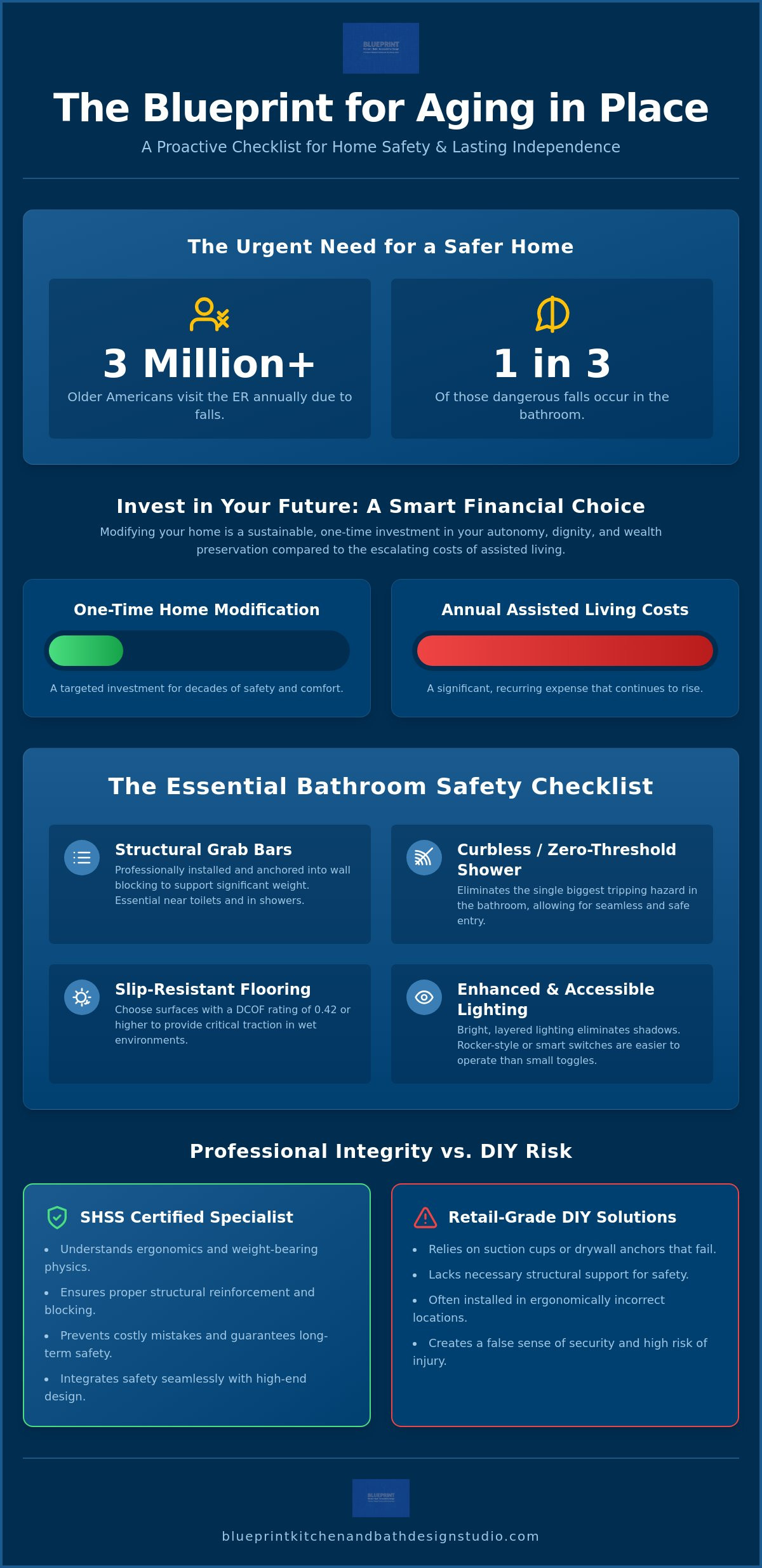
Did you know that over 3 million older Americans visit emergency rooms each year due to falls, with nearly one-third of those accidents occurring in the bathroom? It's a sobering statistic that highlights why proactive home design is a necessity for longevity. You likely value your independence and the personal aesthetic of your home, yet the fear of a sudden injury can make the future feel uncertain. Our comprehensive aging in place checklist provides a structured way to evaluate your living space through the lens of a specialized expert.
We agree that your home should feel like a sanctuary, not a clinical facility. You don't have to sacrifice style for stability when making these essential transitions. This guide promises to help you identify specific hardware and layout modifications that blend seamlessly with modern design. We'll walk you through a room-by-room assessment, covering everything from doorway widening to slip-resistant flooring. This ensures you can maintain your physical autonomy and peace of mind in the place you love most.
Key Takeaways
- Adopting a proactive mindset toward home modifications is the most effective way to preserve your independence and long-term safety.
- Use a professional-grade aging in place checklist to identify hidden hazards in high-traffic areas like the bathroom and kitchen.
- Modern designer finishes and curbless showers allow you to integrate safety features without compromising your home's high-end aesthetic.
- Understand the importance of structural reinforcement and why professional installations are safer than retail-grade DIY solutions.
- Establish a clear roadmap for prioritizing your 2026 home upgrades to create a safer and more efficient living environment.
The Proactive Approach to Aging in Place in Redlands
In 2026, the concept of What is Aging in Place? has shifted from a reactive medical necessity to a proactive lifestyle design. It represents the freedom to remain in your own home safely and comfortably as you age, regardless of changes in mobility. Choosing to modify your environment today means you're investing in your future autonomy. This strategy isn't about clinical requirements; it's about making deliberate choices that prioritize your dignity and long-term independence.
For homeowners in Redlands, this choice is particularly significant. Our local architecture varies from historic 1920s bungalows with narrow hallways and high entry steps to more modern builds in the Inland Empire that may still lack essential safety features. Addressing these structural challenges early is far more cost-effective than the alternative. While the average cost of assisted living continues to rise, a one-time investment in specialized home modifications provides a sustainable, long-term solution. This preserves both your wealth and your dignity while allowing you to stay in the neighborhood you love.
To better understand how these changes impact your daily life, watch this helpful overview:
Why a Checklist is Your First Step to Independence
A comprehensive aging in place checklist serves as a diagnostic tool for your home. It helps you identify "invisible" hazards that you might overlook every day, such as high floor thresholds, dim lighting in transition areas, or lack of support in the shower. Using a professional aging in place checklist allows you to prioritize projects based on your current mobility and future needs. This approach is rooted in Universal Design, a concept focused on creating spaces that are inherently accessible and aesthetic for everyone, regardless of age or ability level. By planning ahead, you can ensure that your home remains a sanctuary rather than a source of stress.
The Role of an SHSS Certified Specialist
Not every contractor understands the nuances of mobility-focused renovation. Working with an SHSS Certified Senior Home Safety & Grab Bar Specialist ensures your home is evaluated with clinical precision. Unlike a general contractor who might focus solely on aesthetics, an accessibility expert understands the specific physics of weight-bearing hardware and the ergonomic requirements of limited reach. This specialized knowledge prevents costly mistakes, such as installing grab bars in the wrong location or using insufficient blocking behind the wall. Professional assessments ensure every modification is done right the first time. This creates a seamless integration of safety and style that maintains your home's value and provides lasting peace of mind.
The Essential Room-by-Room Aging in Place Checklist
A systematic evaluation of your home allows you to identify structural barriers that might impede your movement or safety. This aging in place checklist focuses on high-traffic areas where accidents are most likely to occur, transforming them into spaces that support your lifestyle. As noted in the National Institute on Aging's Guide to Growing Older at Home, making these adjustments early helps you maintain a high quality of life while reducing the risk of a health crisis. Every room presents unique challenges that require specific, technical solutions to ensure long-term stability.
Bathroom Safety: Beyond the Basics
The bathroom is statistically the most hazardous room in the house due to wet surfaces and confined spaces. To mitigate these risks, your first priority should be professional grab bar installation near the toilet and inside the shower. Unlike retail products that rely on suction, professional bars are anchored into structural blocking to support significant weight. You should also evaluate your flooring for its Dynamic Coefficient of Friction (DCOF). Surfaces with a DCOF rating of 0.42 or higher provide the necessary slip resistance for wet environments. If your current shower has a high threshold, consider a curbless shower installation. This removes the trip hazard entirely and provides a seamless transition for those using mobility aids.
The Accessible Kitchen Checklist
A safe kitchen prioritizes reachability and reduces physical strain. You don't want to overextend your reach for heavy items or struggle with difficult hardware. Check your cabinetry for pull-out shelving, which brings items to you and prevents deep bending. Replace traditional round knobs with D-shaped drawer pulls; these allow you to open drawers with a single finger or a closed fist. Task lighting is another critical element. Installing LED strips under upper cabinets illuminates work surfaces, reducing the risk of cuts or burns during meal preparation. If you're planning a more extensive update, designing for varied counter heights ensures you can work comfortably while standing or seated.
Home Access and Navigation
Clear paths of travel are the foundation of a functional home. Measure your doorways to ensure they provide at least 32 to 36 inches of clear width. If your home features the narrow doors common in older Redlands properties, doorway widening may be necessary to accommodate walkers or wheelchairs comfortably. Look at the transitions between rooms. High thresholds should be replaced with beveled transitions that sit flush with the floor. This eliminates a common trip point and makes navigation effortless. Ensuring your home is easy to move through is a vital step in maintaining your physical autonomy. If you're unsure where to start, consulting with a specialist about accessible kitchen design can help you prioritize the most impactful upgrades for your specific layout.
Balancing Safety with Style: Avoiding the Clinical Look
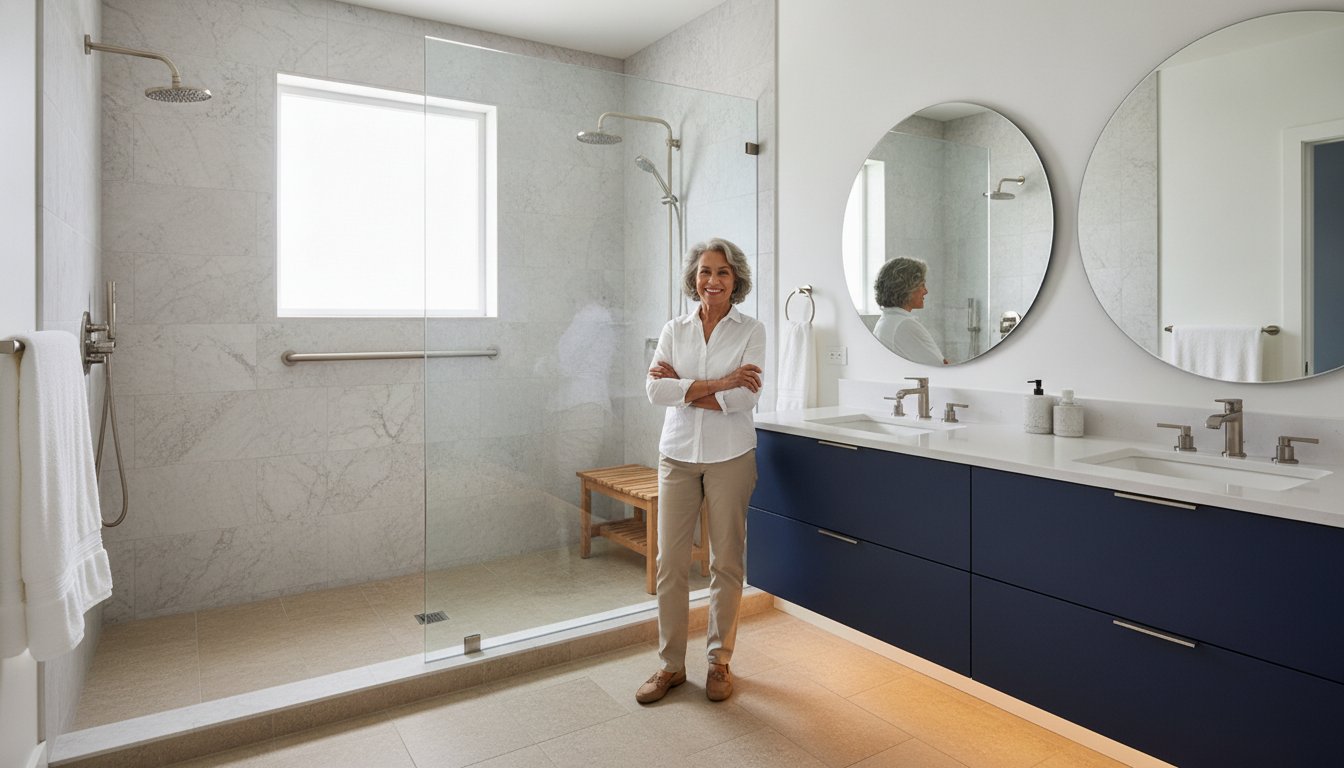
Many homeowners hesitate to implement an aging in place checklist because they worry their residence will begin to resemble a medical facility. This is a common misconception that often delays essential safety upgrades. In 2026, the intersection of high-end interior design and accessibility has created a new standard for home modification. Modern safety hardware is now available in sophisticated finishes like matte black, brushed gold, and polished chrome. These options allow you to maintain a cohesive aesthetic throughout your home while adding the structural support you need for long-term stability.
One of the most effective ways to blend safety with luxury is through a curbless shower installation. Once considered a specialized medical modification, the "zero-entry" shower is now a staple of high-end spa design. It removes the physical barrier of a curb, making the bathroom feel larger and more open. When you pair this with slip-resistant tile that mimics the texture of natural slate or limestone, the result is a space that is both visually stunning and physically secure. This approach proves that functional clarity doesn't have to come at the expense of your home's character.
Universal Design as a Luxury Feature
While resources like AARP's aging in place checklist highlight the functional needs of a home, modern remodeling focuses on how these features increase property value. Open-concept layouts and curbless transitions are highly desirable for all age groups, making your home more marketable in the future. Lighting also plays a dual role in this design philosophy. Motion-activated LED toe-kick lighting provides a safe path at night while adding a dramatic, modern architectural accent to your hallways and bathrooms. You aren't just installing safety features; you're upgrading your home's overall design language.
The "Invisible" Safety Upgrade
The most successful modifications are often the ones you don't notice. During a standard renovation, reinforcing walls with structural plywood blocking allows for the future installation of grab bars without needing to tear out expensive tile later. Widening doorways to 36 inches creates a sense of spaciousness and better airflow, even if you don't currently use a mobility aid. Replacing traditional round knobs with sleek, lever-style handles is another ergonomic upgrade that looks intentional and modern. These "invisible" changes ensure your home is prepared for the future without compromising its current charm or high-end feel.
Professional Grade vs. DIY: Ensuring Structural Integrity
While aesthetics define how you feel in your home, structural integrity defines how well your home protects you. An effective aging in place checklist must distinguish between superficial fixes and professional-grade installations. Many retail products marketed for seniors, such as suction-cup grab bars or adhesive-backed transition strips, offer a false sense of security. These items aren't designed to support the full weight of an adult during a sudden loss of balance. True safety hardware requires a mechanical connection to the building’s framing, ensuring every modification provides the stability you expect when you need it most.
Choosing between a DIY approach and professional intervention often comes down to the complexity of the task. You can easily handle minor updates, like replacing standard lightbulbs with high-lumen LEDs or adding non-slip backing to area rugs. However, when your aging in place checklist involves structural changes, the margin for error disappears. Improperly anchored hardware or poorly executed layout changes can lead to expensive property damage and, more importantly, physical injury. For high-stakes modifications, partnering with a Redlands specialist ensures your home remains a safe sanctuary.
Grab Bar Installation: Why it Matters Who Installs Them
Standard wall studs are rarely located exactly where you need support. Professional installation often requires opening the wall to install solid wood blocking, which provides a continuous, high-strength mounting surface. This reinforcement is necessary to meet the 250-pound weight-bearing requirement for certified safety hardware. Additionally, professional installation in tile requires specialized diamond-tipped tools to prevent cracking the delicate surface of your designer finishes. Without the right equipment and experience, a simple installation can lead to damaged tile and compromised waterproofing, leading to costly repairs later.
The Complexity of Curbless Showers
A curbless shower is a sophisticated piece of engineering. Achieving a true zero-entry transition requires precise floor pitching so water flows toward the drain rather than across your bathroom floor. This often involves recessed subfloors and advanced waterproofing systems, such as Schluter-Kerdi, to protect your home from long-term moisture damage. If the pitch is off by even a fraction of an inch, you risk standing water or leaks that can lead to mold and subfloor rot. This level of precision is why structural modifications should be handled by a specialist rather than a general handyman. If you're ready to ensure your home is structurally sound, consider scheduling a consultation for aging-in-place remodeling today.
Starting Your Home Modification Journey in Redlands
Completing an aging in place checklist is a significant first step, but the transition from identification to implementation requires a structured plan. In 2026, homeowners have more resources than ever to support these upgrades. Starting January 1, 2026, Medicare now covers home accessibility assessments performed by qualified professionals. This policy change helps you pinpoint exactly where your home needs reinforcement without guesswork. By using professional data to guide your decisions, you can move forward with the confidence that your investments are targeted and effective.
Budgeting for these modifications is a practical consideration for many families in the Inland Empire. Residents of Redlands and San Bernardino County may qualify for the Owner-Occupied Residential Rehabilitation Program (OORP), which offers up to $40,000 in forgivable loans for essential accessibility repairs like wheelchair ramps and grab bars. For veterans, the VA offers substantial support through SAH and SHA grants, while the HISA grant provides up to $6,800 for medically necessary modifications. If you're a rural homeowner aged 62 or older, the USDA Section 504 program offers grants up to $10,000 to remove health and safety hazards. These financial tools make it easier to prioritize your long-term well-being without delay.
Your Priority List: What to Fix First
When you review your aging in place checklist, focus on the "Fall Zones" first. Bathrooms and stairways are high-risk areas where accidents carry the most significant consequences. Addressing these spaces provides the most immediate impact on your safety and independence. Once these zones are secure, shift your attention to the kitchen to improve reachability and ease of use. Larger structural projects, like doorway widening or permanent entry ramps, can be scheduled as part of a phased aging in place remodeling plan. This unhurried approach allows you to manage your budget while steadily improving your home's functionality.
Work with a Redlands Specialist
Local expertise is invaluable when navigating building codes and the specific architectural styles found in Redlands, Yucaipa, and Loma Linda. At Blueprint Kitchen and Bath Design Studio, we combine the technical precision of an SHSS Certified Senior Home Safety Specialist with the eye of a high-end designer. Our process ensures that every modification is structurally sound and aesthetically integrated into your home's existing decor. We treat your project as an empowering lifestyle upgrade, focusing on the positive outcomes of dignity and physical autonomy. Our team understands the personal significance of your home and works to preserve its character while enhancing its safety. Schedule your professional home safety assessment today.
Secure Your Future Independence in Redlands
Choosing to adapt your home today is an empowering decision that prioritizes your dignity and long-term autonomy. By using this aging in place checklist, you've identified the critical transitions needed to maintain a safe, beautiful environment. We've explored how professional-grade hardware and specialized structural reinforcements provide the stability you need, while modern designer finishes ensure your home remains a stylish sanctuary. Whether you're starting with high-impact bathroom safety or planning a full kitchen redesign, the right expertise makes all the difference in your daily quality of life.
Blueprint Kitchen and Bath Design Studio is proud to be a 5-star rated bathroom safety expert serving Redlands and the Inland Empire. As an SHSS Certified Specialist, we bridge the gap between clinical necessity and high-end aesthetics. We're ready to help you navigate the new 2026 assessment options and local grant programs to make your vision a reality. Download our Full Aging in Place Design Guide or Schedule a Consultation today to begin your transformation. Your home should always be a place where you feel both secure and inspired.
Frequently Asked Questions
What is the most important item on an aging in place checklist?
Fall prevention in the bathroom is the most critical priority on any aging in place checklist. Since one-third of falls among older adults occur in the bathroom, installing secure grab bars and slip-resistant flooring provides the highest immediate safety benefit. These modifications address the most common physical risks while preserving your independence in your most private space.
How much does it cost to make a home aging-in-place compliant?
The total investment for home modifications depends on the scope of your specific needs and the current condition of your residence. Small changes like improved lighting are relatively inexpensive, while structural projects like doorway widening or curbless shower installations require more significant resources. Many homeowners choose to phase these projects over time to manage their budgets effectively while steadily increasing their home's safety.
Do I need a permit for aging-in-place modifications in Redlands?
Whether you need a permit depends on the complexity of the modification. Simple hardware installations like grab bars typically don't require permits. However, structural changes such as doorway widening, plumbing moves for a walk-in tub, or building a permanent access ramp usually require approval from the City of Redlands Building and Safety Division to ensure compliance with California Building Codes.
Can grab bars be installed without drilling into tile?
While suction-cup products exist, they aren't safe for weight-bearing support and don't belong on a professional aging in place checklist. Secure grab bars must be mechanically fastened into structural blocking or wall studs. Professional installers use specialized diamond-tipped bits to drill through tile without cracking it, ensuring the bar can support at least 250 pounds of force during a fall.
What is a curbless shower and why is it safer for seniors?
A curbless shower is a walk-in design where the bathroom floor continues seamlessly into the shower area without a raised threshold. This "zero-entry" transition is safer because it eliminates the most common trip hazard in the bathroom. It allows for effortless entry and exit, especially for those who use walkers or wheelchairs, while creating a modern, spa-like aesthetic in the space.
How wide should doorways be for wheelchair accessibility?
Doorways should ideally provide a clear opening of 32 to 36 inches to accommodate wheelchairs and walkers. Standard doors in older Redlands bungalows are often as narrow as 28 inches, which can lead to restricted movement and difficulty navigating the home. Doorway widening ensures you can move freely between rooms without physical barriers, maintaining your autonomy throughout the entire house.
Does aging-in-place remodeling decrease home value?
Aging-in-place remodeling typically maintains or increases home value by incorporating Universal Design principles. Features like open-concept layouts, curbless showers, and improved lighting are highly desirable for all buyers, not just seniors. These modifications make a home more functional and accessible for everyone, which can be a significant selling point in the modern real estate market.
What is an SHSS Certified specialist?
An SHSS Certified specialist is a professional who has earned the Senior Home Safety Specialist designation. This certification ensures the expert has mastered the clinical and technical requirements for conducting thorough home safety assessments. Working with an SHSS specialist provides you with a higher standard of care, as they understand the specific mobility challenges and ergonomic needs associated with aging in place.
Disclaimer
This article provides general educational information and design inspiration, not project-specific professional advice. Costs, timelines, permit requirements, building codes, and product suitability vary by property and jurisdiction. Final scope, pricing, and specifications are established only through a written proposal or contract. Consult qualified professionals and local building officials before beginning work. Unless expressly identified as a completed Blueprint project, images are illustrative and may include stock photography, design renderings, or AI-generated imagery.


