
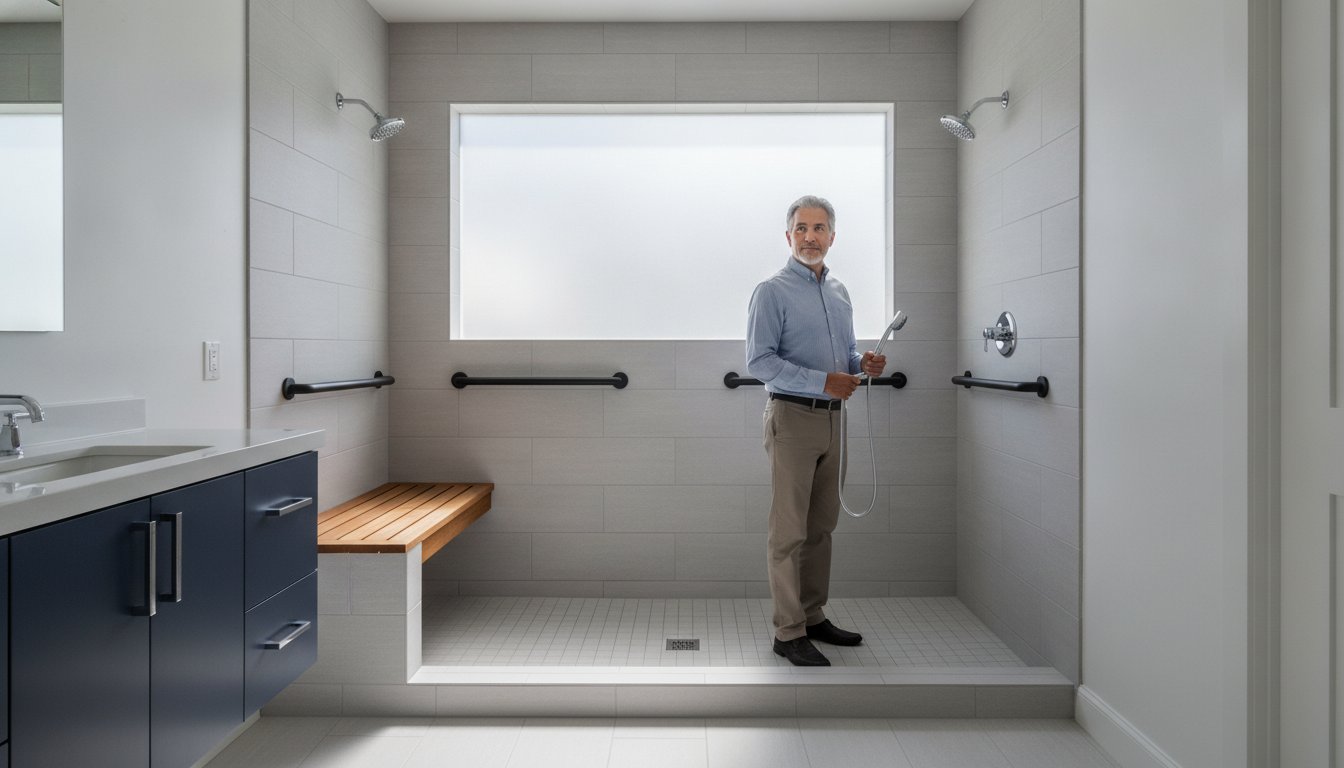

Article by
Jake Blasco, B-2 Licensed Contractor
Jake Blasco leads design and project planning at Blueprint Kitchen & Bath Design Studio, specializing in kitchen, bath, and whole home design in Huntington Beach and surrounding Orange County communities. His approach combines thoughtful layouts, quality materials, and practical construction knowledge to create spaces that look beautiful and work for everyday life.
Jake shares guidance on cabinetry, countertops, finishes, lighting, and renovation planning to help homeowners make informed decisions. As the qualifying individual for Blueprint’s California B-2 Residential Remodeling license (CSLB #1161570), he brings a construction perspective to every design.
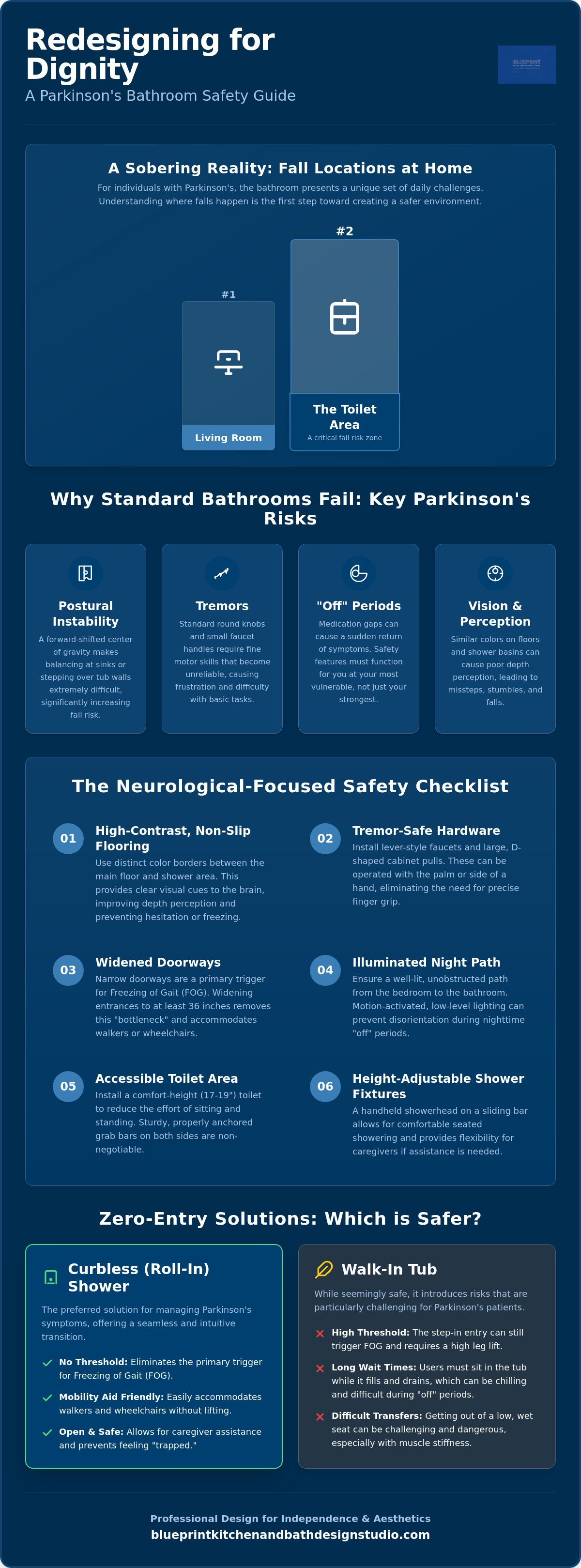
Did you know that for individuals living with Parkinson’s disease, the toilet is the second most common location for a fall, trailing only the living room? It's a sobering reality that explains why bathroom modifications for Parkinson's patients are often the most critical investment a family can make. You likely value your autonomy above all else, yet "off" periods and sudden freezing episodes make navigating tight doorways or standard shower stalls feel like a high-stakes challenge. Tremors can make even the simplest task, like turning a faucet or grabbing a towel, feel frustratingly difficult.
The good news is that your home doesn't have to feel like a clinical facility to be safe. This guide explores how specialized upgrades can transform these physical risks into manageable architectural solutions. We'll show you how to manage symptoms while preserving the high-end, spa-like aesthetic of your residence. From curbless shower transitions to widened doorways, you'll discover how to build a foundation of long-term stability. We will walk through a comprehensive safety checklist and explain why a professional technical assessment in Redlands is the most reliable way to ensure your home remains a sanctuary of independence and dignity.
Key Takeaways
- Identify how postural instability and tremors impact daily movement, requiring hardware that prioritizes stability over fine motor control.
- Explore essential bathroom modifications for Parkinson's patients, including high-contrast flooring borders that improve depth perception and prevent falls.
- Compare the benefits of curbless showers and walk-in tubs to determine which "zero-entry" solution best manages your specific freezing triggers.
- Follow a step-by-step safety checklist to audit your home's "night path" and verify that doorway widths accommodate mobility aids like walkers.
- Learn how professional design partners combine clinical safety standards with high-end aesthetics to preserve your home’s beauty and your independence.
Understanding Parkinson's Risks: Why Standard Bathrooms Fail
Standard bathrooms are built for the average user, but they rarely account for the specific motor and non-motor symptoms associated with this condition. Understanding Parkinson's disease reveals that postural instability often shifts a person's center of gravity forward. This makes it difficult to maintain balance while standing at a vanity or stepping over a high tub wall. Tremors further complicate these tasks, as standard faucets or small cabinet knobs require fine motor skills that become unreliable during symptomatic episodes. "Tremor-safe" hardware, such as lever-style handles and D-shaped pulls, allows for easier operation without the need for a precise grip.
These physical challenges are often compounded by changes in vision and depth perception. Many patients struggle to distinguish between the floor and the shower basin if the colors are too similar, which frequently leads to missteps. When you consider that research has shown the toilet is the second most common location for falls, the necessity of targeted bathroom modifications for Parkinson's patients becomes a matter of daily survival. Creating a space that accounts for these neurological shifts is the first step toward maintaining your independence.
To visualize how these challenges impact daily life and what solutions are available, watch this helpful overview:
The Danger of 'Off' Periods in the Bathroom
"Off" periods occur when medication levels drop in the bloodstream, leading to a sudden return of stiffness, bradykinesia, and tremors. These episodes often happen in the middle of the night or early morning, making the journey to the bathroom particularly perilous when lighting is low and the body is least responsive. Because medication cycles directly dictate your physical capabilities throughout the day, your bathroom safety needs must be designed for your most vulnerable moments rather than your strongest. Ensuring that the environment supports you during these "off" times is essential for preventing the injuries that commonly occur during nighttime navigation.
Freezing of Gait and Floor Transitions
Freezing of Gait (FOG) is a unique neurological phenomenon where the brain temporarily loses the ability to initiate movement, often described as feeling like your feet are glued to the floor. This typically happens at "bottlenecks" like narrow doorways or when the eyes perceive a sudden change in flooring texture or color. A simple metal threshold or a dark rug on a light floor can be interpreted by the brain as a significant obstacle, triggering a freeze that can lead to a forward-toppling fall. Effective bathroom modifications for Parkinson's patients utilize high-contrast floor borders and widened doorways to provide the clear visual cues the brain needs to maintain a steady, confident stride.
Essential Bathroom Modifications for Parkinson's Stability
Achieving stability in the home requires a shift from general accessibility to specialized, neurological-focused design. While a standard bathroom safety checklist provides a helpful baseline, bathroom modifications for Parkinson's patients must address the nuanced interplay between motor symptoms and the physical environment. High-contrast borders on slip-resistant flooring, for instance, provide the visual cues necessary for better depth perception. This design choice helps the brain navigate spatial changes, reducing the hesitation that often leads to freezing or missteps.
Lever-style faucets and D-shaped cabinet pulls are equally essential for accommodating hand tremors. These features allow you to operate water and storage using the palm of your hand or a closed fist, bypassing the need for the fine motor control that tremors often disrupt. Additionally, installing height-adjustable features, such as handheld showerheads on a slide bar, ensures the space remains functional as mobility needs evolve over time. These thoughtful details transform a hazardous room into a supportive environment that prioritizes your autonomy.
Professional Grab Bar Installation for Tremor Support
It's a common mistake to assume a towel bar can provide support during a balance shift. Professional grab bars are engineered to withstand significant weight and force, whereas towel bars are likely to pull away from the wall under pressure. For maximum safety, look for bars with a textured or "peened" finish. This specialized surface provides a secure grip even if a patient is experiencing hand tremors or if the hardware is wet. Proper placement creates a "stable path" throughout the room, ensuring there is always a reliable point of contact. If you need assistance with layout planning, you can learn more about professional grab bar installation Redlands CA to ensure every bar is anchored correctly into structural blocking.
Lighting and Visual Cues
Darkness is a significant risk factor, especially during nighttime "off" periods when movement becomes unpredictable. Motion-activated lighting is a transformative modification; it illuminates the path automatically, removing the need to fumble for a switch. Use non-glare LED fixtures to reduce visual confusion and harsh shadows, which the brain can sometimes misinterpret as floor obstacles. By creating a "visual path" using high-contrast tile or paint along the baseboards, you provide a clear roadmap for the eyes to follow. This layering of light and color works together to reinforce confidence. If you're ready to explore how these elements can be integrated into your home, consulting with a design specialist can help you prioritize the most impactful upgrades first.
Curbless Showers vs. Walk-in Tubs: Which is Safer for PD?
The choice between a curbless shower and a walk-in tub is a pivotal decision when planning bathroom modifications for Parkinson's patients. While both options aim to reduce fall risks, they address the symptoms of the disease in very different ways. For many, the "zero-entry" design of a curbless shower is the superior choice because it completely removes the physical and visual threshold that often triggers a freezing episode. By creating a seamless transition from the bathroom floor into the bathing area, you eliminate the need for the high-stepping motion that can lead to a loss of balance.
Stability within the shower is equally important. A built-in shower bench provides more permanent structural support than a folding seat, which is beneficial for those dealing with significant postural instability. Combining this with a handheld showerhead allows for a safer, seated bathing experience. This setup is particularly helpful when hand tremors make it difficult to stand under a fixed stream of water. For a deeper look at equipment choices, the Parkinson's Foundation guide to bathing safety offers excellent recommendations for adaptive tools that complement these structural changes.
The Case for Curbless Showers in Redlands Homes
Curbless designs are increasingly popular in Southern California because they blend high-end aesthetics with maximum accessibility. A professional curbless shower installation Redlands ensures the floor is correctly pitched for drainage without requiring a raised lip. This open-concept layout is ideal for those who use walkers or wheelchairs, as it allows for a wide, unobstructed turning radius. It removes the "bottleneck" effect of standard stalls, helping to maintain a fluid gait and reducing the anxiety associated with tight spaces.
Walk-in Tubs: Considerations for Parkinson's
Walk-in tubs provide the therapeutic benefits of soaking, which can help soothe muscle stiffness. However, they come with specific challenges for Parkinson's patients. The "step-in" motion, though lower than a standard tub, can still trigger a freezing response in some individuals. Additionally, the user must remain in the tub while it fills and drains. This can be difficult for those with temperature sensitivity or those who experience "off" periods where sitting still for long durations becomes uncomfortable. If you choose a tub, prioritize models with fast-drain technology and internal grab bars to ensure the transition in and out remains as stable as possible.
The Parkinson's Bathroom Safety Checklist: A Step-by-Step Guide
To begin your transformation, perform a "Night Path" audit. Walk the route from your bedside to the toilet exactly as you would at 2:00 AM during an "off" period. Identify every obstacle, low-light area, or narrow passage that could trigger a freezing episode. This real-world test provides the most accurate data for planning bathroom modifications for Parkinson's patients. You should also test your current faucets and handles specifically during a tremor episode. If a fixture requires a pinching or twisting motion that you find difficult in that moment, it's time to replace it with accessible hardware. Finally, look at the visual contrast of your layout. Ensure that the toilet seat, floor, and grab bars are distinct colors to help the brain process spatial boundaries clearly.
Step 1: The Mobility and Clearance Audit
Doorway width is a critical structural factor for long-term independence. Standard residential doors are often only 28 inches wide, which is insufficient for most walkers or wheelchairs. Widening these openings to 32 or 36 inches is the gold standard for safety. This prevents "pinch points" where a mobility aid might snag on a frame, potentially leading to a fall. For residents in the Inland Empire, aging in place remodeling Redlands services can help you determine which walls are load-bearing before you begin these vital structural changes.
Step 2: Evaluating Surface Safety
The texture of your floor is your primary defense against slips. Conduct a "Wet COF" (Coefficient of Friction) check on your tiles. If they feel slick when damp, they lack the necessary grip for someone with postural instability. High-gloss finishes are also problematic; they create disorienting reflections that the brain may misinterpret as standing water or a hole. Remove every rug and mat from the space. Even those labeled "non-slip" can bunch up or catch a walker's wheel, creating a high-risk tripping hazard. A consistent, matte, slip-resistant surface is the safest choice for bathroom modifications for Parkinson's patients.
While a self-audit is a great start, a professional eye is invaluable. Consulting with an SHSS-certified specialist ensures that your assessment covers technical details like structural blocking for grab bars and electrical safety for motion lighting. Contact our team to schedule a professional home assessment and ensure your bathroom is truly safe for your evolving needs.
Professional Bathroom Modifications in the Inland Empire
Executing the bathroom modifications for Parkinson's patients outlined in this guide requires a specialized skill set that balances structural integrity with neurological safety. Many homeowners in the Inland Empire find that while general contractors are capable of standard renovations, they often lack the training to address the specific "freezing" triggers or postural shifts unique to this condition. Choosing a partner who specializes in aging-in-place design ensures that your investment provides genuine protection against falls while maintaining the high-end feel of your home. We focus on creating a space that feels like a lifestyle upgrade rather than a medical necessity, ensuring your home remains a sanctuary of comfort.
Our methodical process is designed to be unhurried and transparent. We start by listening to your specific challenges, whether they involve hand tremors or difficulty with walker clearance. We then create a structured plan that prioritizes the most critical safety features first, such as curbless shower transitions or reinforced grab bar blocking. This logical flow ensures that no detail of your movement or routine is overlooked. The result is a finished space that feels both complete and trustworthy, providing you with the stability you need for daily living.
Why a Certified Senior Home Safety Specialist Matters
The role of a Certified Senior Home Safety Specialist (SHSS) is distinct from that of a traditional builder. We don't just install hardware; we analyze the mechanics of your daily routine. This involves coordinating with your Occupational Therapist's specific recommendations to ensure that every modification, from slip-resistant flooring to doorway widening, serves a functional purpose. This collaborative approach ensures that your bathroom supports you even when your symptoms are at their most challenging. Blueprint Kitchen and Bath is committed to maintaining the dignity of every homeowner by ensuring that safety features enhance, rather than detract from, the beauty of the home.
Your Local Partner for Aging in Place
Our team serves the communities of Redlands, Loma Linda, Yucaipa, Riverside, and Moreno Valley with a focus on longevity and seamless integration. We believe that a safe home is a foundation for peace of mind, allowing families to focus on quality time rather than the fear of a household accident. The process begins with a comprehensive home safety assessment, where we evaluate your most frequent paths and identify structural pinch points. From there, we handle every technical detail of the installation, ensuring that your space is as durable as it is beautiful. If you're ready to secure your home's future, Contact Blueprint Kitchen and Bath Design Studio for a professional safety assessment and discover how we can help you preserve your independence.
Securing Your Independence Through Thoughtful Design
Creating a safe home environment is a proactive step toward maintaining your autonomy and peace of mind. By focusing on specialized bathroom modifications for Parkinson's patients, you address the specific neurological triggers that standard renovations often overlook. Transitioning to a curbless shower eliminates the visual obstacles that cause freezing, while high-contrast design helps your brain navigate the space with greater confidence. These changes don't just reduce fall risks; they transform your bathroom into a supportive sanctuary that respects your lifestyle and aesthetic preferences.
Reliable safety requires more than just high-quality hardware. It demands a professional partner who understands the clinical nuances of your condition. As an SHSS Certified Senior Home Safety and Grab Bar Specialist, Blueprint Kitchen and Bath Design Studio has spent years serving families throughout Redlands and the Inland Empire. We specialize in high-end accessible design that prioritizes your dignity without compromising your home's beauty. Schedule your professional home safety assessment today with Blueprint Kitchen and Bath Design Studio to begin your journey toward a safer, more stable future. You've worked hard for your home, and it's our mission to ensure it remains the safest place for you to live and thrive.
Frequently Asked Questions
What are the most important bathroom modifications for someone with Parkinson's?
The most critical bathroom modifications for Parkinson's patients focus on eliminating tripping hazards and providing continuous physical support. Curbless shower installations are essential because they remove the threshold that often triggers freezing episodes. Professionally anchored grab bars should be placed strategically to create a "stable path" throughout the room. Additionally, slip-resistant flooring with high-contrast borders helps the brain process depth and spatial boundaries more effectively.
How can I prevent my Parkinson's patient from falling in the shower?
Fall prevention in the shower requires a combination of stable seating and accessible hardware. Installing a built-in shower bench allows the user to bathe while seated, which is much safer for those with postural instability or tremors. Pair this with a handheld showerhead on a slide bar so the water is always within reach. Ensure the floor has a high coefficient of friction and that grab bars have a textured or "peened" finish for a more secure grip when wet.
Are walk-in tubs safe for people with Parkinson's disease?
Walk-in tubs provide therapeutic soaking benefits but aren't always the safest choice for every stage of the disease. The "step-in" motion, even with a low threshold, can still trigger a freezing response in some individuals. Furthermore, the user must stay in the tub while it fills and drains, which can be difficult during "off" periods or for those with temperature sensitivity. For many, a curbless shower offers a more seamless and predictable entry.
Will bathroom modifications for Parkinson's lower my home's value?
High-end bathroom modifications for Parkinson's patients often increase a home's appeal by following universal design principles. Features like zero-entry showers and widened doorways are increasingly popular among a broad range of buyers who value accessibility and modern, open-concept layouts. When these safety features are integrated with luxury materials and professional design, they feel like premium upgrades rather than clinical retrofits, making the home more versatile for future residents.
How wide should a bathroom door be for someone using a walker?
A bathroom doorway should be between 32 and 36 inches wide to provide sufficient clearance for walkers and wheelchairs. This extra width prevents "pinch points" where equipment might catch on the door frame, a common trigger for balance loss or freezing of gait. Widening the doorway allows for a much smoother transition into the space, reducing the physical and mental effort required to navigate tight turns during symptomatic episodes.
Can grab bars be installed on existing tile or fiberglass walls?
Yes, grab bars can be installed on existing surfaces, but they must be anchored into structural blocking or wall studs to provide reliable support. Fiberglass walls are particularly challenging because the material itself isn't strong enough to hold a person's weight during a fall. A professional installer will use specialized mounting hardware or reinforce the wall from behind to ensure the bar remains secure under significant pressure, preventing the hardware from pulling away from the wall.
What kind of flooring is best for Parkinson's patients to prevent freezing of gait?
The best flooring is a matte-finish, slip-resistant tile or luxury vinyl that minimizes glare and disorienting reflections. Parkinson's patients often experience freezing when they perceive a change in floor color or texture, so keeping the surface consistent is vital. Using a high-contrast color for the floor that stands out from the walls and the toilet helps the brain distinguish boundaries, providing the visual clarity needed to maintain a steady, confident stride.
How do I find a certified aging-in-place contractor in Redlands?
It's important to look for a contractor who holds a Senior Home Safety Specialist (SHSS) certification, as they have specific training in clinical safety standards. In the Redlands area, Blueprint Kitchen and Bath specializes in these technical assessments and high-end installations. Choosing a local expert ensures they understand the structural requirements of Inland Empire homes while working closely with your healthcare team to implement modifications that truly support your long-term independence.
Disclaimer
This article provides general educational information and design inspiration, not project-specific professional advice. Costs, timelines, permit requirements, building codes, and product suitability vary by property and jurisdiction. Final scope, pricing, and specifications are established only through a written proposal or contract. Consult qualified professionals and local building officials before beginning work. Unless expressly identified as a completed Blueprint project, images are illustrative and may include stock photography, design renderings, or AI-generated imagery.


