

Article by
Jake Blasco, B-2 Licensed Contractor
Jake Blasco leads design and project planning at Blueprint Kitchen & Bath Design Studio, specializing in kitchen, bath, and whole home design in Huntington Beach and surrounding Orange County communities. His approach combines thoughtful layouts, quality materials, and practical construction knowledge to create spaces that look beautiful and work for everyday life.
Jake shares guidance on cabinetry, countertops, finishes, lighting, and renovation planning to help homeowners make informed decisions. As the qualifying individual for Blueprint’s California B-2 Residential Remodeling license (CSLB #1161570), he brings a construction perspective to every design.
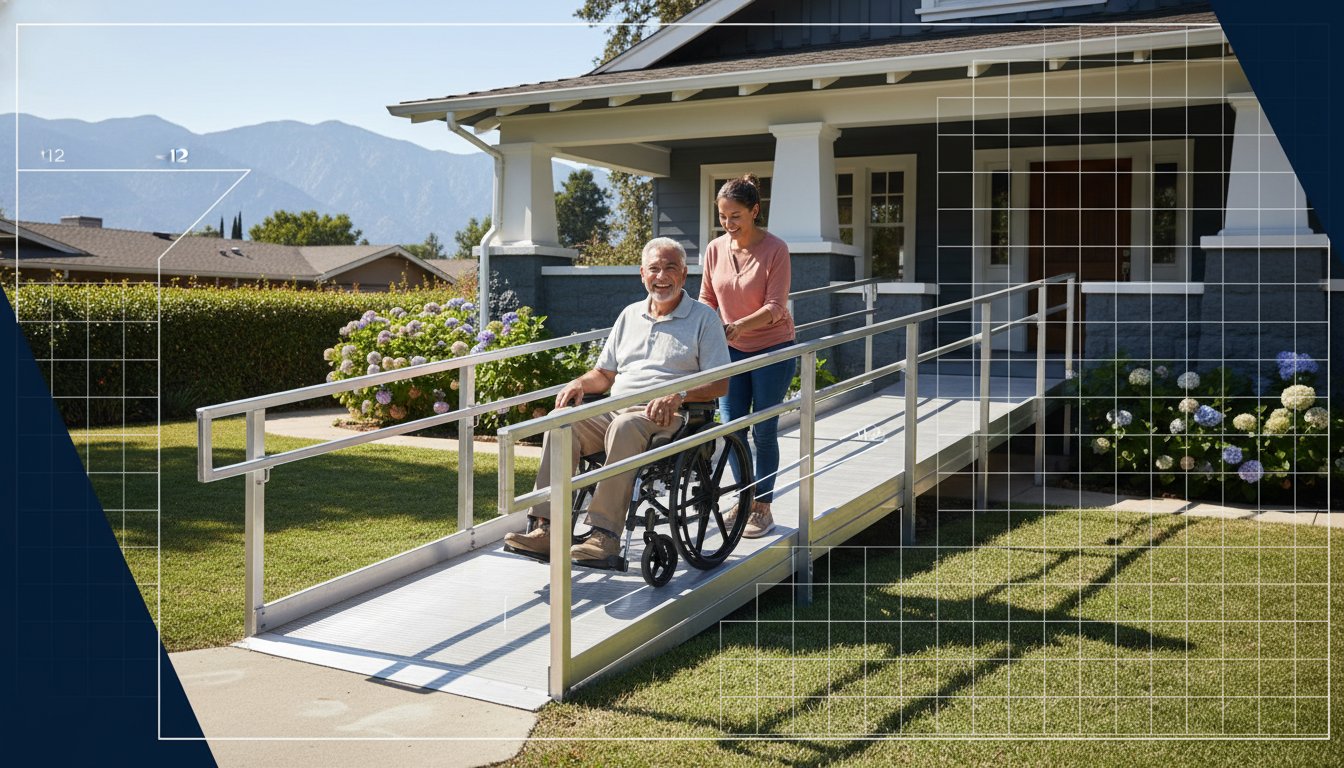
A home access ramp is a structural extension of your independence that must balance clinical safety with residential aesthetics. It's natural to feel concerned about whether a new addition will compromise your home's curb appeal or if a DIY attempt might lead to dangerous slips on a rainy afternoon. You deserve a solution that feels like a natural part of your property rather than a clinical necessity. A professional home access ramp installation ensures that your transition to better mobility is both dignified and structurally sound.
Discover how a professionally installed ramp can transform your daily routine while meeting the rigorous safety standards and local Redlands requirements that keep your family protected. This guide explores the essential ADA slope and width guidelines, the specific permit processes within San Bernardino County, and the high-quality materials that provide lasting stability. You'll learn how to navigate the technicalities of home modification without sacrificing the style or value of your residence. By the end, you'll have a clear path forward to a safer, more accessible home.
Key Takeaways
- Learn why the 1:12 slope ratio is the essential safety standard for ensuring manual and power wheelchairs can navigate inclines without physical strain.
- Compare the longevity and maintenance needs of aluminum, wood, and concrete to choose a material that complements your home's architectural style.
- Understand how a professional home access ramp installation utilizes a "Path of Travel" assessment to create a seamless transition from your driveway to your living space.
- Navigate San Bernardino County permit requirements and learn to distinguish between residential safety codes and commercial ADA standards.
- Discover how to integrate structural ramps with other modifications like doorway widening for a comprehensive and dignified aging-in-place strategy.
The Fundamentals of Home Access Ramp Installation
Professional home access ramp installation is a structural commitment to your long-term autonomy. It's much more than a simple wooden walkway; it's a sophisticated modification that bridges the gap between your driveway and your front door. For those choosing to age in place, this installation serves as a primary defense against the falls that often occur on traditional steps. To understand the broader context of these structures, it's helpful to review The Fundamentals of Home Access Ramps, which outlines how design standards have evolved to support diverse mobility needs. By prioritizing professional expertise over a DIY kit, you ensure that every joint, railing, and surface meets the highest safety benchmarks.
The primary users of these systems range from individuals using canes or walkers to those operating heavy power wheelchairs that can weigh several hundred pounds. Each user has different requirements for stability and traction. A professional installer evaluates these specific needs to determine the best layout for your property. This unhurried, methodical approach eliminates the hidden costs of DIY projects, such as failed inspections or the need for expensive structural corrections later. You aren't just buying a ramp; you're investing in a permanent solution that respects the dignity of your home.
To better understand this concept, watch this helpful video:
Understanding the ADA 1:12 Slope Rule
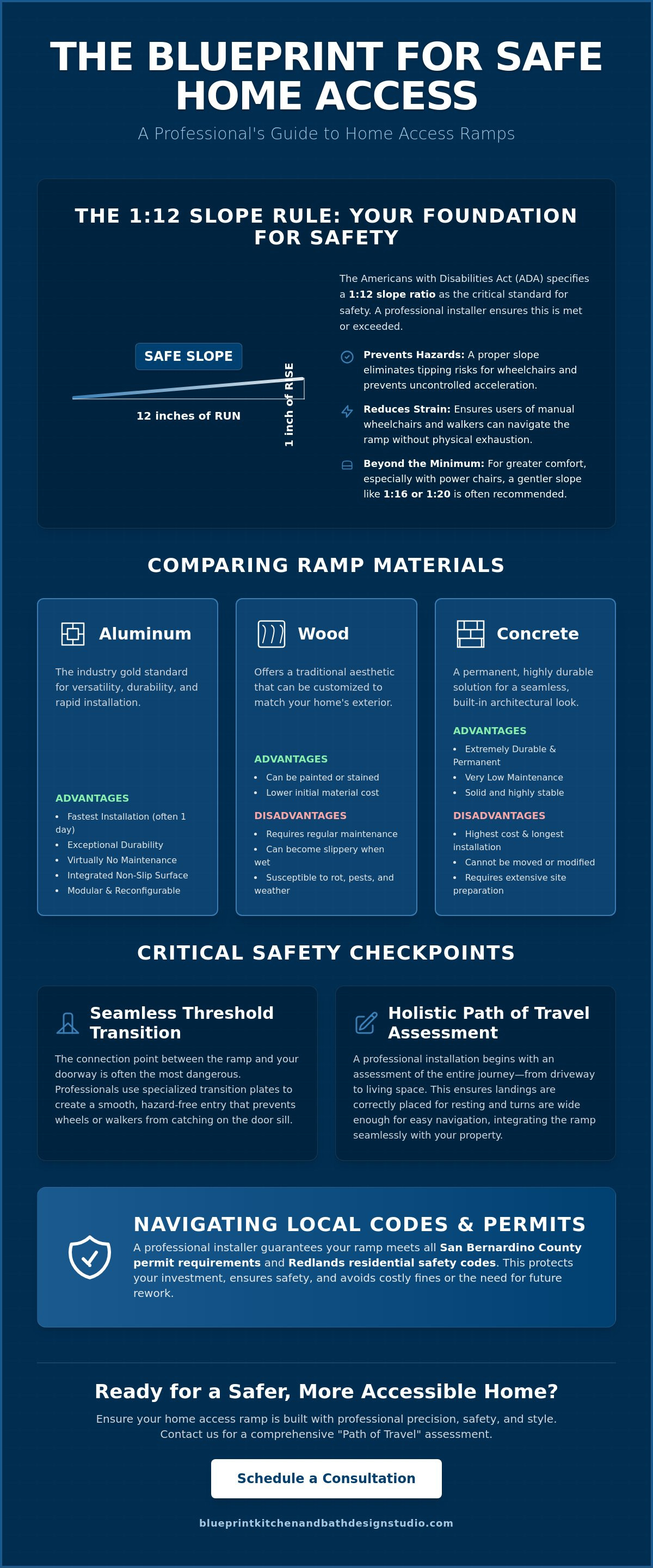
The most critical safety metric in any home access ramp installation is the slope ratio. The Americans with Disabilities Act (ADA) specifies a maximum slope of 1:12, meaning for every inch of vertical rise, the ramp must be at least 12 inches long. This gradient isn't just a suggestion; it's a mathematical necessity for safety. An improper slope creates a significant tipping hazard for wheelchair users and can lead to physical exhaustion for those using manual equipment. In many cases, especially for residents with limited physical strength, a gentler slope is recommended to provide a more comfortable experience. A specialized expert will calculate the exact rise of your entryway to ensure the final structure is both safe and easy to navigate.
The Critical Threshold Transition
The point where the ramp meets the doorway is often the most dangerous part of the entire structure. If there's a gap or a height difference between the ramp surface and the door sill, it creates a major trip hazard. Professional installers use specialized transition plates to bridge this gap, ensuring a seamless entry that doesn't catch the wheels of a walker or the front casters of a wheelchair. To make this entrance truly functional, it's often helpful to consider doorway widening as part of the project. This ensures that once you reach the top of your ramp, you can move into your home without maneuvering through tight, restrictive spaces. These small details transform a medical necessity into a lifestyle upgrade.
Comparing Ramp Materials: Aluminum vs. Wood vs. Concrete
Selecting the right material for your home access ramp installation is a decision that impacts your daily safety and your property's long-term value. While the primary goal is functional mobility, the choice of material must withstand the specific climate of the Inland Empire. Redlands homeowners often face intense UV exposure and seasonal rains, both of which can degrade certain materials faster than others. A well-chosen ramp should integrate seamlessly with your home's existing architecture while providing a stable, non-slip surface under all conditions. This balance ensures that your home remains a place of comfort rather than a series of obstacles.
Aluminum Modular Ramps: The Industry Gold Standard
Modular aluminum ramps have become the preferred choice for professional installers due to their versatility and durability. These systems offer the fastest installation times, often being completed in a single day without the need for extensive site preparation. Aluminum is naturally non-corrosive, making it ideal for the local climate where wood might warp or rot over time. The surface of an aluminum ramp is typically designed with a high-traction texture that remains safe even during morning dew or rain. One of the most significant benefits of a modular system is its adaptability; it can be reconfigured or entirely removed if your needs change, which helps preserve the original curb appeal and market value of your property.
Custom Wood and Concrete Ramps
Custom-built wood ramps are often chosen for their ability to blend with traditional residential aesthetics. However, they come with hidden maintenance requirements that many homeowners overlook. To remain safe, wood requires regular staining to prevent rot and frequent updates to grip-tape or non-slip coatings. Without this care, the surface can become dangerously slick. Concrete ramps offer the ultimate in permanence and stability, but they are significantly more complex to install. They require permanent footings and often involve a more rigorous permitting process in San Bernardino County. Regardless of which material you prefer, every design must strictly adhere to ADA ramp specifications to ensure the slope and width remain safe for all users.
Choosing between these options depends on your specific mobility timeline and aesthetic goals. If you are planning for a permanent lifestyle change, a high-quality home access ramp can be tailored to meet your unique structural requirements while maintaining the beauty of your residence.
The Professional Installation Process in Redlands
Professional home access ramp installation isn't just about bolting metal to the ground. It's a design-led process that begins with a comprehensive Senior Home Safety Specialist (SHSS) certified assessment. This assessment treats your property as a complete ecosystem of movement rather than a series of disconnected obstacles. We don't just look at the entrance; we analyze the entire Path of Travel. This involves mapping the journey from the moment a vehicle door opens in the driveway to the point where the user is safely inside the living area. This holistic perspective ensures that the final structure provides a seamless, stress-free transition that preserves both your energy and your dignity.
Our methodical approach treats every measurement with clinical precision. We account for critical rest platforms and landings, which are essential for those with limited endurance or those using manual wheelchairs. These level areas, typically required at the top, bottom, and at any change in direction, must meet specific ADA ramp accessibility guidelines to ensure safety. By integrating these technical requirements into a cohesive home design, we avoid the "hospital-like" appearance that many families fear. We look for ways to align the ramp with your home's natural lines, creating a solution that is as beautiful as it is functional.
Phase 1: Site Assessment and Layout Design
During the initial phase, we evaluate ground stability and clearance to determine the safest ramp footprint for your specific yard. In many Redlands properties, space constraints might require a switchback design rather than a long, straight run. This configuration uses turns to manage the slope within a smaller area while maintaining a safe 1:12 ratio. We also consult on the aesthetic placement of the structure to minimize the visual impact on your home's facade. Every landing is designed to be at least 60 inches by 60 inches, providing ample room for a wheelchair to turn or for a user to rest comfortably before continuing.
Phase 2: Structural Assembly and Anchoring
The physical installation focuses on long-term stability and ergonomic support. Handrails are installed at a precise height, typically between 34 and 38 inches, to provide reliable leverage for walkers and canes. We use heavy-duty anchoring systems to prevent the ramp from shifting, a crucial factor when supporting the weight of modern power chairs. Every piece of hardware is verified to meet residential safety standards for weight capacity and longevity. Once the structure is secure, we conduct a final walkthrough and provide user training for family members. This ensures that everyone feels confident and safe navigating the new path into the home.
Navigating Permits and Compliance in San Bernardino County
Navigating the administrative side of home access ramp installation in San Bernardino County is a vital step in your accessibility journey. While permit applications might feel like a hurdle, they serve as a protective measure for your family's safety. In Redlands, a building permit is generally required for new structures that exceed 120 square feet. This threshold covers most permanent ramps. Partnering with a specialized expert ensures that your modification meets these local requirements without unnecessary delays. It's about more than just checking a box; it's about ensuring your home remains a safe, compliant sanctuary.
Homeowners often wonder about the distinction between commercial ADA standards and residential building codes. While commercial properties face stricter mandates, applying those same rigorous safety principles to your home is the best way to prevent tipping or falls. Professional documentation of the permit and inspection process also plays a crucial role in your property's future. During a home appraisal, verified, code-compliant modifications are viewed as high-value upgrades rather than liabilities. This protects your financial investment while supporting your physical independence.
Redlands Local Building Requirements
Local zoning ordinances in Redlands dictate specific setbacks, which are the required distances from your property lines. It's essential to map your ramp's footprint to ensure it doesn't interfere with these boundaries or utility access. Modular aluminum systems are frequently preferred because their removable nature can sometimes simplify the permitting process compared to permanent concrete pours. Regardless of the material, a final inspection verifies that the structure is securely anchored and ready for heavy use. This unhurried process ensures every bolt and bracket is positioned for maximum stability.
Safety Beyond the Ramp: Handrails and Landings
True safety involves looking beyond the incline. Level landings are required at the top and bottom of every run, providing a stable area for users to pause and operate doors safely. These landings must be at least 60 inches by 60 inches to allow for a full turning radius. Handrails must be installed at an ergonomic height between 34 and 38 inches with "no-snag" end loops to prevent accidents. In our sunny climate, we prioritize materials with integrated slip-resistant textures that won't warp or become dangerously hot under the Inland Empire sun. Every detail is calculated to provide a steady, reliable experience.
If you're ready to ensure your project meets every local safety standard, you can start your home access ramp installation with a professional team that understands Redlands building codes.
Why Blueprint Kitchen and Bath Design Studio is Your Accessibility Partner
Blueprint Kitchen and Bath Design Studio approaches every home access ramp installation with a specialized blend of clinical precision and high-end design expertise. Being based in Redlands, we understand the local architecture and the specific needs of our community members. We don't view a ramp as a standalone piece of equipment. Instead, we see it as a vital component of a larger mobility ecosystem. Our team bridges the gap between medical necessity and residential comfort, ensuring that your home modification feels like an intentional lifestyle upgrade rather than a clinical addition.
Our holistic methodology ensures that your journey doesn't end at the front door. We evaluate the entire home to identify potential bottlenecks that could hinder your independence. This often involves coordinating your ramp with doorway widening to ensure your mobility device can transition smoothly into every room. By addressing these needs together, we create a cohesive environment that supports your long-term well-being and physical autonomy. This integrated approach saves time and ensures that every modification works in harmony with your daily routine.
Specialized Expertise for Aging in Place
Choosing a Certified Senior Home Safety Specialist (SHSS) makes a profound difference in the success of your project. This certification means we've mastered the nuances of aging-in-place design, from calculating optimal grip diameters to understanding the specific ergonomic needs of older adults. We are committed to maintaining the dignity of every client we serve. This specialized focus allows us to integrate features like grab bar installation and slip-resistant flooring into a comprehensive safety plan. You gain the peace of mind that comes from working with a partner who prioritizes your long-term safety over quick, generic fixes.
Start Your Mobility Transformation Today
Scheduling a professional assessment for your Redlands home is the first step toward reclaiming your independence. During your initial consultation, our design team will listen to your specific concerns and evaluate your property's unique layout. We handle every detail of the home access ramp installation process, from the initial site mapping to the final inspection by San Bernardino County officials. Our unhurried, methodical project management ensures that your modification is completed with the highest level of craftsmanship. We are here to guide you through this transition with the technical expertise and practical empathy you deserve.
Reclaiming Your Independence at Home
A successful home access ramp installation is more than a structural addition; it's a commitment to a life without boundaries. You've learned that precision in the 1:12 slope ratio and seamless threshold transitions are essential for preventing falls and ensuring long-term stability. By choosing durable materials and navigating the specific permit requirements of San Bernardino County, you protect both your physical safety and your home's aesthetic value. These modifications aren't just about accessibility; they're about maintaining the dignity and comfort of your private residence.
As a locally owned specialist in Redlands, CA, Blueprint Kitchen and Bath Design Studio combines SHSS Certified Senior Home Safety Specialist expertise with high-end design studio standards. We specialize in aging-in-place remodeling that treats your home with the respect it deserves. Our team is ready to help you bridge the gap between medical necessity and domestic comfort with unhurried, professional care. You don't have to navigate these transitions alone.
Schedule Your Professional Home Accessibility Assessment Today to begin your journey toward a safer, more dignified lifestyle. You deserve the peace of mind that comes from a home designed for your future.
Frequently Asked Questions
Do I need a permit for a wheelchair ramp in Redlands?
Yes, a building permit is typically required in Redlands for any permanent structure exceeding 120 square feet. This requirement covers most comprehensive home access ramp installation projects. San Bernardino County fee schedules apply based on construction valuation, and plans must be reviewed for zoning and setback compliance. Working with a specialist ensures your project meets these legal standards, which protects you from complications during future property appraisals or inspections.
What is the safest slope for a home access ramp?
The safest and most widely accepted slope for a residential ramp is a 1:12 ratio. This means for every one inch of vertical rise, the ramp should have twelve inches of length. This gradient provides the necessary stability to prevent tipping while reducing the physical effort required for manual wheelchair users. In some cases, we recommend an even gentler slope for individuals with limited upper body strength to ensure maximum ease of use.
How long does it take to install a modular aluminum ramp?
A professional modular aluminum home access ramp installation can often be completed in a single day. Because these systems are pre-engineered and don't require concrete footings to cure, the assembly process is remarkably efficient. Once the site assessment and layout are finalized, the physical installation moves quickly. This minimizes the disruption to your daily routine while providing immediate, safe access to your home without the wait of traditional construction.
Can a ramp be installed over existing concrete stairs?
Yes, modular ramps are frequently designed to be installed directly over existing concrete stairs. This approach utilizes the existing structural footprint and often simplifies the layout process. By bridging over the steps, we create a continuous, safe path of travel without the need for costly demolition. This method is particularly effective for entryways where space is limited but accessibility is a high priority for the homeowner.
Will installing a ramp decrease my home's resale value?
A professionally installed ramp that meets local building codes can actually enhance your home's appeal to a growing demographic of buyers looking for accessible features. High-quality modular systems are especially valuable because they can be reconfigured or removed if a future owner doesn't require them. When the installation is integrated thoughtfully into the home's architecture, it's viewed as a functional lifestyle upgrade rather than a medical necessity.
What is the weight capacity of a professional home access ramp?
Professional-grade aluminum modular ramps typically support a weight capacity of at least 800 pounds. This high threshold is designed to accommodate the combined weight of a heavy power wheelchair and the user with a significant safety margin. During the design phase, we verify that all anchoring hardware and structural supports meet these rigorous standards. This ensures the ramp remains stable and secure under heavy, frequent use over many years.
How do I maintain my ramp during the winter or rainy season?
Maintaining your ramp during the rainy season involves keeping the surface clear of debris and standing water. Aluminum ramps with integrated slip-resistant textures require very little maintenance, as their open-mesh or grooved designs allow water to drain away quickly. For wood ramps, it's important to check that non-slip coatings are intact and that the wood hasn't become slick with moss or algae. Regular inspections ensure the path remains safe year-round.
Can you widen my front door while installing the ramp?
Yes, we frequently perform doorway widening as part of a comprehensive aging-in-place remodeling project. Reaching the top of a ramp is only half the battle if the entrance is too narrow for a wheelchair or walker. We treat these modifications as a single, cohesive solution to ensure you can transition from the driveway into your living area without any physical barriers. This creates a truly accessible and dignified entry experience for every user.
Disclaimer
This article provides general educational information and design inspiration, not project-specific professional advice. Costs, timelines, permit requirements, building codes, and product suitability vary by property and jurisdiction. Final scope, pricing, and specifications are established only through a written proposal or contract. Consult qualified professionals and local building officials before beginning work. Unless expressly identified as a completed Blueprint project, images are illustrative and may include stock photography, design renderings, or AI-generated imagery.


