


Article by
Jake Blasco, B-2 Licensed Contractor
Jake Blasco leads design and project planning at Blueprint Kitchen & Bath Design Studio, specializing in kitchen, bath, and whole home design in Huntington Beach and surrounding Orange County communities. His approach combines thoughtful layouts, quality materials, and practical construction knowledge to create spaces that look beautiful and work for everyday life.
Jake shares guidance on cabinetry, countertops, finishes, lighting, and renovation planning to help homeowners make informed decisions. As the qualifying individual for Blueprint’s California B-2 Residential Remodeling license (CSLB #1161570), he brings a construction perspective to every design.
What if the most important safety feature in your home was also the most beautiful part of your renovation? Many homeowners worry that installing slip resistant flooring for seniors means turning a beloved living space into a sterile hospital ward. You might also worry about how a walker will glide across new surfaces or if safety upgrades will hurt your home's resale value. These concerns are natural, as your home should always feel like a sanctuary rather than a clinical facility.
In this guide, you'll discover how to choose and install the safest, most durable flooring to prevent falls while maintaining the beauty and comfort of your home. We'll show you how modern materials provide high-traction stability without sacrificing style. We will explore the best surfaces for mobility aids, easy-to-clean materials, and design strategies to ensure your new flooring integrates seamlessly with your existing decor.
Key Takeaways
- Understand how the "Fall Prevention Triangle" of lighting, grab bars, and traction works together to create a secure living environment.
- Compare the durability and traction of modern materials like Luxury Vinyl Plank and treated porcelain tile to find the best fit for each room.
- Learn how flush transitions and proper subfloor preparation make slip resistant flooring for seniors easy to navigate with walkers or wheelchairs.
- Discover "Invisible Safety" design strategies that maintain your home’s high-end aesthetic while providing clinical-grade protection.
- Find out why partnering with a SHSS Certified specialist is essential for identifying subtle structural hazards that general contractors often miss.
Why Slip-Resistant Flooring is the Foundation of Aging in Place
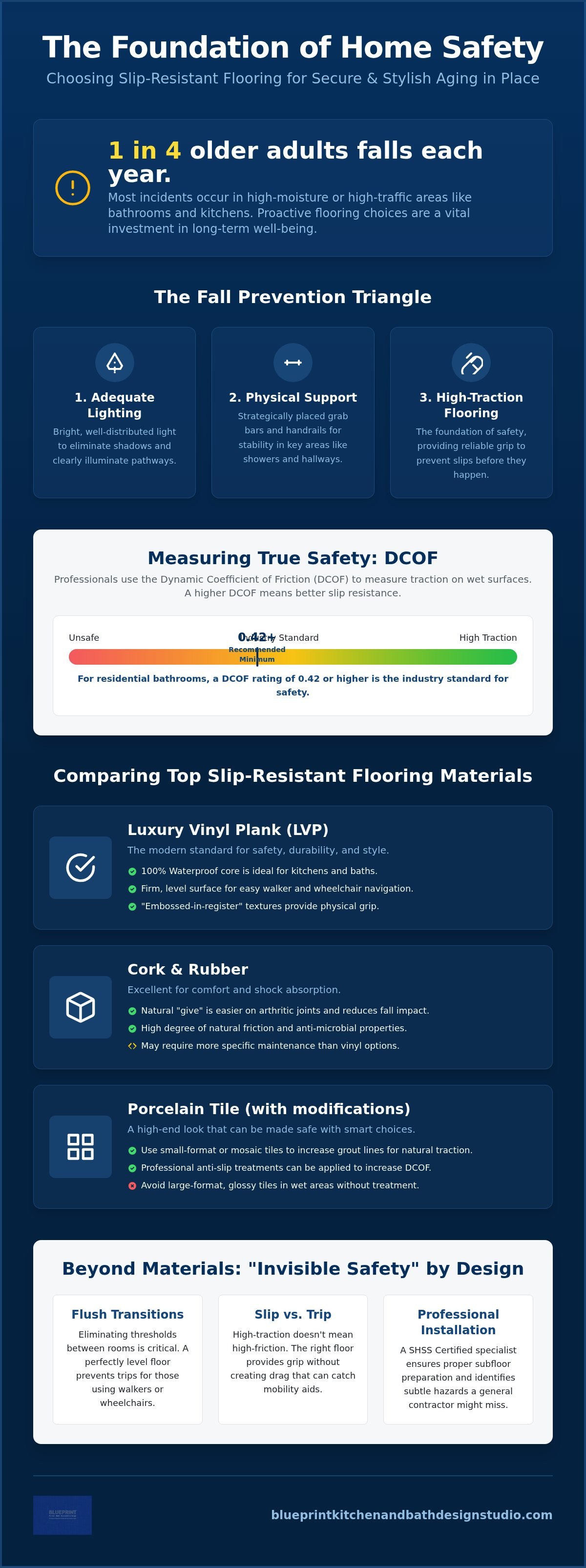
Aging in place starts from the ground up. While many homeowners focus on high-visibility upgrades, the floor you walk on every day dictates your safety and mobility more than any other feature. We view home safety through the "Fall Prevention Triangle," which balances adequate lighting, physical support like grab bars, and high-traction surfaces. Without reliable slip resistant flooring for seniors, even the best lighting and support systems can't fully mitigate the risk of a serious accident. True safety is about traction, stability, and the intentional reduction of friction-loss in every room.
To understand true safety, you must look past how a floor "feels" to the touch. Professionals use the Dynamic Coefficient of Friction (DCOF) to measure traction accurately. This metric determines how much friction is present when a person is already in motion on a wet or dry surface. For residential bathrooms, a DCOF rating of 0.42 or higher is the industry standard for safety. Relying on area rugs, even those labeled "slip-resistant," often introduces new hazards. These rugs create uneven thresholds that catch the toes of shoes or the wheels of walkers, turning a supposed safety feature into a primary trip hazard.
The Statistics of Falls in the Home
According to the CDC, one in four older adults falls each year. This isn't just a statistic; it represents a significant shift in lifestyle and independence. Most of these incidents occur in high-moisture areas like the bathroom or high-traffic zones like the kitchen where spills are common. A single fall can lead to a loss of confidence and physical autonomy, making proactive home modification a vital investment in your long-term well-being. By addressing the floor now, you're protecting your future independence and peace of mind.
Traction vs. Trip Resistance
It's vital to distinguish between a slip and a trip. A slip happens when your foot loses friction and slides out from under you. A trip occurs when your foot or a mobility aid catches on an unexpected obstacle. Interestingly, some high-traction surfaces like thick, plush carpeting actually increase trip risks because they're difficult to maneuver across with a walker or cane. Choosing the right slip resistant flooring for seniors means finding a surface that provides grip without creating drag for mobility aids. Floor levelness is the measure of how flat and consistent a surface remains across an entire room, and it's a critical safety metric for any professional installation. Achieving this levelness ensures that transitions between rooms don't become dangerous barriers.
Comparing the Best Slip-Resistant Flooring Materials for Seniors
Selecting the right material for your home involves more than just picking a color. It requires a technical understanding of how different surfaces respond to moisture, foot traffic, and mobility aids. While many options exist, the goal is to find a surface that provides high traction without creating a "clinical" atmosphere. Choosing the right slip resistant flooring for seniors requires evaluating how different materials respond to moisture and daily wear while maintaining a high-end aesthetic.
Luxury Vinyl Plank (LVP) and Senior Safety
Luxury Vinyl Plank has become the modern standard for safety and durability. Unlike traditional hardwood, LVP is engineered with a waterproof core, making it an ideal choice for bathrooms and kitchens where spills are frequent. For those using walkers or wheelchairs, LVP provides a firm, level surface that allows wheels to glide without the resistance found in thick carpeting. When selecting LVP, look for "embossed-in-register" textures. This manufacturing process creates a realistic wood grain that provides extra physical grip underfoot, ensuring stability even when the floor is slightly damp.
Cushioned Options: Cork and Rubber
If shock absorption is a priority, natural cork and rubber are excellent alternatives. Cork contains millions of tiny air-filled cells that provide a natural "give," which is significantly easier on arthritic joints and reduces the severity of injuries if a fall occurs. It is also naturally anti-microbial and warm to the touch. While industrial rubber flooring is often associated with gyms, modern residential rubber tiles offer a sophisticated look for utility areas or home hobby rooms. These materials offer a high degree of friction and comfort, though they may require more specific maintenance than vinyl options.
Anti-Slip Tile Treatments
Porcelain tile remains a favorite for high-end bathrooms, but its smooth surface can be hazardous. To mitigate this, we recommend small-format tiles. The increased frequency of grout lines in a mosaic pattern naturally provides more traction for the foot. If you prefer larger tiles, professional anti-slip coatings can be applied to increase the DCOF rating without altering the tile's appearance. It is vital to avoid polished stone or high-gloss ceramics in senior living areas, as these surfaces become incredibly slick with even a small amount of condensation. When planning your home safety upgrades, consulting with a design professional ensures you select materials that meet both safety standards and your personal style.
Low-pile carpet is occasionally appropriate for bedrooms where a soft landing is desired. If choosing carpet, the pile height should not exceed one-quarter of an inch to prevent "toe-catch" trips. A firm, high-density pad should be used underneath to ensure the surface remains stable for those using canes or walkers. This combination provides comfort while minimizing the physical effort required to move across the room.
Critical Safety Factors: Transitions, Padding, and Mobility Aids
Transitions represent a significant risk factor in home safety. Even a half-inch threshold between a bedroom and bathroom can catch a toe or stop a walker wheel abruptly. Creating a flush, continuous surface is essential when installing slip resistant flooring for seniors. This approach eliminates trip hazards and provides a predictable path for movement throughout the day, ensuring that every step is supported by a level foundation.
Professional installation begins with the subfloor. Any "soft spots" or unevenness in the foundation can cause planks to shift or tiles to crack over time. High-quality underlayment ensures the surface remains rigid and level, providing a stable foundation that supports your weight and your mobility aids without flexing. This structural integrity is what prevents the subtle shifts that lead to stumbles.
Achieving a Zero-Entry Home
A truly accessible home removes barriers at every doorway. This is most critical when performing a curbless shower installation. By using a single, continuous material from the bedroom into the bathroom and directly into the shower, you improve spatial orientation and eliminate the need to step over a curb. In older Southern California homes, leveling subfloors is often a technical challenge due to foundation settling over decades. We specialize in correcting these deviations to ensure a perfectly flat, zero-entry transition that looks as good as it performs.
For those with low vision, color contrast is a vital safety feature. Using a slightly different shade or a contrasting transition strip at the edge of a step-down or a change in room function helps the eye identify changes in floor levels. This visual cue prevents missteps before they happen, providing a sense of confidence in every room of the house.
Mobility Aid Navigation
Mobility aids like walkers and wheelchairs require a specific type of surface response. High-pile carpet is often the primary enemy of walker users because the wheels sink into the fibers, creating significant "drag" and requiring more physical effort to move. We prioritize surfaces with low rolling resistance. This ensures that wheelchairs glide easily and walkers stay stable. Additionally, slip resistant flooring for seniors must be durable enough to withstand the constant pressure and potential scuffing from metal legs or wheels without losing its aesthetic appeal. Selecting a material with a high wear layer protects your investment while maintaining a safe, easy-to-clean surface for years to come.
Balancing Safety with Style: How to Avoid the Clinical Look
Home modifications are often met with resistance because families fear their living space will lose its personal warmth. We advocate for the "Invisible Safety" concept. This design philosophy ensures that safety features are integrated so seamlessly that they appear as intentional décor choices rather than medical necessities. By choosing high-end slip resistant flooring for seniors, you can protect your loved ones while actually enhancing the visual appeal and market value of your property.
Wood-look Luxury Vinyl Plank (LVP) is a prime example of this balance. It offers the rich textures and organic warmth of traditional hardwood but with the superior traction required for aging in place. Similarly, modern tile patterns use grout as both a design element and a functional safety feature. Increasing the number of grout lines provides more physical grip for shoes and bare feet, especially in wet environments. This approach turns a technical requirement into a sophisticated mosaic detail.
Integration is key to a cohesive look. When you coordinate your flooring with a professional grab bar installation, the entire room feels unified. Modern grab bars are available in finishes like brushed gold or matte black, allowing them to match the hardware of your kitchen or bath and the tones of your new flooring. This creates a space that feels curated rather than clinical.
Design Trends in Accessible Flooring
Current trends prioritize matte finishes over high-gloss surfaces. Matte finishes are more than an aesthetic preference; they reduce glare, which can be disorienting for seniors with dementia or low vision. Natural stone aesthetics are also popular in slip-resistant porcelain, providing a sophisticated look that mimics slate or travertine. We also use border tiles to define pathways. This subtle visual cue helps guide movement through a space without creating the physical trip hazards associated with rugs or bulky transitions.
Maintenance and Longevity
Ease of maintenance is a frequently overlooked safety factor. Floors that require heavy scrubbing or waxing put seniors at risk of overexertion or falls during cleaning. High-quality slip resistant flooring for seniors is designed to be low-maintenance, requiring only simple sweeping or damp mopping. Investing in premium materials ensures the surface won't peel or crack, which can happen with cheaper alternatives. A home designed with universal accessibility in mind often commands a higher resale value, as it appeals to the growing demographic of buyers planning for their own long-term needs. If you're ready to transform your home into a secure and stylish sanctuary, contact our design studio to discuss your project.
Professional Flooring Installation in Redlands: The Blueprint Advantage
General contractors often view a renovation through the lens of standard building codes and general aesthetics. However, true senior home safety remodeling requires a deeper understanding of mobility challenges and environmental hazards. As an SHSS Certified Senior Home Safety specialist, we identify risks that others overlook, such as subtle floor height variances or inadequate lighting that increases fall risks. Our expertise ensures that your slip resistant flooring for seniors is part of a holistic safety strategy rather than a standalone product.
We serve families throughout Redlands, Riverside, and the broader Inland Empire, providing a localized touch that understands the specific architectural styles of our region. Our team coordinates flooring projects with comprehensive bathroom safety upgrades, ensuring that transitions into showers and around fixtures are perfectly level and secure. This integrated approach creates a unified environment where every modification works in harmony to support your independence and dignity.
Our Assessment Process
Every project begins with a detailed evaluation of your home's current state. We don't just look at the surface; we examine subfloor stability and lighting conditions to ensure the new installation will perform as intended. Our assessment considers the specific mobility aids used in the home, such as walkers or wheelchairs, to determine the ideal material density and texture. This data-driven approach allows us to create a custom plan that balances your budget with the clinical necessity of safety and the aesthetic desires of high-end design. We focus on providing a structured solution that addresses your unique functional challenges.
The Installation Journey
We understand that home modifications can be stressful, especially in occupied residences. Our installation team prioritizes minimizing disruption, maintaining a clean and organized workspace throughout the project. We focus on achieving perfect, ADA-compliant transitions in every room, ensuring that your home is free of thresholds and trip hazards. Once the installation is complete, we conduct a final safety walkthrough. This unhurried process involves verifying the traction and stability of every surface, giving you the peace of mind that your new slip resistant flooring for seniors meets the highest standards of professional care. We treat your home as a sanctuary; every detail contributes to a safer, more efficient living space.
Secure Your Independence with Specialized Design
Creating a fall-proof environment is an empowering lifestyle upgrade that preserves your dignity and peace of mind. By prioritizing technical standards like the Dynamic Coefficient of Friction and ensuring flush transitions between rooms, you eliminate the subtle hazards that lead to stumbles. We have shown that safety doesn't require a clinical aesthetic. Instead, it can be a seamless part of a beautiful, modern home renovation that enhances your daily comfort.
Choosing the right slip resistant flooring for seniors is a foundational step in creating a space that supports long-term independence. As SHSS Certified Senior Home Safety Specialists serving the Inland Empire, we combine expert aging-in-place design with professional construction to deliver results that are both safe and sophisticated. Our team understands the delicate balance between functional necessity and high-end design, ensuring your home remains a sanctuary for years to come.
Take the first step toward a safer, more comfortable home today. Schedule Your Home Safety Assessment with Blueprint Today and discover how our specialized expertise can transform your living space into a secure environment tailored to your needs. You deserve a home that provides both absolute stability and timeless beauty.
Frequently Asked Questions
What is the absolute safest flooring for an elderly person?
The safest flooring depends on specific mobility needs, but Luxury Vinyl Plank (LVP) with an embossed texture is often considered the gold standard. It provides high traction and a firm surface for walkers or wheelchairs. Natural cork is another excellent choice because it offers natural shock absorption, which helps reduce the severity of injuries if a fall occurs. Both materials provide the stability required for independent living.
Is carpet or hardwood better for seniors with walkers?
Hardwood or wood-look vinyl is generally better than carpet for those using walkers. High-pile carpets create significant rolling resistance, making it physically exhausting to move the device. They also present a trip hazard if the walker wheels catch on the fibers. A firm, level surface allows for a smooth glide, which is essential for maintaining balance and conserving energy during daily movement around the home.
Can I make my existing tile floors slip-resistant?
You can improve the safety of existing tile floors by applying professional-grade anti-slip coatings. These treatments increase the Dynamic Coefficient of Friction (DCOF) without changing the appearance of your tile. This is a practical solution for homeowners who want to improve safety in high-moisture areas like bathrooms without a full remodel. For maximum safety, we often recommend replacing large, slick tiles with smaller mosaic patterns that offer more grout-line traction.
Does slip-resistant flooring look different from regular flooring?
Modern slip resistant flooring for seniors is designed to be indistinguishable from high-end residential materials. Thanks to advanced manufacturing, you can enjoy the aesthetic of natural oak, slate, or marble while benefiting from hidden safety features like textured wear layers and matte finishes. This "invisible safety" approach ensures your home feels like a sanctuary rather than a clinical facility, maintaining your property’s style and resale value.
How much does it cost to install senior-safe flooring in Redlands?
Installation costs in the Redlands and Riverside area vary based on the square footage, the material selected, and the condition of your existing subfloor. Since every home has unique structural requirements, we provide project-based fees after a thorough assessment. Factors such as doorway widening or subfloor leveling can influence the total investment. We focus on providing a structured, professional solution that balances your specific safety needs with your renovation budget.
What flooring is best for seniors with pets?
Luxury Vinyl Plank is the ideal choice for seniors who share their homes with pets. It offers a high wear layer that resists scratches from claws and is completely waterproof, making it easy to clean up accidental spills or messes. The textured surface provides traction for both the homeowner and their pets, preventing the "skating" effect that often occurs on polished hardwood or slick ceramic tiles.
Is vinyl flooring slippery when wet?
Standard vinyl can be slick, but the slip resistant flooring for seniors we install is specifically engineered to maintain traction even when damp. By selecting products with a high Dynamic Coefficient of Friction (DCOF) rating, you ensure a safer surface in kitchens and bathrooms. Matte finishes also help by reducing glare and providing a more tactile surface underfoot, which is a critical feature for preventing slips in high-risk zones.
Do I need to replace the subfloor for new safety flooring?
You don't always need to replace the subfloor, but it must be perfectly level and structurally sound before installation. During our assessment, we check for soft spots, moisture damage, or unevenness that could create trip hazards. If the subfloor is compromised, we will recommend specific repairs to ensure your new safety flooring remains stable and durable. A solid foundation is the only way to guarantee a truly flush, zero-entry transition between rooms.
Disclaimer
This article provides general educational information and design inspiration, not project-specific professional advice. Costs, timelines, permit requirements, building codes, and product suitability vary by property and jurisdiction. Final scope, pricing, and specifications are established only through a written proposal or contract. Consult qualified professionals and local building officials before beginning work. Unless expressly identified as a completed Blueprint project, images are illustrative and may include stock photography, design renderings, or AI-generated imagery.


