
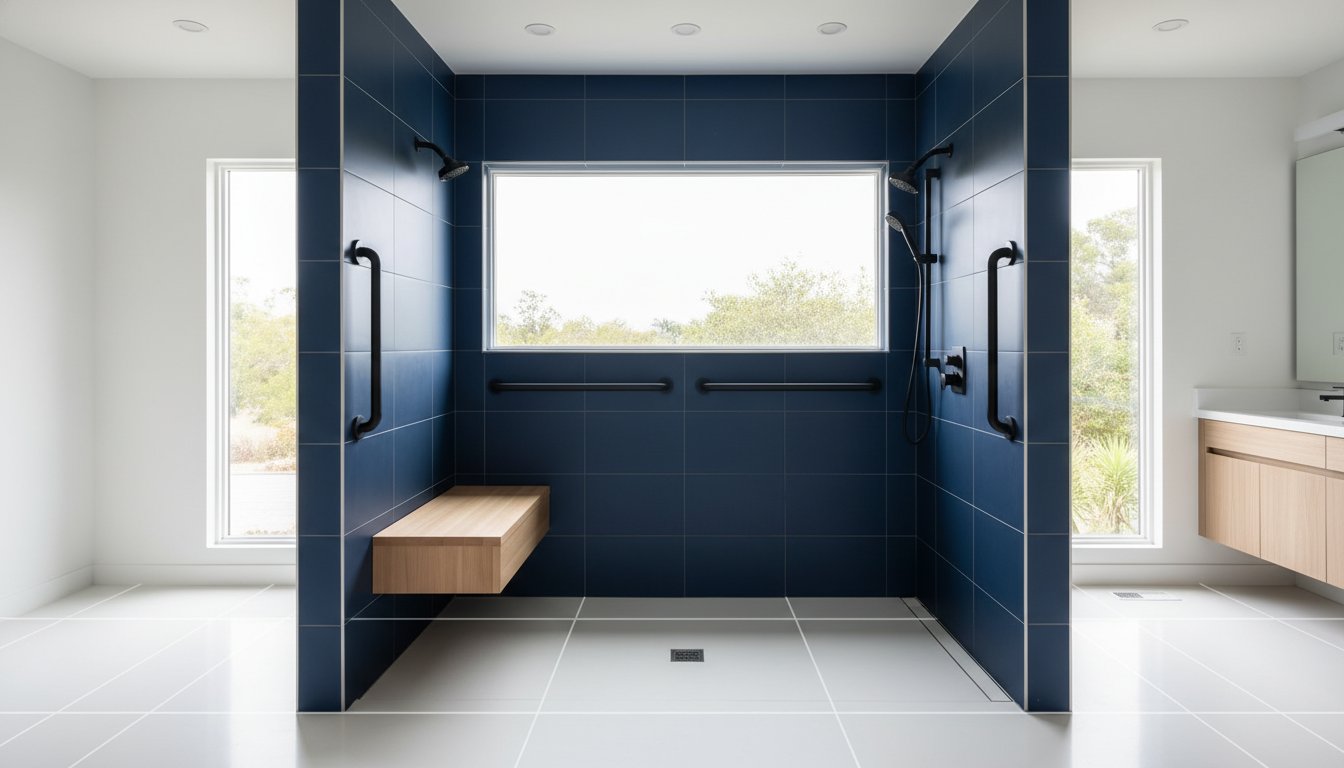

Article by
Jake Blasco, B-2 Licensed Contractor
Jake Blasco leads design and project planning at Blueprint Kitchen & Bath Design Studio, specializing in kitchen, bath, and whole home design in Huntington Beach and surrounding Orange County communities. His approach combines thoughtful layouts, quality materials, and practical construction knowledge to create spaces that look beautiful and work for everyday life.
Jake shares guidance on cabinetry, countertops, finishes, lighting, and renovation planning to help homeowners make informed decisions. As the qualifying individual for Blueprint’s California B-2 Residential Remodeling license (CSLB #1161570), he brings a construction perspective to every design.
A wheelchair accessible shower remodel shouldn't feel like a compromise between clinical safety and domestic style. True accessibility is an invisible engineering feat that prioritizes your physical safety while protecting the psychological comfort of a high-end home. You might worry that installing grab bars or a curbless entry will turn your private sanctuary into a sterile environment that hurts your resale value. It's a valid concern, but modern design has evolved to treat these modifications as empowering lifestyle upgrades rather than medical necessities.
In this guide, you'll learn how to transform a standard bathroom into a safe, stylish sanctuary that preserves your independence. We'll navigate the practical realities of a 2026 wheelchair accessible shower remodel, covering everything from "spa-like" wet room trends to the new ABLE account eligibility rules for those whose disability began before age 46. You will discover how to balance strict ADA measurements and California Title 24 requirements with the aesthetic demands of residential life; this ensures your home remains a place of dignity, stability, and lasting value.
Key Takeaways
- Understand how to move beyond clinical aesthetics by blending universal design principles with high-end finishes.
- Identify the critical measurements for a successful wheelchair accessible shower remodel, including the essential 1:48 floor slope and 36-inch entry clearance.
- Discover the functional differences between curbless, roll-in, and transfer showers to choose the right fit for your specific mobility needs.
- Learn why recessed subfloors and linear drainage systems are the gold standard for creating a truly barrier-free environment.
- Explore how to integrate safety features like LED pathfinding and designer hardware that enhance both dignity and home value.
Transitioning to a Wheelchair Accessible Shower: What to Expect
Transitioning to a wheelchair accessible shower remodel often begins with a fundamental shift in perspective. You aren't just adding safety features; you're adopting accessible housing standards that improve the home for everyone. While accessible design focuses on removing barriers for specific mobility needs, universal design ensures the space remains usable for guests and family members of all ages. Most homeowners are surprised to learn that a standard 30x60 inch bathtub footprint provides the perfect foundation for this change. By removing the high porcelain walls of a tub, you reclaim floor space that allows for a seamless entry. This modification restores the emotional peace of mind that comes with hygiene independence. It allows you to manage your daily routine without external assistance, which is a vital component of maintaining your dignity at home.
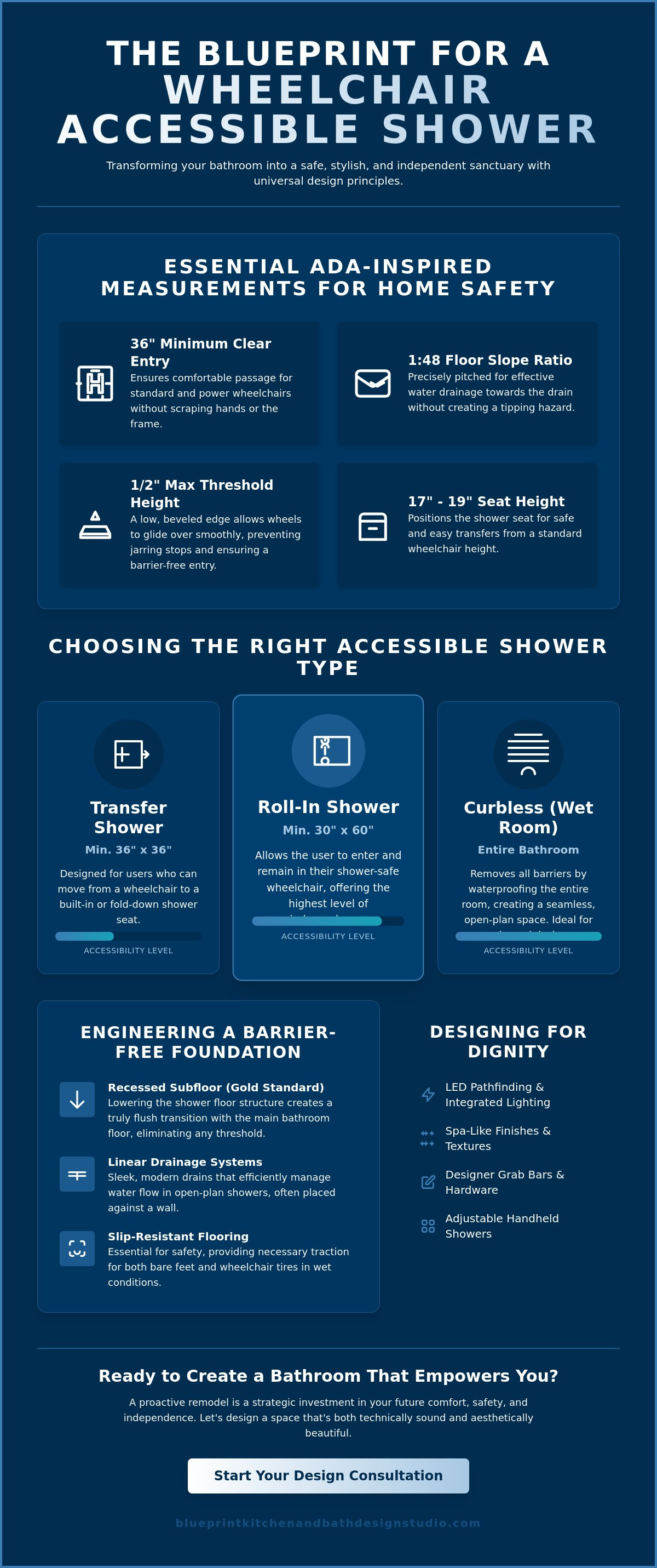
Choosing the right configuration depends on your current and future needs. A transfer shower typically requires a 36x36 inch space where a user moves from a wheelchair onto a fixed seat. In contrast, a full roll-in unit offers a larger 30x60 inch area, allowing the user to remain in their chair during the entire process. Both options prioritize stability and dignity, but the roll-in model offers the highest level of long-term flexibility and ease of use for those with significant mobility challenges.
The Anatomy of an Accessible Shower
A successful remodel balances three core components: the entry point, the interior layout, and the specialized hardware. The entry point often requires doorway widening to accommodate a standard wheelchair width. Many modern designs now utilize the wet room concept, which eliminates shower doors and curbs entirely. This creates a wide, open-plan area where movement is unrestricted and floor levels remain consistent. To ensure safety in these open spaces, the installation of slip-resistant flooring is essential. These materials provide the necessary traction for both rubber tires and bare feet, reducing the risk of accidents in wet environments. The strategic placement of grab bars and adjustable shower heads ensures that every functional element is within reach, providing a sense of organized reliability.
Why Proactive Remodeling Beats Reactive Repairs
Waiting for a mobility crisis to occur often leads to rushed, clinical-looking repairs that can feel like a compromise. Proactive aging-in-place remodeling allows you to integrate these features thoughtfully into a high-end design. When accessibility upgrades are professionally executed, they protect your home's long-term resale value by appealing to the growing demographic of older buyers. Rather than looking like a medical facility, a well-planned bathroom feels like a luxury spa. A wheelchair accessible shower remodel is a strategic investment in your future comfort and physical autonomy. It's wise to consult with a specialist who understands the nuances of these structural changes to ensure the final result is both technically sound and aesthetically pleasing.
Essential ADA Standards for Residential Shower Remodels
While the Americans with Disabilities Act (ADA) primarily governs public spaces, these guidelines serve as the definitive benchmark for a safe wheelchair accessible shower remodel at home. Adhering to these specifications ensures that your bathroom remains functional for years to come. One of the most critical requirements is a 36-inch minimum clear opening. This width provides enough room for a standard wheelchair to enter without scraping the frame or injuring the user's hands. It also accommodates the wider footprint of power chairs, which often require more clearance than manual models.
Effective water management is equally important. According to the ADA Standards for Accessible Design, shower floors should maintain a 1:48 slope ratio. This precise pitch allows water to flow toward the drain without creating a steep incline that might cause a wheelchair to tip or slide. To complement this, thresholds must be kept to a maximum height of 1/2 inch. Beveled edges on these low thresholds allow wheels to glide over the transition smoothly; this prevents the jarring stops that can lead to falls or equipment damage.
Critical Measurements for Safety
Precision in hardware placement can make the difference between a frustrating experience and a seamless one. Shower seats should be installed at a height of 17 to 19 inches from the floor to allow for easy lateral transfers from a wheelchair. Grab bars are most effective when they have a diameter between 1.25 and 1.5 inches, providing a secure grip for various hand sizes. You should also ensure a 1.5-inch clearance between the bar and the wall to prevent hands from slipping through. Finally, a handheld shower head with a hose at least 60 inches long is necessary to give seated users full control over their hygiene routine.
ADA vs. Residential Reality
Strict ADA compliance is a great starting point, but residential projects allow for individual customization. In California, you must also account for Title 24 building codes, which can be even more stringent regarding grab bar placement and seat dimensions. A successful remodel adapts these rules to the specific layout of your home. A 60-inch diameter turning space is required within the bathroom to allow a wheelchair user to perform a full 360-degree turn. If you aren't sure how these measurements fit into your current space, you can consult with experts in aging-in-place remodeling to create a tailored floor plan. This balance of technical standards and personal preference ensures your bathroom remains a private, high-end sanctuary.
Choosing Between Curbless, Roll-in, and Transfer Showers
Selecting the specific configuration for your wheelchair accessible shower remodel requires a balance between your current physical abilities and your long-term health projections. Each design offers a distinct functional benefit. A curbless shower provides a seamless, flush transition from the bathroom floor directly into the showering area. This design removes the physical barrier of a threshold entirely. It's often the preferred choice for homeowners who want a modern, open-concept "wet room" look while ensuring total safety.
Roll-in showers are specifically engineered for users who remain in a specialized shower wheelchair during the entire process. These units require a larger footprint, typically at least 30 by 60 inches, to accommodate the chair's movement and provide enough space for a caregiver to assist. Transfer showers, on the other hand, are optimized for individuals who prefer to move from their wheelchair onto a fixed or folding seat. These are generally smaller, around 36 by 36 inches, keeping all controls and grab bars within arm's reach of the seated user. Deciding between these options depends on whether you anticipate needing full wheelchair access or if a seated transfer will remain the most comfortable routine.
The Pros and Cons of Curbless Entries
The primary benefit of a curbless entry is the total elimination of trip hazards. This creates an expansive, high-end aesthetic that makes smaller bathrooms feel significantly larger. However, the engineering behind this "invisible" safety feature is complex. It requires a recessed subfloor to allow for proper sloping toward the drain without a raised lip. Linear drains are the superior choice for these designs. They sit flush against the wall or at the entrance, allowing the floor to slope in one single direction. This provides a more stable, level surface for wheels compared to traditional center-point drains that require a "four-way" bowl-shaped slope, which can cause a wheelchair to tilt or wobble.
Optimizing for Caregiver Assistance
Designing for dignity also means considering the comfort of those who help you. Many homeowners overlook the physical space required for a caregiver during a wheelchair accessible shower remodel. Designing "splash zones" with partial glass partitions or weighted curtains keeps the assistant dry while they provide help. Wider shower openings are essential for a two-person presence; you don't want a caregiver to feel cramped or restricted in their movement. Strategically placing the shower controls so they're reachable from outside the main water spray allows a caregiver to adjust temperatures safely before the user enters. This thoughtful layout prioritizes the safety and ease of everyone involved in the daily routine.
Engineering the Remodel: Drainage, Flooring, and Plumbing
Engineering a wheelchair accessible shower remodel requires more than a simple floor swap; it involves precise structural modifications to ensure the space is both flush and functional. One of the most significant technical hurdles in a residential setting is the recessed subfloor. In a standard bathroom, the floor joists sit at a uniform height to support a traditional tub or raised shower pan. To achieve a true zero-entry result, these joists must often be lowered or notched by a structural specialist. This allows the new shower pan to sit below the level of the existing bathroom floor, creating the necessary depth for a seamless transition without a raised lip.
Linear drains have become the gold standard for these high-end modifications. Unlike traditional center drains that require the floor to slope from four different angles toward a single point, a linear drain allows for a single, consistent pitch. This one-way slope provides a much more stable surface for wheelchair wheels, preventing the uncomfortable tilting or "high-centering" that occurs with bowl-shaped drainage. To protect the integrity of your home, modern waterproofing systems now extend beyond the traditional rubber pan liner. We utilize integrated bonding flanges and liquid-applied membranes that wrap the entire "wet room" area, ensuring that moisture cannot migrate into the wall cavities or subfloor over time.
Safety also includes the invisible mechanics of the plumbing system. Thermostatic mixing valves are essential, especially for users who may have limited sensation in their extremities. These valves automatically maintain a constant water temperature, even when pressure drops elsewhere in the house. This prevents sudden spikes of hot water that could cause serious burns before the user can react. If you're ready to start your project, our team specializes in curbless shower installation to ensure every technical detail is handled with precision.
Mastering the Curbless Transition
Lowering floor joists is a delicate engineering task that requires a deep understanding of load-bearing requirements. During this process, we install capillary breaks at the shower's entrance. These small but vital components prevent water from wicking through the grout lines into the dry area of the bathroom. A 2% floor slope is the industry standard for drainage because it is steep enough to move water effectively toward the drain without creating an incline that compromises wheelchair stability or causes the user to feel off-balance.
Selecting High-Performance Safety Materials
The choice of flooring material is a critical safety decision. We prioritize tiles with a Coefficient of Friction (COF) rating of 0.60 or higher, which indicates superior slip resistance in wet conditions. Smaller tiles or mosaic patterns are particularly effective in a wheelchair accessible shower remodel because the increased number of grout lines provides natural traction and additional drainage channels. For added comfort, integrating heated floors can assist with thermoregulation, providing a warm, inviting environment that helps maintain body temperature during and after the shower.
Designing for Dignity: Beautiful Accessibility in Redlands
A wheelchair accessible shower remodel should never sacrifice your home's aesthetic for the sake of utility. Many homeowners worry that accessibility means installing cold, chrome bars that remind them of a medical facility. However, modern design allows us to hide these essential features in plain sight. High-end hardware now serves dual purposes; you can install grab bars that function as elegant towel racks or integrated shampoo shelves. These fixtures provide the necessary weight-bearing support while maintaining the look of a luxury spa. By choosing finishes like brushed gold, oil-rubbed bronze, or matte black, we ensure that safety hardware feels like a deliberate design choice rather than a medical necessity.
Lighting plays a vital role in both safety and ambiance. We often integrate recessed LED strips at the floor level to provide clear pathfinding for users. This soft, indirect light illuminates the transition into the shower without creating glare on wet surfaces, which is particularly helpful during nighttime routines. Color contrast is another powerful tool for dignity-focused design. By using a darker tile for the shower floor against a lighter bathroom floor, we create a clear visual boundary. This helps users with visual impairments navigate the space with confidence, as the high-contrast cues clearly distinguish between different functional areas without the need for bulky physical barriers.
Aesthetic Hardware and Fixtures
Creating a barrier-free environment involves more than just the shower itself. Floating vanities are a staple of our accessible designs in Redlands. These units provide the necessary knee clearance for wheelchair users while maintaining a contemporary, airy look that enhances the room's footprint. This design language of openness is popular in modern renovations; many homeowners who appreciate this style also explore Mono-Beam Floating Stairs to bring a similar sense of luxury and space to other parts of the house. We prioritize the use of textured stone and matte finishes for these surfaces. These materials offer natural slip resistance and a sophisticated, organic feel that moves away from the sterile gloss of traditional hospital bathrooms. This approach ensures the bathroom remains a private, high-end sanctuary that protects both your physical autonomy and your home's resale value.
To achieve this level of customized functionality, looking at the work of premier providers like NY Cabinets can provide inspiration for how to integrate accessible storage and vanities into a high-end bathroom layout.
The Blueprint Kitchen and Bath Design Studio Advantage
Redlands architecture often presents unique challenges, from historic bungalow layouts to modern suburban plumbing configurations. Our team understands how to adapt these local structural nuances into a seamless, accessible environment. We bring the expertise of a SHSS Certified Senior Home Safety Specialist to every project, ensuring your wheelchair accessible shower remodel meets the highest standards of stability and longevity. We treat every renovation as a partnership, focusing on the specific movement patterns of your daily routine. If you're ready to transform your bathroom into a safe, high-end sanctuary, contact our Redlands studio today for a professional safety assessment.
Securing Your Future Comfort and Physical Autonomy
A successful wheelchair accessible shower remodel is more than a structural change; it's a commitment to your long-term independence and peace of mind. By integrating precise ADA standards with high-end materials like slip-resistant mosaics and linear drainage, you create a space that is as beautiful as it is functional. You've seen how professional engineering, such as recessed subfloors and thermostatic valves, provides the technical foundation for a truly barrier-free environment. These modifications ensure that your home remains a sanctuary of dignity rather than a medical facility.
As a locally owned and operated business in Redlands, CA, we specialize in curbless shower engineering and comprehensive aging-in-place solutions. Our team includes SHSS Certified Senior Home Safety specialists who understand the delicate balance of safety and style. We're here to help you navigate these transitions with confidence and clarity. Schedule Your Professional Bathroom Safety Assessment in Redlands to begin your journey toward a safer home. You deserve a bathroom that supports your lifestyle today and for many years to come.
Frequently Asked Questions
Does Medicare pay for a wheelchair-accessible shower remodel?
Medicare rarely covers the cost of home modifications because they are classified as home improvements rather than durable medical equipment. You should check with specific Medicare Advantage providers or look into Medicaid HCBS waivers. These alternative programs sometimes offer financial support for essential safety upgrades that allow individuals to remain in their homes. Some taxpayers may also find relief through the 2026 expansion of ABLE account eligibility.
How much space do I really need for a roll-in shower?
You need a minimum interior dimension of 30 inches by 60 inches for a standard roll-in shower. This size allows a wheelchair to enter and maneuver comfortably. For total accessibility, the bathroom layout should also include a 60-inch turning radius outside the shower area. This ensures the user can perform a full 360-degree turn without hitting walls or fixtures during their daily routine.
Can I turn a standard 5-foot bathtub into a wheelchair shower?
Yes, a standard 5-foot tub footprint is the perfect foundation for a wheelchair accessible shower remodel. Since most alcove tubs are 60 inches long, removing the unit provides the exact space required for an ADA-compliant roll-in shower. This conversion eliminates the high tub wall. It removes the most dangerous barrier to hygiene independence for those using mobility aids while maintaining the bathroom's original footprint.
What is the best flooring for a wheelchair-accessible bathroom?
Slip-resistant porcelain or ceramic tile with a Coefficient of Friction (COF) of 0.60 or higher is the most reliable choice. We recommend using smaller mosaic tiles because the increased density of grout lines creates a naturally textured surface. This provides essential traction for both rubber wheels and bare feet. It significantly reduces the risk of hydroplaning or slipping in wet environments where stability is paramount.
How long does a typical accessible shower remodel take?
Most professional accessible shower remodels are completed within two to three weeks. This timeline accounts for the complex engineering required to recess the subfloor and install advanced waterproofing membranes. While surface-level updates are faster, a true zero-entry conversion requires careful structural work and curing times for thin-set and grout. This methodical pace ensures the final installation is stable, leak-proof, and built for longevity.
Do I need a permit for a curbless shower in Redlands?
Yes, the City of Redlands requires permits for any bathroom remodel that involves structural changes or plumbing reconfigurations. Projects must adhere to California Title 24 standards, which are often stricter than federal guidelines. Working with a local specialist ensures that your curbless entry and drainage systems meet all municipal safety codes. This protects your home's legal standing and ensures the project passes all required inspections.
Are grab bars required by law in a residential remodel?
Grab bars are not legally required in private homes, but they are the most effective way to prevent falls. While you aren't bound by the same laws as commercial facilities, following ADA placement standards is the best way to ensure safety. Installing these features during a wheelchair accessible shower remodel also adds significant appeal to future buyers. It positions your property as a high-value, aging-in-place ready home.
Disclaimer
This article provides general educational information and design inspiration, not project-specific professional advice. Costs, timelines, permit requirements, building codes, and product suitability vary by property and jurisdiction. Final scope, pricing, and specifications are established only through a written proposal or contract. Consult qualified professionals and local building officials before beginning work. Unless expressly identified as a completed Blueprint project, images are illustrative and may include stock photography, design renderings, or AI-generated imagery.


