
Article by
Jake Blasco, B-2 Licensed Contractor
Jake Blasco leads design and project planning at Blueprint Kitchen & Bath Design Studio, specializing in kitchen, bath, and whole home design in Huntington Beach and surrounding Orange County communities. His approach combines thoughtful layouts, quality materials, and practical construction knowledge to create spaces that look beautiful and work for everyday life.
Jake shares guidance on cabinetry, countertops, finishes, lighting, and renovation planning to help homeowners make informed decisions. As the qualifying individual for Blueprint’s California B-2 Residential Remodeling license (CSLB #1161570), he brings a construction perspective to every design.
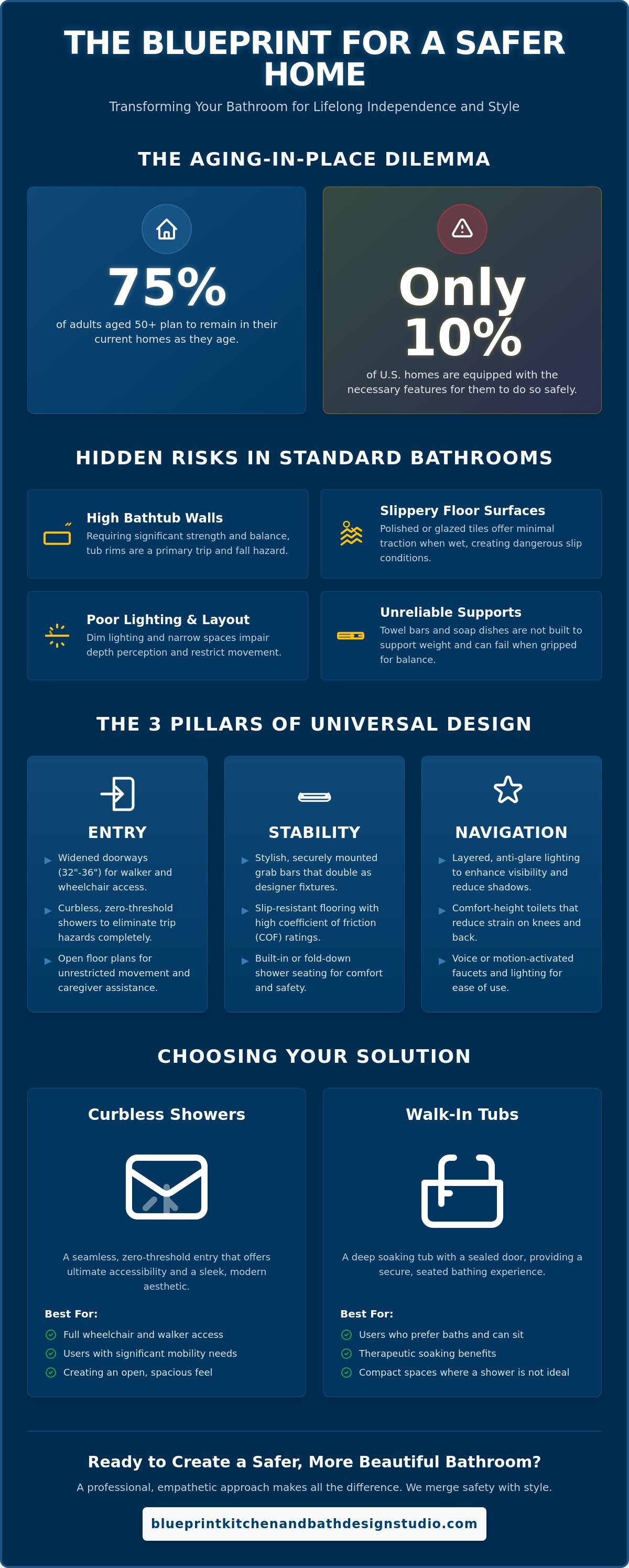
While 75% of adults aged 50 and older plan to stay in their current homes as they age, research from 2026 shows that only 10% of U.S. houses are actually equipped to support them safely. You shouldn't have to compromise your home's beauty to ensure your physical security, yet the fear of a fall or the loss of dignity in an inaccessible space is a heavy burden to carry. A professional mobility-friendly bathroom renovation solves this dilemma by merging rigorous safety standards with high-end interior design, proving that accessibility can be a sophisticated lifestyle upgrade rather than a clinical necessity.
In this guide, you'll discover how to transform your bathroom into a stylish, functional sanctuary that supports independent living for years to come. We'll walk through the essential modifications for 2026, including curbless showers and slip-resistant flooring, to help you make informed decisions that protect both your autonomy and your home's resale value. By the end of this article, you'll have a clear roadmap for creating a space that offers total peace of mind without sacrificing the modern aesthetic you love.
Key Takeaways
- Understand how universal design replaces hazardous standard layouts with safe, intuitive environments that support your independence and dignity.
- Discover how a mobility-friendly bathroom renovation prioritizes the three pillars of Entry, Stability, and Navigation using high-end hardware that avoids a clinical appearance.
- Compare the functional benefits and space requirements of curbless showers and walk-in tubs to determine which solution best fits your daily routine and home layout.
- Learn the importance of local expertise and the step-by-step process required to move from an initial safety assessment to a successful, professional home modification.
- Identify why a certified Senior Home Safety Specialist (SHSS) offers a higher level of technical precision and empathy than a general contractor for aging-in-place projects.
The Hidden Risks of Traditional Bathroom Design
A mobility-friendly bathroom renovation is often misunderstood as a purely medical necessity. In reality, it represents a commitment to universal design, creating a space that is intuitive and safe for every user, regardless of their physical ability. Standard bathroom layouts are typically designed for the able-bodied, prioritizing compact footprints over the fluid movement required for those with balance or mobility challenges. This architectural mismatch often goes unnoticed until a person's physical needs change, turning a once-private sanctuary into a source of daily anxiety.
The "Invisible Danger" in traditional design isn't just about slippery floors. It's found in the high walls of a standard bathtub that require significant core strength to step over. It's tucked into narrow toilet alcoves that prevent a caregiver from assisting or a wheelchair from turning. As we move through 2026, the industry is shifting away from reactive, emergency-based repairs. Homeowners are now embracing proactive modifications that blend safety with high-end aesthetics, ensuring their homes remain functional for a lifetime.
To better understand how these design principles translate into a beautiful, functional space, watch this helpful video showing a successful transformation:
Why Standard Bathrooms Become Hazards
Most standard bathrooms contain what professionals call "trip-and-grip" points. In tight layouts, people naturally reach for towel bars or soap dishes to steady themselves. These fixtures aren't designed to support human weight, and their failure often leads to more severe injuries. Traditional flooring choices, like polished marble or large-format glazed tiles, offer very little traction when wet. Additionally, poor lighting in older homes often creates deep shadows. This diminishes depth perception, making it difficult for seniors to judge the height of a tub rim or the distance to a vanity edge. Implementing accessible bathroom design principles helps eliminate these structural failures by providing stable, predictable environments.
The Benefits of Proactive Home Modification
Choosing a mobility-friendly bathroom renovation before a crisis occurs allows for a more thoughtful, design-forward result. Proactive modifications protect a resident's dignity by allowing them to perform daily routines without constant assistance. Beyond the emotional benefits, these changes are a sound financial strategy. Preventing a single fall can save a family from the staggering costs of long-term rehabilitation or assisted living facilities. Modern universal design features, such as curbless showers and stylish grab bars, are also in high demand. These upgrades increase the home's appeal to a wider range of buyers, ensuring that safety and resale value grow together.
Core Features of a Mobility-Friendly Bathroom Renovation
A successful mobility-friendly bathroom renovation relies on three core pillars: Entry, Stability, and Navigation. While many homeowners assume that adding a few safety rails is sufficient, true accessibility requires a holistic look at how a person moves through the space. In 2026, we've seen a significant shift toward "invisible" safety features. This means using hardware that looks like high-end designer fixtures rather than hospital equipment. Integrating smart technology, such as voice-activated faucets or motion-sensing lighting, further enhances independence by reducing the need for fine motor skills or physical reach.
To ensure your home meets these modern standards, reviewing a home fall prevention checklist is an excellent starting point for identifying structural gaps in your current layout.
Entry and Floor Plan Modifications
Navigation begins at the door. Standard 24-inch or 28-inch bathroom doors are often too narrow for walkers or wheelchairs. Widening these openings to a 32-inch or 36-inch standard ensures easy passage and reduces the risk of scuffing walls or catching fingers. Beyond width, we must address thresholds. Removing the "lip" between the hallway and bathroom floor creates a seamless transition that prevents trips. Within the room, creating a 60-inch turning radius, which is a five-foot circle, is the gold standard for wheelchair maneuverability. This often involves relocating vanities or opting for wall-hung sinks to clear floor space, allowing for a fluid and unhindered movement throughout the room.
Stability Hardware: Beyond the Basic Grab Bar
Stability is about more than just having something to hold; it's about having support exactly where you need it. Professional-grade grab bar placement goes beyond basic ADA guidelines to account for a user's specific height and reach. During the renovation phase, we install structural blocking, which is solid wood reinforcement behind the drywall. This ensures that every bar is anchored securely enough to support significant weight. Flooring also plays a critical role in overall stability. We select materials with a high Dynamic Coefficient of Friction (DCOF), ensuring the surface remains slip-resistant even when wet. Strategic planning is the hallmark of a high-quality mobility-friendly bathroom renovation. If you're planning these upgrades, collaborating with a designer who specializes in aging-in-place remodeling can help you balance these technical requirements with your personal style.
Curbless Showers vs. Walk-In Tubs: Choosing the Right Solution
Choosing between a curbless shower and a walk-in tub is often the most pivotal decision in a mobility-friendly bathroom renovation. This choice dictates the structural layout of the room and directly impacts the user's daily independence. While both options offer significant safety upgrades over traditional fixtures, they cater to different physical needs and lifestyle preferences. A thoughtful analysis of your current mobility, combined with a realistic look at future requirements, ensures the final result remains functional for years to come.
For homeowners seeking the most rigorous safety benchmarks, the U.S. Access Board's ADA standards for bathing rooms provides a detailed framework for clearance and hardware positioning. These guidelines are particularly helpful when deciding how to maximize space in Redlands homes, where bathroom footprints can vary significantly between historic properties and modern builds.
The Case for Curbless Showers
Curbless showers, often called roll-in showers, are the gold standard for future-proofing a home. By eliminating the "step-over" hazard entirely, they create a seamless transition from the bathroom floor into the bathing area. This design is essential for wheelchair users, but it also benefits anyone with balance issues or joint pain. Beyond safety, curbless showers offer a modern, high-end aesthetic that makes a bathroom feel larger and more open. Customization options are nearly limitless; you can include built-in tiled benches, recessed storage niches, and adjustable handheld showerheads. These features allow for a tailored experience that adapts to the user's changing needs without looking institutional.
When to Choose a Walk-In Tub
A walk-in tub is a specialized solution for those who prioritize the therapeutic benefits of soaking. For individuals dealing with chronic pain, arthritis, or circulation issues, the hydrotherapy jets in a walk-in tub provide relief that a shower cannot match. However, there are practical considerations that general contractors often overlook. Because the door must be sealed before the tub fills, the user must sit inside the tub during the entire filling and draining process. This requires a bathroom with a high-capacity water heater to ensure the water stays warm and a fast-acting drainage system to minimize wait times. If these technical requirements are met, a walk-in tub can be a transformative addition to a mobility-friendly bathroom renovation, offering a spa-like experience that supports physical health.
The right choice ultimately depends on a simple framework. If the user requires a roll-in entry or prefers a quick, efficient routine, the curbless shower is the superior option. If the user has a strong preference for soaking and can manage the sitting-wait time, a walk-in tub provides unmatched comfort. Regardless of the choice, the goal is to create a space that feels like a sanctuary rather than a medical facility.
Planning Your Accessibility Project in Redlands
A successful mobility-friendly bathroom renovation requires a methodical approach that balances immediate safety with long-term lifestyle goals. Planning isn't simply about selecting hardware; it's about understanding the specific flow of your daily life and the structural realities of your home. A professional project moves through a transparent, logical sequence. It begins with a comprehensive assessment of your physical needs, moves into a design phase that respects your home’s architecture, and concludes with a final walkthrough to ensure every modification functions exactly as intended. This structured process provides the calm authority needed to handle complex renovations with precision.
Budgeting for these projects involves prioritizing modifications that offer the most significant safety impact. For many homeowners, this means addressing floor stability and entry points first. If you're working with a limited scope, starting with Grab Bar Installation and Slip-Resistant Flooring provides immediate peace of mind while you plan for more extensive structural changes. During this planning phase, a Senior Home Safety Specialist (SHSS) acts as a pragmatic expert. They identify specific hazards that a general contractor might overlook, ensuring your investment focuses on actual functional improvements rather than just cosmetic updates.
Assessing Your Specific Mobility Needs
The first step in planning is conducting a "day-in-the-life" walkthrough. Pay close attention to the moments where you feel most vulnerable, such as stepping over a tub rim or reaching for a vanity light. Many families find it helpful to consult with occupational therapists during this stage. These specialists can help differentiate between immediate safety requirements and the modifications needed for long-term aging-in-place goals. This clarity prevents the anxiety of choosing the wrong solutions and ensures the renovation supports your physical autonomy for years to come.
Local Considerations for Redlands Homeowners
Redlands possesses a diverse housing stock, ranging from historic Victorian properties to modern Inland Empire builds. Adapting accessibility designs to historic architecture requires a sensitive, specialized touch. You must ensure that structural changes, such as Doorway Widening, maintain the integrity of the home while meeting modern safety standards. Navigating city permits in Redlands is also a critical part of the planning process. Structural modifications often require specific approvals to ensure they meet local building codes. Working with a professional who understands these regional requirements ensures your project stays on schedule and avoids the complications of non-compliant installations.
If you're ready to begin your home transformation, the first step is a professional evaluation of your space. To get started on your project, contact our team for expert aging-in-place remodeling services tailored to your specific needs.
Why Professional SHSS Certification Matters for Your Remodel
A mobility-friendly bathroom renovation is a high-stakes project that requires more than general construction knowledge. It demands a specialized understanding of human movement and the specific challenges associated with aging or limited physical range. This is where the Senior Home Safety & Grab Bar Specialist (SHSS) designation becomes essential. The SHSS is a nationally recognized credential that provides professionals with a rigorous 240-point home safety assessment protocol. Unlike a general contractor who may treat accessibility as a secondary service, Blueprint Kitchen and Bath Design Studio operates as a pragmatic expert. We focus on the clinical precision of safety while respecting the aesthetic goals of your home renovation.
The Precision of Certified Installation
Many homeowners believe that any handyman can install safety features using simple wall anchors. However, the science of secure grab bar anchoring involves much more than basic stud-finding. It requires a deep understanding of wall composition and the physics of weight-bearing loads to ensure a bar never fails during a moment of crisis. Certified professionals ensure that every installation meets or exceeds ADA standards, even in private residential settings. This level of reliability is a necessity for long-term peace of mind. An uncertified installation carries significant liability; if a bar pulls away from the wall during a fall, the resulting injury can be far more severe than the fall itself.
Blueprint Kitchen and Bath Design Studio’s Approach
At Blueprint Kitchen and Bath Design Studio, we're committed to "Design-Led Safety." We believe that a safe bathroom should still be a beautiful one. Our team blends specialized safety hardware with high-end cabinetry and custom tile work to create a seamless look. Our local Redlands process is methodical and transparent, moving from a detailed initial assessment to a functional, stunning result. We treat your mobility-friendly bathroom renovation as an empowering lifestyle upgrade, ensuring every feature supports your dignity and autonomy.
Before you hire a contractor for your accessibility project, use this final checklist to ensure they have the necessary expertise:
- Do they hold a specialized SHSS or Aging-in-Place certification?
- Can they explain the specific weight-bearing capacity of their hardware installations?
- Do they offer integrated solutions like Curbless Shower Installation and Doorway Widening?
- Do they have experience adapting accessibility designs to the unique historic architecture found in Redlands?
Protecting your independence starts with professional, specialized guidance. To ensure your home is ready to support you for years to come, schedule your professional bathroom safety assessment with Blueprint Kitchen and Bath Design Studio today.
Invest in Your Future Independence
Investing in your home is an investment in your long-term physical autonomy. We've explored how a mobility-friendly bathroom renovation transforms a space from a collection of hazards into a supportive sanctuary. By choosing modifications like curbless entries and precision-placed stability hardware, you ensure your home evolves with your needs. This proactive approach preserves your dignity and allows for a lifestyle defined by independence rather than limitation.
As a division of A&M Rehab Services, Blueprint Kitchen and Bath Design Studio brings a unique clinical perspective to every project. Our SHSS Certified specialists combine medical-grade safety standards with the aesthetic requirements of high-end Redlands homes. Whether you reside in a historic Victorian or a modern residence, we provide the specialized expertise required for a seamless transition. Don't wait for a fall to dictate your living situation. Schedule Your Professional Bathroom Safety Assessment with Blueprint Kitchen and Bath Design Studio today. You deserve a home that empowers you to age in place with confidence.
Frequently Asked Questions
How much does a mobility-friendly bathroom renovation cost in Redlands?
Costs for these projects vary based on the specific scope of the modifications and the materials you select. Factors like structural changes to the floor joists or the relocation of existing plumbing lines will influence the total investment. Homeowners should consult with a specialized contractor for a detailed assessment of their home layout to determine the necessary requirements for their unique accessibility goals.
Can a mobility-friendly bathroom still look modern and high-end?
Yes, modern accessibility features are designed to blend seamlessly with high-end interior design. Manufacturers now offer hardware like grab bars in sophisticated finishes such as brushed gold or matte black that double as designer towel racks. A mobility-friendly bathroom renovation utilizes luxury materials like natural stone and custom cabinetry—similar to the high-quality finishes achieved by Cabinet refinishing Denver—to ensure the space feels like a spa rather than a clinical environment.
What is the difference between an ADA-compliant and an accessible bathroom?
ADA-compliant refers to specific legal standards designed for public facilities, while an accessible bathroom is tailored to an individual's unique physical needs within a private residence. In your home, you have the flexibility to adjust the height of vanities or the placement of stability hardware based on your specific reach. This customization ensures the space is functional for your daily routine rather than meeting a generic standard.
Do I need a permit for widening a bathroom doorway in Redlands?
Structural changes like doorway widening typically require a permit from the City of Redlands Building and Safety Division. Because this modification often involves cutting into load-bearing walls to create a wider opening, a permit ensures the work meets current safety and building codes. Working with a professional who understands local Inland Empire regulations helps streamline this process and ensures your home remains structurally sound.
How long does a typical accessibility remodel take to complete?
A typical mobility-friendly bathroom renovation can take anywhere from two to six weeks depending on the complexity of the structural changes. Smaller upgrades like grab bar installation might be completed in a few hours; however, full conversions like a curbless shower require more time for waterproofing and curing. A steady, methodical pace is necessary to ensure every safety feature is installed with the required precision.
Does a curbless shower cause water to leak into the rest of the bathroom?
Properly installed curbless showers do not leak because they utilize a precise floor pitch and advanced drainage systems. The floor is sloped accurately toward the drain to ensure water remains within the designated wet area. Professional waterproofing and the use of linear drains provide a reliable solution that maintains a dry, safe environment for the rest of the room while eliminating the trip hazard of a shower curb.
Can I install grab bars on existing tile or fiberglass walls?
Grab bars can be installed on existing surfaces, but they must be anchored into solid structural blocking behind the wall. Simply attaching a bar to a fiberglass insert or thin tile is dangerous; it will not support human weight during a fall. Specialized mounting hardware and structural reinforcement are essential to ensure the installation is stable, providing the reliable support you need for daily movement and safety.
What is the best flooring for a senior-friendly bathroom?
The best flooring is a material with a high Dynamic Coefficient of Friction (DCOF) to provide maximum slip resistance. Small-format tiles with more grout lines offer better traction underfoot, especially when the surface is wet. Textured luxury vinyl or slip-resistant porcelain are excellent choices that provide essential stability while maintaining a sophisticated, domestic aesthetic that complements the rest of your home design.
Disclaimer
This article provides general educational information and design inspiration, not project-specific professional advice. Costs, timelines, permit requirements, building codes, and product suitability vary by property and jurisdiction. Final scope, pricing, and specifications are established only through a written proposal or contract. Consult qualified professionals and local building officials before beginning work. Unless expressly identified as a completed Blueprint project, images are illustrative and may include stock photography, design renderings, or AI-generated imagery.


