
Article by
Jake Blasco, B-2 Licensed Contractor
Jake Blasco leads design and project planning at Blueprint Kitchen & Bath Design Studio, specializing in kitchen, bath, and whole home design in Huntington Beach and surrounding Orange County communities. His approach combines thoughtful layouts, quality materials, and practical construction knowledge to create spaces that look beautiful and work for everyday life.
Jake shares guidance on cabinetry, countertops, finishes, lighting, and renovation planning to help homeowners make informed decisions. As the qualifying individual for Blueprint’s California B-2 Residential Remodeling license (CSLB #1161570), he brings a construction perspective to every design.
What if the most significant hazard in your kitchen isn't a hot stove, but the deep, low cabinet that requires you to bend and strain every time you need a heavy pot? For many homeowners, the simple act of preparing a meal becomes a source of physical discomfort when items are tucked away in unreachable corners or at the back of dark pantries. Integrating professional accessible kitchen storage solutions is not just a matter of convenience; it is a vital step toward ensuring your home remains a safe and supportive environment as your needs change.
It is common to feel that a kitchen must be either stylish or functional, but we believe you deserve both. You can maintain your independence and dignity through thoughtful modifications that bring the storage to you, rather than forcing you to reach for it. This guide explores how precision-engineered hardware, such as pull-down shelving and drawer-style appliances, works alongside universal design standards to reduce physical strain. We will look at how specific clearances and smart hardware choices can transform your kitchen into a beautiful, modern space that happens to be exceptionally safe.
Key Takeaways
- Learn how the "reach range" principle and middle-zone storage can eliminate the need for dangerous bending or overhead stretching.
- Discover how professional accessible kitchen storage solutions, such as pull-down shelving and heavy-duty glides, bring items directly to the user for effortless access.
- Explore the functional advantages of pull-out pantries and integrated LED lighting to ensure every item remains visible and within reach.
- Understand why a professional home safety assessment is a critical first step for ensuring your kitchen remodel meets both personal needs and local building codes.
- See how specialized safety certifications and high-end design principles work together to create a kitchen that is both a luxury space and a secure environment.
Rethinking Kitchen Accessibility: Beyond Basic Organization
True kitchen accessibility is often misunderstood as a simple matter of decluttering or adding plastic bins to a pantry. While organization is helpful, it doesn't address the underlying structural challenges that make a kitchen difficult or dangerous to use. Professional accessible kitchen storage solutions focus on fundamental design changes that bring the environment to the user. This approach relies on Universal Design Principles, which ensure that a space remains functional for everyone, regardless of their age, height, or physical mobility.
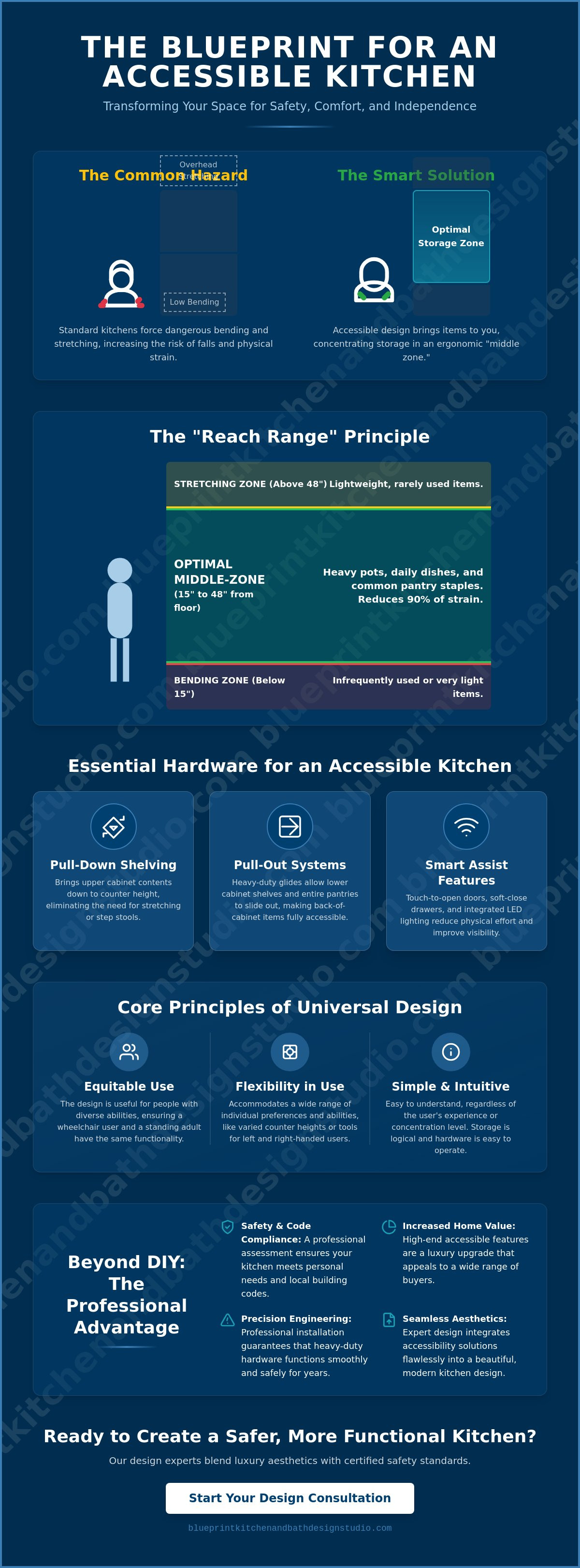
The most critical concept in this transition is the "reach range." In a standard kitchen, many essential items are stored in deep base cabinets or high upper shelves, forcing users to bend low or stretch precariously. Effective accessibility design prioritizes middle-zone storage, which is the area between 15 and 48 inches from the floor. By concentrating heavy pots, frequently used dishes, and pantry staples within this zone, we significantly reduce the risk of falls and physical strain. This structural shift transforms the kitchen from a series of obstacles into a supportive tool for daily living.
To see how these structural modifications look in a real-world setting, watch this demonstration of kitchen cabinet accessibility:
The Core Principles of Universal Design
Universal design is built on the idea of equitable use, meaning the kitchen should be just as functional for a person using a wheelchair as it is for a standing adult. Flexibility is also paramount; a well-designed kitchen accommodates both right and left-handed users and provides varied work surface heights. Finally, the design must be simple and intuitive. When storage is logically placed and easy to operate, it reduces the cognitive and physical load required to prepare a meal, making the process safer and more enjoyable for everyone in the household.
Why Accessibility is a High-End Lifestyle Upgrade
Modern accessible kitchen storage solutions have moved far away from the clinical, "medical" look of the past. Today, these modifications are seen as luxury upgrades that emphasize seamless integration and sophisticated hardware. In the Redlands real estate market, a kitchen that features high-end pull-out systems and ergonomic layouts can actually increase home value by appealing to a wide demographic of buyers. Beyond the financial benefits, there is a profound psychological advantage to these upgrades. Maintaining the ability to cook and navigate your own home independently fosters a sense of dignity and peace of mind that no simple organization project can provide.
Essential Hardware for Accessible Kitchen Cabinets
Static shelving remains the primary obstacle to safety in the kitchen. When items are stored on fixed shelves, users are forced to reach into dark corners or kneel on hard floors to find what they need. Professional accessible kitchen storage solutions replace these passive surfaces with active, integrated hardware that moves with the user. Heavy-duty glides are essential here; they support the weight of cast-iron pans and heavy stacks of plates, allowing the entire shelf to slide forward with minimal physical effort. This precision engineering ensures that even the heaviest items are easily reachable.
For individuals managing arthritis or limited hand strength, the physical impact of opening and closing heavy doors can be taxing. Soft-close technology is a critical addition that dampens the closing motion, preventing jars from rattling and reducing jarring vibrations. This creates a much calmer, quieter environment that reduces sensory overload during meal preparation. Touch-to-open features take this a step further by allowing cabinets to pop open with a simple nudge from a hip or elbow. This completely bypasses the need for traditional knobs or pulls, which can be difficult to grasp.
Lower Cabinet Solutions: Bringing the Back to the Front
Lower cabinets often become "dead zones" where small appliances go to be forgotten. Full-extension pull-out shelves solve this by bringing the entire contents of the cabinet out into the light, eliminating the need to crawl or strain. For those tricky corner spaces, we move beyond the basic Lazy Susan. Modern blind corner pull-out units utilize a multi-tiered tray system that glides out and pivots, ensuring no square inch is wasted. Utilizing a drawer-within-a-drawer system also optimizes vertical space, allowing for shallow storage of utensils directly above deeper storage for pots.
Upper Cabinet Accessibility: The Drop-Down Revolution
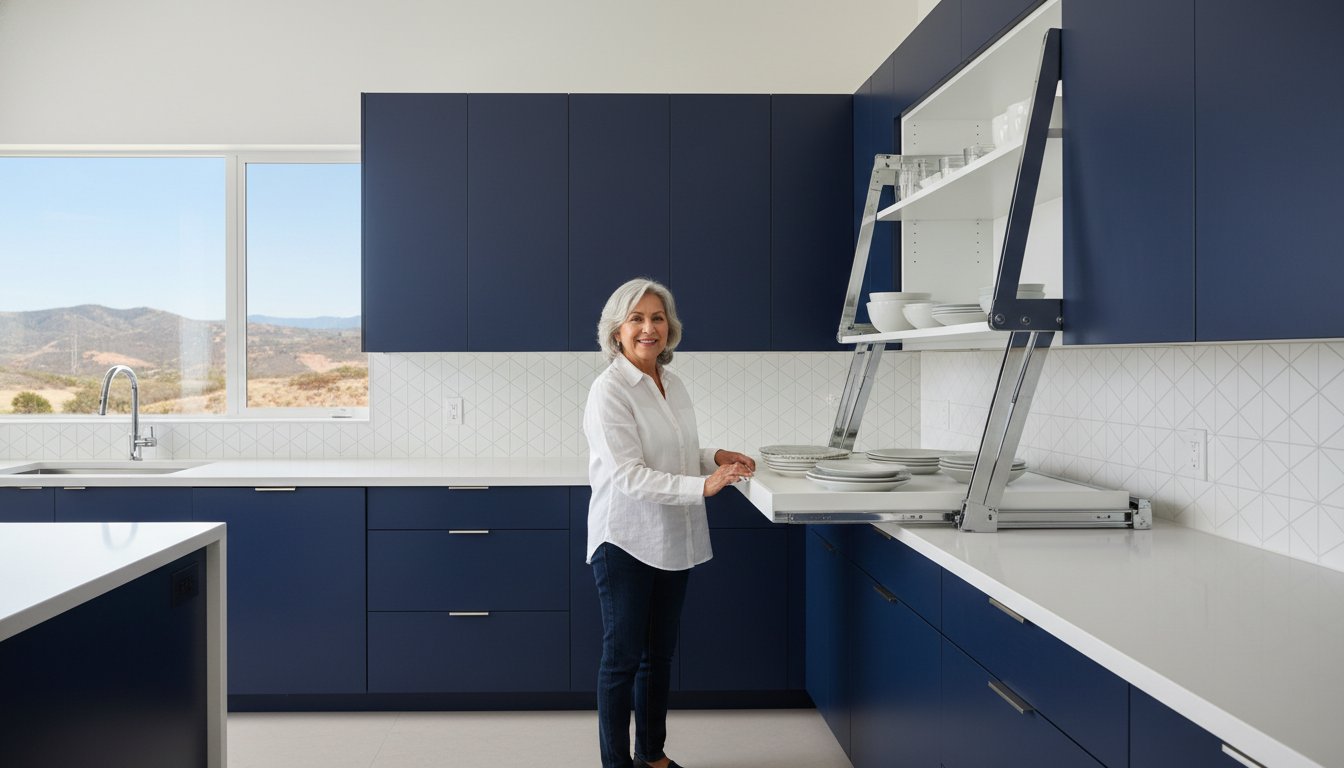
Upper cabinets are traditionally out of reach for anyone in a seated position or with limited shoulder mobility. Pull-down shelving systems revolutionize this space by using a gas-assist mechanism to lower the interior shelves to counter level. Verified standards suggest that the bottom shelves of upper cabinets should be no more than 48 inches above the floor for seated accessibility, and these pull-down units make that possible. For the ultimate in ease, motorized upper cabinet lifts can be controlled by a remote or wall switch. Integrating clear-front cabinet inserts also improves visibility, allowing you to identify items quickly before you reach for them. If you are considering these upgrades, an accessible kitchen design professional can help select the hardware that best matches your physical requirements.
Smart Pantry Solutions for Mobility and Ease
The pantry is often the most high-traffic area of the kitchen, yet it is frequently the most difficult to navigate. Traditional deep shelving creates dark pockets where food items are lost or forgotten, forcing users to reach blindly into cramped spaces. When we implement accessible kitchen storage solutions, the primary goal is to eliminate these "dead zones" through structural hardware. While retail bins might help with categorization, they don't solve the physical strain of reaching into a 24-inch deep cabinet. Integrated systems, such as the pull-out pantry, bring the entire inventory into the light, allowing for easy identification and retrieval without the need for awkward stretching.
Choosing between a "Chef's Pantry" and a "Pull-Out Pantry" depends largely on your specific mobility needs. A Chef's Pantry typically features swing-out shelves that pivot toward the user. While these provide excellent visibility, the weight of the loaded doors can sometimes be difficult to manage for those with balance concerns. In contrast, a pull-out pantry functions like a giant vertical drawer. It utilizes heavy-duty glides to move smoothly, even when fully loaded with canned goods. This design allows you to access items from both sides, which is a significant advantage for users with limited reach or those operating from a seated position.
Lighting is another essential safety component that often goes overlooked. Installing motion-activated LED strip lighting along the interior sides of the pantry ensures that every shelf is brilliantly illuminated. This isn't just a luxury feature; it's a safety requirement that prevents the accidental grasping of the wrong item or the risk of knocking over heavy glass jars. For those focusing on comprehensive home safety, combining these pantry upgrades with professional grab bar installation in Redlands can provide the necessary stability needed when moving between the pantry and the main prep area.
The Pull-Out Pantry: A Deep Dive
Slim pull-out towers are particularly effective for utilizing narrow gaps between appliances that would otherwise be wasted. These units must be selected with weight capacity in mind, as a single shelf of canned goods can weigh significantly more than standard kitchenware. We recommend ergonomic, D-shaped handles placed at a mid-range height. This placement ensures the pantry remains easy to operate whether you are standing or using a mobility aid, providing a consistent experience for every member of the household.
Walk-in Pantry Modifications
For homes with walk-in pantries, the layout should prioritize a U-shaped design. According to verified accessibility standards, a U-shaped space requires a 60-inch clearance to allow for a full wheelchair turning radius. We also recommend installing lowered countertops at a height of 34 inches within the pantry. This creates a secondary prep area that reduces the distance you need to carry heavy ingredients. Finally, ensuring doorway widening to at least 32 inches of clear width is vital for seamless entry and exit, making the pantry a truly inclusive part of your home.
Designing for Longevity: The Redlands Kitchen Remodel Process
Executing a successful kitchen renovation requires more than selecting cabinetry and countertops. It begins with a professional home safety assessment to identify the specific physical challenges you face daily. This evaluation ensures that the accessible kitchen storage solutions we choose are tailored to your unique reach range and mobility needs. By analyzing your movement patterns, we can determine exactly where to place heavy-duty glides or pull-down shelving to maximize your independence. This methodical approach prevents the costly mistake of installing hardware that looks good but fails to provide the necessary functional support.
Local expertise is vital when navigating the specific building codes in Redlands. For example, California's Chapter 11B mandates precise clearances to ensure a kitchen is truly navigable. A pass-through kitchen must maintain at least 40 inches of clearance between opposing counters, while a U-shaped layout requires a 60-inch turning radius for wheelchair users. We handle the complexities of these regulations and the necessary permit processes, ensuring your accessible kitchen storage solutions meet every legal and safety standard. This professional oversight provides peace of mind, knowing that your home is both compliant and optimized for long-term use.
Choosing a SHSS Certified Senior Home Safety & Grab Bar Specialist over a standard general contractor makes a significant difference in the final outcome. While a general contractor focuses on broad construction, a specialist understands the delicate balance between high-end aesthetics and clinical safety requirements. We prioritize stability and longevity in every material choice, from slip-resistant flooring to reinforced cabinet bases. When budgeting for your project, we recommend investing heavily in high-impact hardware and layout modifications. These structural changes offer the highest daily return on investment by reducing physical strain and preventing home accidents.
Finding the Right Specialist in the Inland Empire
During your initial design consultation, focus on your specific mobility goals rather than just cabinet colors. Ask how the studio integrates specialized safety hardware into luxury designs without compromising the room's visual appeal. In Redlands, climate durability also plays a role in material selection, as temperature fluctuations can affect the alignment of precision drawer glides over time. A studio that manages both the design and the technical installation ensures that every safety feature is integrated seamlessly into your home's architecture.
The Remodel Timeline: What to Expect
A structured timeline keeps the project on track and minimizes disruption to your daily routine. The process begins with a functional assessment and the selection of specialized hardware. Next, we move into the custom cabinetry design phase, where we order the specific pull-out and lift systems required for your layout. Finally, our team handles the professional installation and rigorous safety testing. If you are ready to begin this journey, our team at aging-in-place remodeling is here to guide you through every step of the transformation.
Professional Design Meets Safety: The Blueprint Studio Approach
At Blueprint Kitchen and Bath Design Studio, we recognize that the kitchen is the heart of the home. Maintaining your ability to use this space safely is essential for long-term independence and peace of mind. We specialize in blending high-end luxury with the clinical precision required for safety. Our approach to accessible kitchen storage solutions ensures that your space remains beautiful while functioning at a high level of accessibility. By focusing on the specific physical needs of each client, we create environments that reduce physical strain and foster a sense of autonomy.
Our team carries the SHSS Certified Senior Home Safety & Grab Bar Specialist designation. This certification reflects our commitment to understanding the unique challenges associated with aging and mobility. Unlike general contractors who may overlook the nuances of ergonomic reach ranges, we prioritize the technical details that make a kitchen truly functional. We help Redlands residents stay in the homes they love by integrating sophisticated hardware that brings the storage to the user. This expertise allows us to customize every cabinet and pantry to your specific physical needs and kitchen layout.
Our Design Philosophy: Safety is Invisible
A well-designed kitchen should never feel like a medical facility. Our design philosophy centers on the idea that safety should be invisible. We create kitchens that look and feel high-end while meeting or exceeding standards for residential accessibility. For example, we have successfully transformed standard kitchens by replacing fixed shelving with full-extension glides and motorized upper lifts. The result is a mobility-friendly space that appears identical to a luxury modern kitchen but functions with total ease for the homeowner. Every installation we perform is backed by our commitment to precision and long-term reliability.
Start Your Accessible Kitchen Journey
We invite you to visit our Redlands studio to experience our hardware solutions firsthand. Seeing pull-down shelves and touch-to-open cabinets in person allows you to feel the quality and ease of operation before making a decision. Our comprehensive approach covers everything from doorway widening to custom accessible kitchen design, ensuring a seamless flow throughout your home. Whether you need a single hardware upgrade or a complete aging-in-place remodeling project, we are here to provide expert guidance. Contact us today to schedule a professional consultation and take the first step toward a safer, more functional home.
Transform Your Kitchen into a Haven of Independence
Creating a kitchen that supports your long-term well-being starts with moving beyond simple organization and embracing structural change. By prioritizing the reach range and integrating precision hardware like pull-down shelves and heavy-duty glides, you eliminate the physical barriers that lead to strain and accidents. These accessible kitchen storage solutions don't just improve functionality; they ensure your home remains a place of dignity and ease as your needs evolve. Investing in these modifications today provides a foundation for a safer and more autonomous lifestyle tomorrow.
Beyond the kitchen, maintaining independence often requires similar attention to other high-traffic areas; for instance, Countertops and Cabinetry By Design provides expert solutions for bathroom accessibility that complement a safer home environment.
As a locally owned and operated business in Redlands, CA, Blueprint Kitchen and Bath Design Studio specializes in high-end aging-in-place remodeling. Our team includes SHSS Certified Senior Home Safety Specialists who understand how to blend clinical safety requirements with luxury aesthetics. We are ready to help you navigate the technical details of universal design to create a space that feels both modern and secure. Schedule your accessible kitchen design consultation at our Redlands studio today to begin your transformation. Your kitchen should be a tool for your independence, and we are here to help you reclaim it.
Frequently Asked Questions
What are the best accessible kitchen storage solutions for seniors?
The most effective accessible kitchen storage solutions for seniors include full-extension pull-out shelves and pull-down upper cabinet systems. These modifications eliminate the need to bend into deep base cabinets or stretch for high items. By bringing the storage to the user, these systems reduce the risk of falls and minimize physical strain during daily meal preparation. They transform static, hard-to-reach areas into functional spaces that support long-term independence.
How wide should a kitchen pantry door be for wheelchair access?
Pantry doors should have a clear opening width of at least 32 inches to accommodate standard wheelchairs and mobility aids. For optimal ease and comfort, many designers recommend a 36-inch opening. This additional space prevents hand scrapes and allows for a more natural turning radius when entering or exiting the storage area with heavy items. It's a critical adjustment that ensures the pantry remains a usable part of the home.
Can I retrofit my existing cabinets with pull-out shelves?
You can often retrofit existing cabinets with high-quality pull-out shelves and specialized hardware. However, it's essential to ensure that the cabinet boxes are structurally sound enough to support the weight of heavy-duty glides. A professional assessment can determine if your current cabinetry can handle the transition to more accessible storage or if a full replacement is a safer long-term investment for your specific mobility needs.
What is the ADA compliant height for kitchen countertops and storage?
ADA compliant standards require that the highest point of a kitchen countertop or sink rim be no more than 34 inches above the floor. For upper storage, the bottom shelf should be positioned no higher than 48 inches from the ground for seated access. These specific measurements ensure that work surfaces and stored items remain within the reach range of individuals using mobility aids, promoting a safer cooking environment.
How much does it cost to install pull-out pantry shelves in Redlands?
The cost to install pull-out pantry shelves in Redlands varies based on the cabinet dimensions, the weight capacity of the glides, and the specific materials chosen. Because every kitchen layout is unique, we recommend checking with a local design studio for a personalized project assessment. Professional-grade hardware requires specialized installation to ensure the glides operate smoothly under the weight of heavy canned goods and appliances over many years.
What is a drop-down cabinet organizer and how does it work?
A drop-down cabinet organizer is a specialized shelving unit that uses a gas-assist or spring-loaded mechanism to lower the interior contents of an upper cabinet. By pulling a handle, the user can bring the entire shelf down to counter level, making high-stored items accessible from a seated or standing position. This hardware is a vital component for maximizing vertical storage without compromising safety or requiring the use of dangerous step stools.
Are motorized kitchen cabinets worth the investment for aging in place?
Motorized kitchen cabinets are often a worthwhile investment for individuals with significant mobility challenges or limited upper-body strength. These units provide push-button access to upper storage, removing the physical effort required to operate manual pull-down systems. While they represent a higher-end upgrade, the resulting independence and ease of use can significantly enhance the long-term functionality of an accessible kitchen. They provide a seamless, modern solution for maintaining autonomy.
How do I find a certified aging-in-place specialist in Southern California?
To find a certified aging-in-place specialist in Southern California, look for professionals who hold the SHSS Senior Home Safety Specialist designation. It's also helpful to choose a design studio that focuses specifically on residential modifications rather than general commercial contracting. A specialist will understand the delicate balance between high-end home aesthetics and the clinical requirements of mobility-focused design. They'll ensure every modification is both beautiful and functionally precise.
Disclaimer
This article provides general educational information and design inspiration, not project-specific professional advice. Costs, timelines, permit requirements, building codes, and product suitability vary by property and jurisdiction. Final scope, pricing, and specifications are established only through a written proposal or contract. Consult qualified professionals and local building officials before beginning work. Unless expressly identified as a completed Blueprint project, images are illustrative and may include stock photography, design renderings, or AI-generated imagery.


