
Article by
Jake Blasco, B-2 Licensed Contractor
Jake Blasco is the kitchen, bath, and accessibility specialist behind Blueprint Kitchen & Bath Design Studio. He helps homeowners create beautiful, functional spaces through thoughtful planning, practical design, and careful project coordination. His background in commercial production and set construction brings a strong eye for detail, organization, and finish quality to every project. Jake is a certified Senior Home Safety Specialist® and Grab Bar Specialist, allowing him to integrate aging-in-place and home-safety features without sacrificing style. He serves Huntington Beach, Orange County, and surrounding Southern California communities.
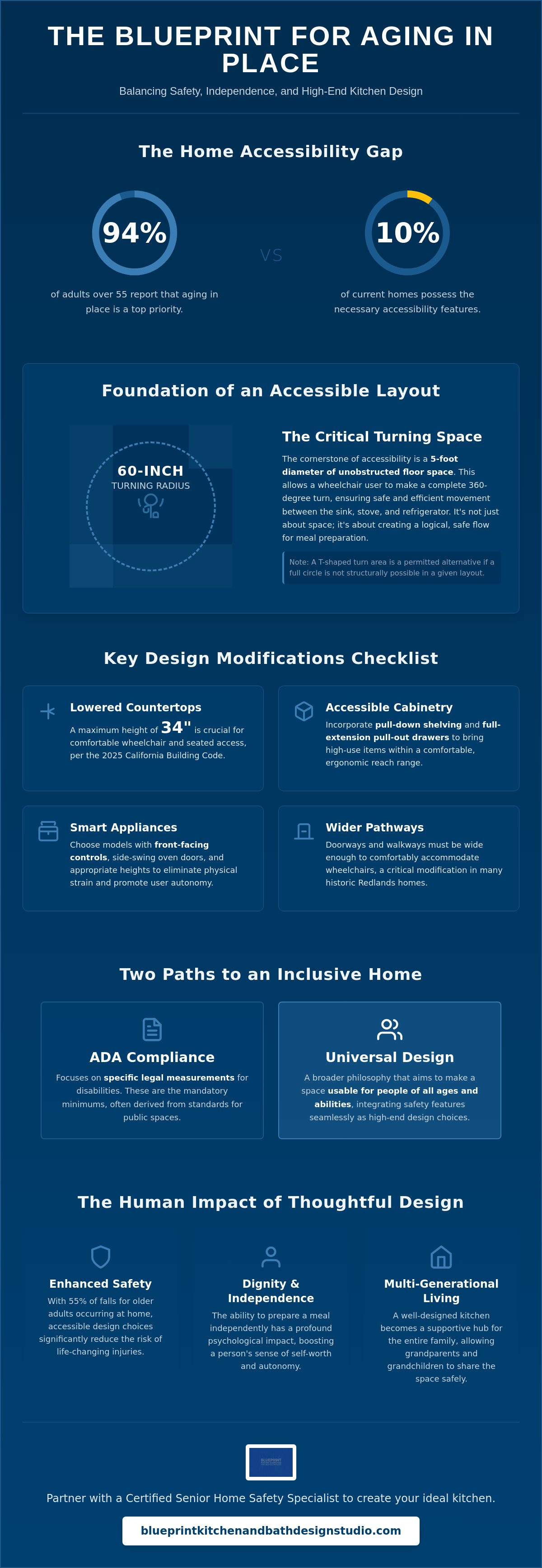
94% of adults over the age of 55 report that aging in place is a top priority, yet only 10% of homes currently possess the accessibility features needed to make that a reality. For many homeowners, the transition to ADA compliant kitchen design Redlands feels like a choice between independence and aesthetics. You might worry that installing lowered countertops or widening pathways will strip away the character of your home, replacing it with a cold, clinical environment. We understand that your kitchen is the heart of your house, and it should remain a space of beauty and dignity regardless of mobility changes.
This article will help you master the essential standards and local considerations for creating a kitchen that balances clinical safety with high-end style. We'll walk you through the specifics of the 2025 California Building Code, including the 34 inch maximum counter height and the new "electric-ready" requirements. By the end of this checklist, you'll have a clear roadmap for a remodel that supports wheelchair use and aging-in-place without sacrificing the sophisticated look you love. We'll show you how to integrate these vital safety features into a design that feels like a natural, empowering upgrade to your lifestyle.
Key Takeaways
- Learn how to adapt strict accessibility standards to the unique architecture of Redlands, ensuring your home remains both functional and beautiful.
- Discover the critical clearance measurements, such as the 60-inch turning radius, that provide the necessary foundation for a safe and independent kitchen environment.
- Explore how ADA compliant kitchen design Redlands integrates lowered countertops and accessible appliances to eliminate daily physical strain and promote autonomy.
- Master cabinet and hardware modifications, like pull-down shelving and pull-out drawers, that bring high-use items within a comfortable and ergonomic reach range.
- Understand the benefit of combining clinical rehabilitation expertise with high-end interior design to create a kitchen that supports lifelong dignity and peace of mind.
Understanding ADA Compliant Kitchen Design in Redlands Homes
Residential ADA compliance isn't just about following a set of rigid rules. It's about creating a space where every family member can thrive with dignity. In our local community, achieving a successful ADA compliant kitchen design Redlands requires a specialized understanding of both federal standards and our unique local architecture. While the ADA was originally written for public spaces—where design-build commercial contractors like DGR Construction Co. apply these standards to professional environments—these guidelines serve as a vital blueprint for private homes to ensure that sinks, appliances, and storage are within a safe reach range for everyone.
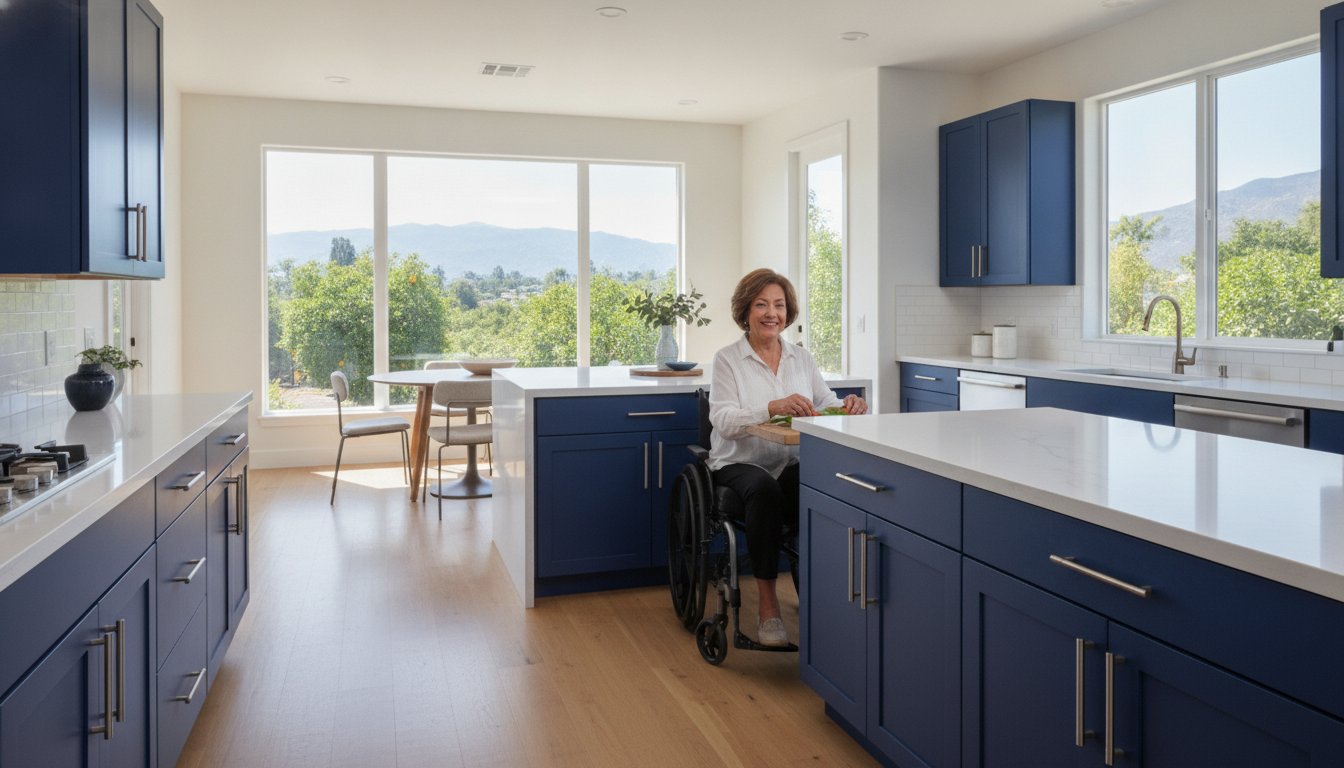
Redlands is famous for its historic Victorian and Craftsman homes, which often feature narrow galley layouts and high cabinetry. Adapting these historic spaces is quite different from modifying a modern build in nearby Moreno Valley. For many Inland Empire families, inclusive design allows grandparents and grandchildren to share the same space safely. This approach transforms the kitchen from a potential hazard into a supportive environment for multi-generational living, ensuring that the heart of the home remains accessible to all.
To see these concepts in action, watch this helpful tour of an accessible kitchen layout:
The Importance of Independence and Dignity
Falls are the leading cause of injuries among older adults, and 55% of these accidents occur right inside the home. By adjusting counter heights and removing floor obstacles, we significantly reduce the risk of a life-changing injury. Beyond physical safety, the ability to prepare a meal independently has a profound psychological impact on a person's sense of self-worth and autonomy. ADA residential compliance acts as the bridge between clinical safety and personal self-reliance.
Navigating Local Redlands Building Standards
Any structural modification in San Bernardino County requires careful adherence to local permit requirements. For example, doorway widening is a common necessity to accommodate wheelchairs, but it must be executed without compromising the structural integrity of older Redlands floor plans. Partnering with a SHSS Certified Senior Home Safety specialist ensures that every change in your ADA compliant kitchen design Redlands project meets rigorous safety standards. This expertise is different from standard contracting because it focuses specifically on the physical ergonomics and long-term health of the user.
While we often use the term "ADA," many homeowners actually benefit from broader universal design principles. ADA compliance focuses on specific legal measurements for disabilities, but universal design aims to make a space usable for people of all ages and abilities. This distinction is important for those who want to prepare for the future through aging-in-place remodeling without making the home feel like a medical facility. We focus on seamless integration so that your safety features look like high-end design choices rather than clinical additions.
Core ADA Requirements for Kitchen Clearances and Layouts
Layout is the most critical element of an ADA compliant kitchen design Redlands. Without proper clearances, even the most expensive appliances remain out of reach. The standard "Work Triangle" between the refrigerator, sink, and stove must be reconsidered for mobility. For a wheelchair user, the path must be wider and unobstructed to allow for safe movement and efficient meal preparation. It's not just about removing barriers; it's about creating a logical flow that minimizes the distance between workstations.
The 60-Inch Turning Space
The foundation of any accessible floor plan is the 60-inch turning radius. This technical requirement ensures a 5-foot diameter of unobstructed floor space, allowing a wheelchair user to make a complete 360-degree turn. If a full circle isn't possible due to structural limits, the ADA allows for a "T-shaped" turn area. This involves two perpendicular paths that form a T, providing enough room for a three-point turn without needing a massive open floor plan.
Pass-through kitchens require a minimum of 40 inches between opposing surfaces. However, if your kitchen is U-shaped with cabinets on three sides, that clearance must increase to 60 inches. This ensures there is enough room to maneuver while doors for the oven or dishwasher are open. Proper senior-friendly kitchen design also prioritizes knee and toe clearance. Sinks and cooktops should have at least 27 inches of vertical clearance underneath. This allows a seated user to pull up directly to the workstation, preventing the need for awkward reaching or leaning that can lead to muscle strain or accidents.
Accessible Work Surfaces and Countertop Heights
Standard kitchen counters are usually 36 inches high. For an ADA compliant kitchen design Redlands, we lower the maximum height to 34 inches. This two-inch difference is vital for ergonomics and visibility into pots or pans on the stove. For households with both standing and seated cooks, we often recommend adjustable-height workstations or multi-level counters. This ensures everyone has a comfortable prep area that fits their specific height. You can find more specific details on materials and styles in our guide to Wheelchair Accessible Kitchen Countertops in Redlands: A Design Guide.
Planning these precise measurements requires a specialized eye for detail. If you're ready to explore how these standards fit your unique home, our team at Blueprint Kitchen and Bath Design Studio can help you visualize a layout that prioritizes both flow and function. We focus on creating a space that feels open and inviting while meeting every clinical safety standard.
Adapting Cabinets and Appliances for Maximum Mobility
Once the foundation of your floor plan is established, the focus shifts to the specific hardware and appliances that facilitate daily tasks. In an ADA compliant kitchen design Redlands, every cabinet and appliance must be positioned within a specific reach range to ensure accessibility without physical strain. This stage of the remodel is where clinical necessity meets the aesthetic desires of a high-end home, creating a space that functions as well as it looks. We look at the kitchen as a series of interactions, making sure each one is effortless for the user.
Smart Storage Solutions for Seniors
Hardware choice is a small detail with a massive impact on daily life. We recommend "D-shaped" pull handles for all cabinetry. These are far superior to standard knobs for those with arthritis or limited grip strength because they don't require a tight pinch to operate. Replacing traditional lower cabinets with deep, full-extension drawers allows you to see every item at a glance without the need to kneel or reach into dark corners. Pull-down shelving systems bring items from upper cabinets directly to the user, ensuring that top-shelf storage remains functional rather than becoming wasted space.
Appliance Placement and Safety Features
Appliance selection is where modern technology supports independent living. Side-swing ovens are a game-changer for wheelchair users. They allow the cook to pull up close to the oven cavity without reaching over a hot, heavy door. Drawer-style dishwashers are another excellent choice, as they eliminate the need to bend over deeply to load or unload dishes. To maintain safety and compliance, all controls and outlets should be placed within the "Reach Range," which is between 15 and 48 inches above the finished floor. This placement prevents the dangerous overreaching that often leads to household accidents.
Safety is paramount when handling heat and water in the kitchen. Induction cooktops provide a significant safety benefit because the surface stays cool to the touch, which prevents accidental burns during meal preparation. Microwaves shouldn't be placed above the range; instead, we install microwave drawers at or below counter level for easier access. For the sink, we utilize shallow basins, typically about six inches deep. This prevents the user from having to reach too far down into the sink. We also ensure that all piping underneath is insulated. This protective barrier prevents burns on the legs of a seated user who may have reduced sensitivity to heat.
The Complete ADA Compliant Kitchen Design Checklist
Precision is non-negotiable when it's time to finalize your renovation plans. You've considered the layout and selected your appliances; now you must verify that every measurement aligns with the 2025 California Building Code. This checklist serves as your final safeguard, ensuring your ADA compliant kitchen design Redlands meets the rigorous standards required for long-term safety and independence. Use these specific data points to evaluate your space before the final installation begins.
Structural and Clearance Checklist
- Doorway Width: Confirm a minimum of 32 inches of clear width at all entry points to allow for effortless doorway widening and wheelchair passage.
- Pathway Clearance: Ensure at least 40 inches of space in galley kitchens or a full 60 inches in U-shaped layouts to prevent entrapment when appliance doors are open.
- Thresholds: Verify all floor transitions are flush. Any necessary beveled thresholds must remain under 1/2 inch to prevent tripping or wheel obstruction.
- Turning Radius: Re-confirm the 60-inch diameter circle of unobstructed floor space for 360-degree mobility.
Fixture and Appliance Checklist
- Countertop Height: Double-check that all primary work surfaces sit at or below the 34-inch maximum height.
- Knee Clearance: Ensure the sink and cooktop provide at least 27 inches of vertical clearance from the floor for a forward approach.
- Faucet Operation: Confirm the installation of touchless or lever-style faucets that are operable with one hand without tight grasping or twisting.
- Sink Depth: Verify the basin depth is 6.5 inches or less to ensure the bottom is within a comfortable reach range.
- Electrical Access: Move all outlets to the front of base cabinets or side splashes, ensuring they fall within the 15 to 48-inch reach zone.
Visibility and stability are the final layers of a secure kitchen. We recommend high-contrast, slip-resistant flooring to help users with low vision distinguish between different zones. Task lighting should be positioned directly over prep areas to eliminate shadows that can hide hazards. These details prevent the common falls and injuries that occur in the home. If you're ready to turn this checklist into a reality, contact our specialists at Blueprint Kitchen and Bath Design Studio to schedule a detailed design consultation for your home.
Partnering with a Redlands Senior Home Safety Specialist
Implementing a comprehensive ADA compliant kitchen design Redlands requires more than a standard contractor's license. It demands a specialized understanding of how physical limitations interact with the built environment. At Blueprint Kitchen and Bath Design Studio, we bridge the gap between clinical necessity and residential elegance. Our unique partnership with A&M Rehab Services allows us to integrate professional clinical expertise directly into your home renovation. This collaboration ensures that every modification, from the placement of task lighting to the height of a workstation, is tailored to your specific mobility profile.
Our team manages the entire transformation process to provide you with a seamless experience. We begin with a thorough home safety assessment to identify current barriers and project future needs as you or your loved ones age. We handle the technical complexities of doorway widening and structural layout changes while also performing smaller, vital tasks like grab bar installation. We believe that a safe kitchen should never feel like a medical facility. By selecting high-end materials and modern fixtures, we preserve the aesthetic value and historic character of your Redlands home while adding the functionality you need for lifelong independence.
Our SHSS Certified Approach
Working with a Certified Senior Home Safety and Grab Bar Specialist (SHSS) means you're partnering with a professional who has mastered the nuances of fall prevention and ergonomic design. Our commitment is to provide high-quality aging-in-place remodeling without the "hospital look" that many families fear. We focus on "invisible" accessibility, where safety features are so well-integrated into the design that they appear as deliberate, stylish choices. For a deeper look at how we create these secure environments, read our post on Aging in Place Remodeling in Redlands: A Guide to Safe, Independent Living.
Start Your Accessible Kitchen Remodel Today
Your home should be a sanctuary that supports your dignity and autonomy at every stage of life. If you're concerned about maintaining your independence or are planning for a multi-generational household, we invite you to take the first step toward a safer future. Our specialized team serves homeowners throughout the Inland Empire, including Yucaipa, Loma Linda, and Riverside. We're ready to help you navigate the complexities of ADA compliant kitchen design Redlands with precision and care. Schedule your Accessible Kitchen Design consultation with Blueprint Kitchen and Bath Design Studio today to begin your home's transformation.
Secure Your Independence with a Future-Ready Kitchen
Creating a kitchen that supports your long-term independence requires a delicate balance of clinical precision and residential style. We've explored how essential clearances, such as the 60-inch turning radius and 34-inch counter heights, provide the physical foundation for a safer home. You don't have to choose between a beautiful space and a functional one. By integrating smart storage solutions and accessible appliances, you can maintain the high-end look of your home while ensuring it remains a place of dignity and self-reliance.
As a specialized division of A&M Rehab Services, our team brings a unique clinical perspective to every project. We're SHSS Certified Senior Home Safety Specialists dedicated to serving Redlands and the Inland Empire with integrity. We understand that home modification is an empowering lifestyle upgrade. Our goal is to help you visualize a space that considers every detail of your movement and routine. If you're ready to transform your home with a professional ADA compliant kitchen design Redlands, we're here to guide you through every step of the transition.
While securing your home for the future is a vital step, maintaining the safety of your business or community events is equally important; for professional protection in these settings, you can visit Broadway Security Services to learn about their expert security solutions across California.
Book Your ADA Kitchen Consultation with Blueprint Kitchen and Bath and start building a space that supports your autonomy for years to come.
Frequently Asked Questions
What is the difference between ADA compliant and accessible kitchen design?
ADA compliance refers to specific legal standards for public accessibility, while accessible design is a broader term for making a space easier for anyone to use. In a residential context, we use ADA standards as a professional benchmark to ensure safety and mobility. Accessible design might include general improvements like better lighting, whereas ADA compliance requires precise measurements for reach and clearance.
Does an ADA kitchen remodel decrease home value in Redlands?
An ADA-focused remodel typically maintains or increases home value in Redlands, especially as the demand for multi-generational housing grows. Many buyers view these modifications as high-value upgrades that allow for lifelong residency. When executed with high-end materials, these features become a selling point for families planning to support aging relatives or those seeking a home that prioritizes universal comfort and stability.
How much clearance is needed for a wheelchair in a kitchen?
A 60-inch diameter of unobstructed floor space is the standard requirement for a full 360-degree wheelchair turn. This allows the user to maneuver safely without hitting cabinets or appliances. In tighter layouts, a T-shaped turning space is an acceptable alternative. This configuration provides enough room for a three-point turn, ensuring the kitchen remains functional even in smaller historic floor plans.
What is the standard ADA counter height for residential kitchens?
The standard maximum height for an ADA-compliant countertop is 34 inches above the finished floor. This is two inches lower than the traditional 36-inch residential standard. This adjustment provides better ergonomics for seated users and improves visibility for cooking tasks. Many homeowners choose to install multi-level counters to accommodate both standing and seated family members within the same workspace.
Can I make my existing kitchen ADA compliant without a full remodel?
You can often improve accessibility without a full renovation by focusing on high-impact hardware and storage modifications. Replacing knobs with D-shaped pulls and installing pull-out shelving in lower cabinets significantly reduces physical strain. You might also remove the base cabinet doors under a sink to create necessary knee clearance. These targeted updates can make a ADA compliant kitchen design Redlands project more manageable and cost-effective.
What are the best appliances for an ADA compliant kitchen?
Side-swing ovens, induction cooktops, and drawer-style dishwashers are the most effective appliances for an accessible layout. These units eliminate the need for deep bending or reaching over hot surfaces, which reduces the risk of burns or falls. We also recommend microwave drawers installed at counter height. These selections empower the user to manage meal preparation independently while maintaining a sophisticated, modern kitchen aesthetic.
Who installs ADA compliant kitchen features in the Inland Empire?
Blueprint Kitchen and Bath provides specialized installation for accessible features throughout the Inland Empire. As a division of A&M Rehab Services, we combine clinical expertise with professional remodeling to ensure every modification meets safety standards. We serve residents in Redlands, Yucaipa, and Riverside who are looking for a ADA compliant kitchen design Redlands that balances medical necessity with home comfort.
Are there specific flooring requirements for ADA kitchens?
Flooring must be slip-resistant and feature high-contrast colors to assist with depth perception and stability. We also ensure that all floor transitions are flush or have beveled thresholds under 1/2 inch to prevent wheel obstruction. These requirements are vital for preventing the common household falls that occur on wet or uneven surfaces. Proper flooring choices create a predictable, safe path for anyone using a mobility aid.
Disclaimer
This article provides general educational information and design inspiration, not project-specific professional advice. Costs, timelines, permit requirements, building codes, and product suitability vary by property and jurisdiction. Final scope, pricing, and specifications are established only through a written proposal or contract. Consult qualified professionals and local building officials before beginning work. Unless expressly identified as a completed Blueprint project, images are illustrative and may include stock photography, design renderings, or AI-generated imagery.


