

Article by
Jake Blasco, B-2 Licensed Contractor
Jake Blasco leads design and project planning at Blueprint Kitchen & Bath Design Studio, specializing in kitchen, bath, and whole home design in Huntington Beach and surrounding Orange County communities. His approach combines thoughtful layouts, quality materials, and practical construction knowledge to create spaces that look beautiful and work for everyday life.
Jake shares guidance on cabinetry, countertops, finishes, lighting, and renovation planning to help homeowners make informed decisions. As the qualifying individual for Blueprint’s California B-2 Residential Remodeling license (CSLB #1161570), he brings a construction perspective to every design.
What if the first bathroom remodel decision isn’t tile or fixtures, but how you use the room each day? It’s easy to focus on finishes early, yet a beautiful bathroom can feel awkward if the layout, storage, or lighting doesn’t support household routines.
Planning becomes clearer when you start with the activities that matter most. Think about when the bathroom is busiest, what needs to be stored within reach, and which parts of the room feel cramped or inconvenient. Those priorities can guide decisions about the vanity, shower, lighting, materials, and overall layout.
This guide offers a practical framework for organizing those choices. You’ll learn how to identify priorities, weigh function and style, coordinate finishes, and connect the bathroom’s design with the rest of your home. A thoughtful sequence can help you make decisions with greater confidence and shape a room that feels cohesive, comfortable, and useful every day.
Key Takeaways
- Start with the household’s daily routines to identify what works, what causes inconvenience, and what the remodel should improve.
- Set goals and define the project scope before comparing finishes, so design choices reflect both practical needs and visual preferences.
- Plan selections and work in a flexible sequence, allowing for existing conditions, project scope, and product lead times.
- Bring a concise list of priorities, scope questions, and design preferences to a bathroom design discussion to help shape a plan around your home.
Bathroom Remodel Planning Starts with How You Use the Room
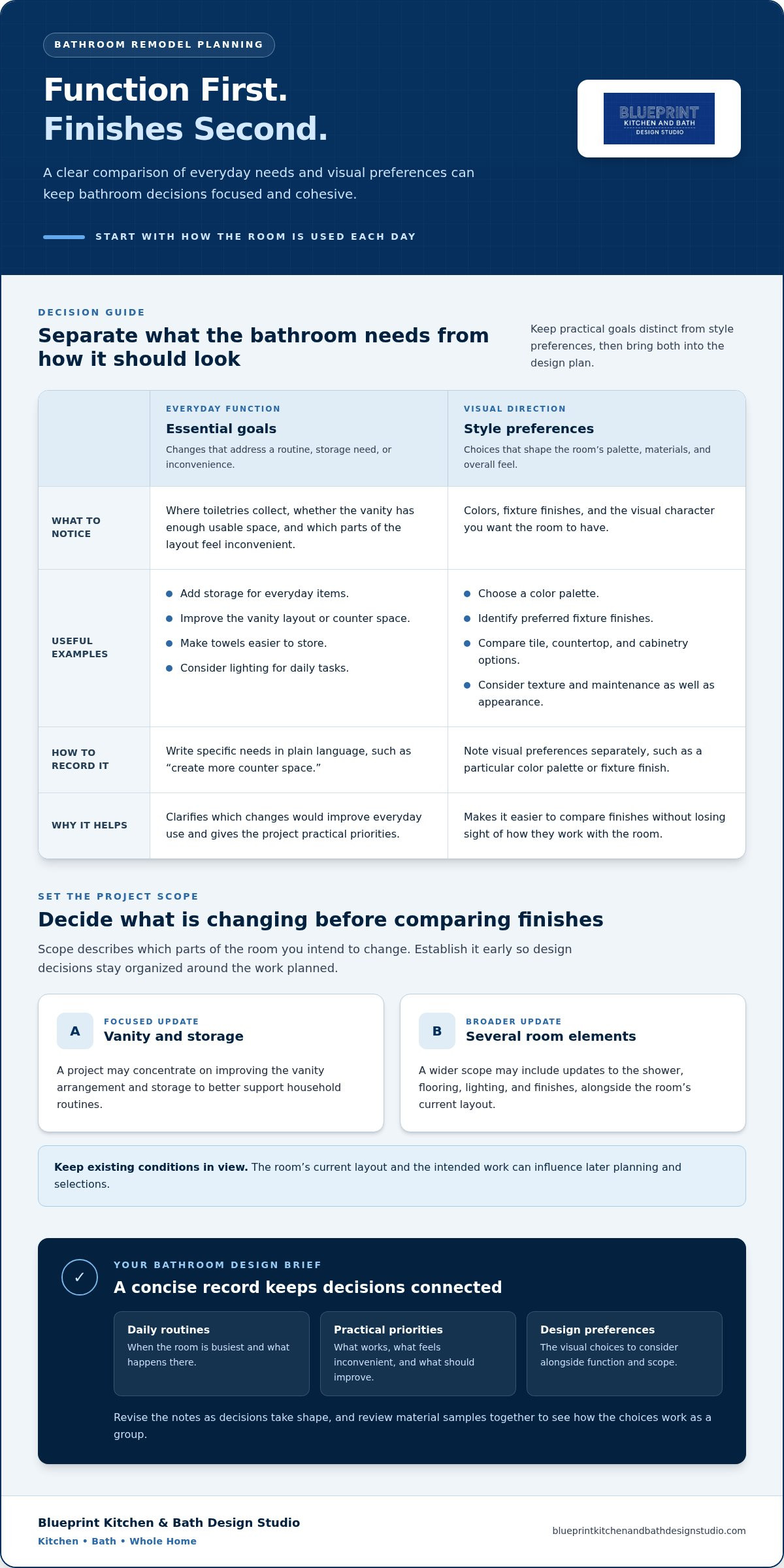
A useful bathroom design plan starts with household routines, not a tile sample. Consider what happens in the room during a typical day: where toiletries collect, whether the vanity provides enough usable space, and which parts of the layout feel inconvenient. These observations help distinguish changes that would improve everyday function from details that are mainly about appearance.
Before choosing finishes, write down what works, what you’d like to change, and what matters most. Separate essential goals, such as adding storage or improving the vanity layout, from visual preferences, such as a particular color palette or fixture finish. This makes it easier to compare options and keep decisions focused as the project develops.
Turn everyday routines into clear design priorities
Observe how household members use the bathroom at different points in the day. Note where items are stored, which surfaces are shared, and whether lighting or counter space suits daily tasks. Describe desired changes in plain language, such as “make towels easier to store” or “create more counter space.” Specific notes are more useful than vague goals like “make it feel better.”
Set a project scope before making selections
Scope describes which parts of the room you intend to change. A project might focus on the vanity and storage, or include updates to the shower, flooring, lighting, and finishes. Clarifying this early helps organize design decisions and priorities. Existing conditions can also influence later planning, so selections may need to be considered alongside the room’s current layout and the intended work.
A bathroom design brief is a record of your needs, priorities, and choices for the project. Keep it simple: list essential functional goals separately from style preferences, then revise the notes as decisions take shape. Working closely with Blueprint Kitchen and Bath Design Studio ensures that every phase of your project reflects your family's unique lifestyle and design preferences.
Frequently Asked Questions
How do I start planning a bathroom remodel?
Start by identifying what isn’t working in your current bathroom and what you want the remodeled space to do better. Note storage needs, daily routines, preferred fixtures, and any layout limitations. Then measure the room and set priorities for the project before browsing finishes. Homeowners in Huntington Beach and nearby communities can use this list to guide bathroom design decisions around function, materials, and overall scope.
What should I decide first in a bathroom remodel?
Decide on the bathroom’s layout and project scope before choosing decorative finishes. Consider whether plumbing fixtures will stay in their current locations, how much storage you need, and whether the existing vanity, shower, or bathtub suits your routine. These choices shape construction planning and help narrow material selections. Once the main plan is clear, compare tile, countertop, cabinetry, lighting, and fixture options that fit the room.
How long does bathroom remodeling take?
A bathroom remodel’s schedule depends on the project scope, existing conditions, material selections, product lead times, trade availability, and any required permits or inspections. A project focused on surface updates may involve different work from one that changes the layout or replaces several major components. Discuss the planned sequence, including ordering, demolition, installation, and finishing, so you understand the factors that may affect timing.
How can I make bathroom design choices feel cohesive?
Choose a simple palette and repeat a few finishes or materials throughout the room. For example, coordinate vanity cabinetry with the overall color scheme, then select tile, countertop, hardware, and lighting that complement rather than compete with one another. Consider texture and maintenance alongside appearance. Reviewing samples together can help you see how the choices work as a group before finalizing the bathroom design.
Disclaimer
This article provides general educational information and design inspiration, not project-specific professional advice. Costs, timelines, permit requirements, building codes, and product suitability vary by property and jurisdiction. Final scope, pricing, and specifications are established only through a written proposal or contract. Consult qualified professionals and local building officials before beginning work. Unless expressly identified as a completed Blueprint project, images are illustrative and may include stock photography, design renderings, or AI-generated imagery.


