

Article by
Jake Blasco, B-2 Licensed Contractor
Jake Blasco leads design and project planning at Blueprint Kitchen & Bath Design Studio, specializing in kitchen, bath, and whole home design in Huntington Beach and surrounding Orange County communities. His approach combines thoughtful layouts, quality materials, and practical construction knowledge to create spaces that look beautiful and work for everyday life.
Jake shares guidance on cabinetry, countertops, finishes, lighting, and renovation planning to help homeowners make informed decisions. As the qualifying individual for Blueprint’s California B-2 Residential Remodeling license (CSLB #1161570), he brings a construction perspective to every design.
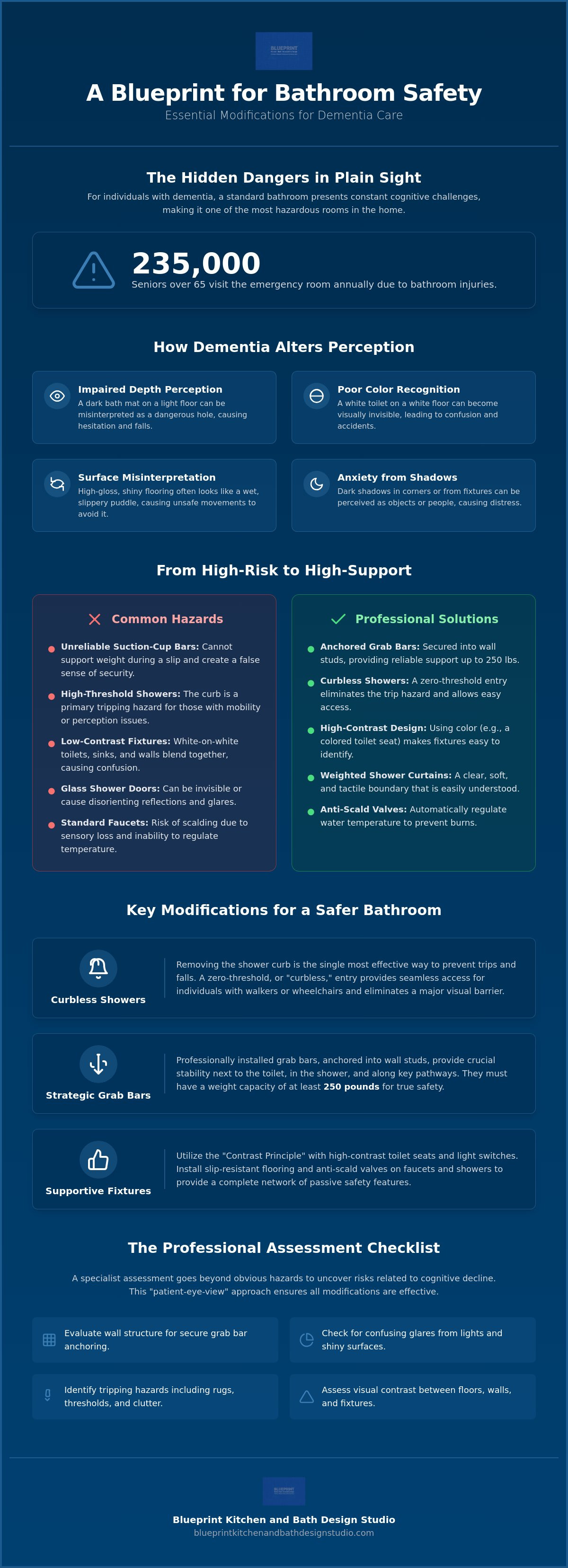
Did you know that approximately 235,000 people over the age of 65 visit the emergency room every year due to injuries sustained in the bathroom? For families managing cognitive decline, this figure represents a daily reality of worry and the constant fear of a life-altering fall. You want to find reliable bathroom safety solutions for dementia patients, but the exhaustion of constant supervision and the confusion over which products actually work can leave any caregiver feeling overwhelmed. It's a heavy burden to carry when you simply want your loved one to remain safe, dignified, and comfortable at home.
We believe that home modifications should be an empowering lifestyle upgrade rather than a clinical necessity. This guide will teach you how to blend physical stabilization with cognitive-focused design to create a space that is both secure and beautiful. By focusing on both high-quality hardware and visual cues, you can transform a high-risk area into a functional environment that supports autonomy. We will explore how professional aging-in-place remodeling, such as curbless shower installation and slip-resistant flooring, can restore confidence for your loved one while providing you with much-needed peace of mind.
Key Takeaways
- Understand how cognitive changes like altered depth perception and color recognition necessitate specific bathroom safety solutions for dementia patients.
- Learn why permanent structural modifications like curbless showers and anchored grab bars offer reliable stability that suction-cup alternatives can't match.
- Use the "Contrast Principle" to reduce patient confusion by creating clear visual distinctions between essential fixtures and their surroundings.
- Identify hidden hazards through a professional "patient-eye-view" assessment that uncovers dangerous glares, shadows, and insufficient wall support.
- Discover how specialized remodeling transforms high-risk areas into secure, dignified spaces without sacrificing your home's high-end aesthetic.
Understanding Why Dementia Changes Bathroom Safety Requirements
Cognitive decline is a complex journey that fundamentally alters how a person interacts with their surroundings. Understanding Dementia is the first step in recognizing that a bathroom, once a place of routine, can become a source of profound confusion. It isn't just about physical mobility; it's about how the brain interprets visual signals. When these signals get scrambled, a standard bathroom layout feels like an obstacle course. Effective bathroom safety solutions for dementia patients must address these neurological shifts to prevent accidents before they happen.
To better understand how these cognitive challenges manifest during daily routines, watch this helpful video on toilet safety:
Nighttime often brings "sundowning," a period of increased agitation and confusion that peaks as the sun goes down. This makes late-night trips to the bathroom particularly hazardous. At these hours, a person's ability to process their environment is at its lowest. A white toilet on a white floor might simply disappear from their field of vision, or a clear glass shower door may seem invisible. Without thoughtful modifications, your loved one may experience "learned helplessness." This occurs when the environment becomes so difficult to navigate that they stop attempting independent tasks altogether. Supportive design reverses this trend by providing the cues the brain needs to function safely.
Perception and Falling: The Hidden Connection
Dementia often impairs depth perception in ways that are invisible to caregivers. A dark bath mat on a light tile floor isn't seen as a rug; it looks like a deep hole in the ground. This causes the individual to hesitate or overstep, which often leads to a loss of balance. Similarly, high-gloss flooring can be a major trigger. To a person with cognitive decline, a shiny surface looks like standing water. They may try to avoid the perceived "puddle," leading to a slip. Shadows are equally problematic. A dark shadow in the corner can be misinterpreted as an intruder or a physical object, causing unnecessary anxiety during simple grooming tasks.
In instances where environmental hazards have already resulted in a serious accident, families may need professional legal guidance; for expert support with traumatic brain injury litigation, visit The Dedric Brown Law Firm.
The Need for "Cognitive Support" in Design
Practical bathroom safety solutions for dementia patients provide a roadmap for the brain. Choice paralysis happens when there are too many shiny chrome handles or complex shower dials to manage. Simplifying the environment helps the user focus on the task at hand. While maintaining a familiar layout is helpful, we must introduce physical barriers for protection. For instance, anti-scald valves are essential because a patient might lose the ability to distinguish between hot and cold taps. By using supportive environmental design, we replace fear with a sense of security, allowing your loved one to maintain their dignity and physical autonomy.
Essential Hardware: Grab Bars and Curbless Shower Solutions
Hardware isn't just about utility; it's about providing a permanent sense of stability. Many families try temporary fixes, but suction-cup bars are a significant liability. They can't reliably support a person's weight during a sudden slip or a moment of heavy leaning. Professional grab bar installation ensures every fixture is anchored directly into wall studs. This provides the 250-pound weight capacity required for true safety. We integrate these features alongside other critical bathroom safety solutions for dementia patients, such as anti-scald valves. Sensory loss often accompanies cognitive decline, making it difficult for a loved one to realize the water is too hot. Physical barriers like these prevent injuries before they occur. We also recommend weighted shower curtains over glass doors. Glass can be invisible or cause distressing reflections, while a curtain offers a clear, tactile boundary that simplifies the bathing process.
Professional Grab Bar Placement for Cognitive Decline
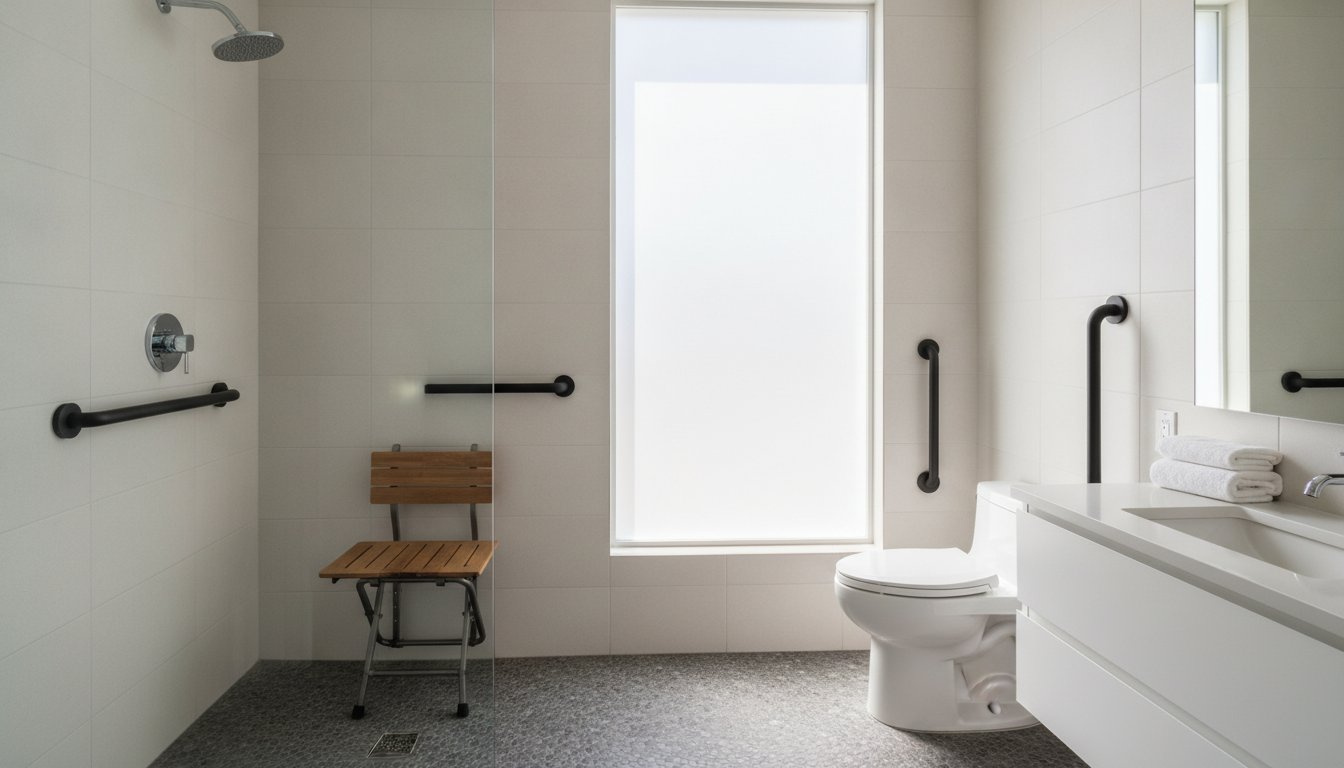
Vertical bars serve as visual landmarks. They tell the brain exactly where to reach for support. When we use high-contrast colors, like matte black bars against white tile, we help the individual's eyes track the safety feature more easily. These essential bathroom safety tips from leading experts remind us that visibility is just as important as physical strength. Strategic placement near the toilet and shower entry points creates a continuous path of support, reducing the anxiety of movement. We ensure all hardware is rated for full body weight to provide long-term reliability.
- Entry Points: Vertical bars at the shower entrance provide a steady handhold during transitions.
- Toilet Transfers: A horizontal bar positioned at a comfort height of 17 to 19 inches assists with sitting and standing.
- Wet Areas: L-shaped bars in the shower provide both horizontal and vertical support for varied needs.
Walk-In Tubs and Showers: Choosing the Right Level of Access
A curbless shower installation is often the most effective way to eliminate trip hazards. While walk-in tubs are popular, they still require stepping over a small threshold. A roll-in or curbless design removes that obstacle entirely. This is a foundational element of any bathroom remodel for aging in place. We focus on creating a 60-inch turning radius to accommodate future mobility needs and reduce the feeling of being trapped in a tight space. This open floor plan is essential for caregivers who may need to assist with bathing. We also select slip-resistant flooring with a matte finish. This prevents the glares and reflections that a dementia patient might misinterpret as a wet surface or a hole. If you're considering these upgrades, professional guidance on accessible design can ensure your renovation meets both safety and aesthetic goals.
Visual Contrast and Sensory Design for Reduced Confusion
Visual perception is often one of the first senses affected by cognitive decline. When a bathroom lacks distinct color boundaries, it becomes a monochromatic haze where the toilet, floor, and walls blend into one. Effective bathroom safety solutions for dementia patients rely on the "Contrast Principle" to restore spatial awareness. By installing a dark-colored toilet seat on a light-colored bowl, you provide a clear visual target. This simple modification reduces the risk of accidents during transfers. Similarly, removing or covering mirrors can prevent significant distress. To a person with dementia, their own reflection can appear as a stranger in the room, leading to agitation or a refusal to enter the space. We approach these changes as empowering lifestyle upgrades that prioritize the user's emotional well-being.
Organization plays a vital role in reducing choice paralysis and anxiety. Labeling drawers and cabinets with both clear text and recognizable icons helps the brain process information more quickly. Instead of searching through multiple cabinets, the individual sees a picture of a toothbrush or a comb. This supports their remaining cognitive strengths and encourages independence. Every detail, from the color of the hardware to the placement of labels, is designed to create a predictable and calm environment.
Lighting Strategies for Nighttime Safety
Lighting must be consistent and deliberate to prevent the brain from misinterpreting shadows as physical obstacles. Automated path lighting that leads from the bedroom directly to the bathroom is essential for managing the confusion of sundowning. We recommend avoiding "blue light" bulbs, as these can disrupt natural sleep cycles and increase nighttime restlessness. Instead, use warm-toned LEDs that provide clear visibility without being harsh. We prioritize matte finishes on all surfaces during remodeling to eliminate disorienting reflections. A shiny floor can look like standing water to a dementia patient, but a matte surface provides a sense of solid ground.
Color Coding for Functionality
Color is a powerful tool for guiding movement and ensuring the safe operation of fixtures. We use distinctive colors for faucet handles, such as bright red for hot and blue for cold, to provide an immediate sensory cue. This reduces the risk of accidental burns. Brightly colored towels can also define the location of the towel rack against a neutral wall. In some cases, color-blocked flooring helps define specific zones within the room. A different colored tile in the shower area signals a change in function, acting as a non-verbal guide. These sensory-focused bathroom safety solutions for dementia patients create a secure environment that looks like a high-end home while functioning as a specialized care space.
Steps to a Professional Dementia-Friendly Bathroom Assessment
A generic home audit often fails to account for the specific neurological challenges of cognitive decline. A professional assessment begins with a "patient-eye-view" walkthrough. This process involves identifying how light hits surfaces at different times of day to spot deceptive glares or shadows that a loved one might perceive as physical obstacles. We also look for "visual noise" like busy wallpaper patterns that can cause sensory overload. These technical evaluations are foundational bathroom safety solutions for dementia patients because they address environmental triggers that a standard contractor might overlook.
Beyond visual cues, we conduct a rigorous physical check of the space. We measure doorway widths to ensure they meet the 32 to 36-inch clearance needed for walkers or wheelchairs. We also evaluate the speed of floor drainage and the maximum temperature of the water supply. If a drain is slow, pooling water creates a high-risk slip hazard that a person with dementia may not notice until it's too late. These measurements provide a data-driven baseline for your renovation, ensuring the space is prepared for both current and future mobility needs.
Evaluating Structural Integrity
The most critical part of an assessment is verifying what lies behind the walls. We test the load-bearing capacity of the wall studs to ensure they can support the 250-pound weight requirement for safety hardware. Many modern bathrooms lack the internal wood blocking needed for secure anchoring. Professional senior home safety remodeling involves opening specific sections of the wall to add this reinforcement. This is a vital safety step; a grab bar that pulls out of the drywall during a fall can cause more harm than having no bar at all. Specialized remodeling also requires specific permits to ensure all modifications meet local building codes and safety standards.
Creating a Long-Term Modification Plan
A strategic plan balances immediate fall prevention with anticipated mobility changes. We help you prioritize high-risk areas first, such as stabilizing toilet transfers and shower entry, while planning for more extensive upgrades like a curbless shower conversion. This phased approach allows you to manage your budget effectively without compromising on safety. Consulting with a SHSS Certified Senior Home Safety Specialist ensures your plan is rooted in clinical necessity and structural precision. If you're ready to identify the hidden risks in your home, you can request a professional safety assessment to begin creating a secure, dignified environment for your loved one.
Accessibility Remodeling in Redlands: The Blueprint Advantage
Choosing the right partner for home modification involves more than hiring a general contractor. It requires a Specialized Guardian who understands the unique intersection of cognitive health and structural engineering. As a SHSS Certified Senior Home Safety Specialist, we bring clinical precision to every project we undertake. Our team provides comprehensive bathroom safety solutions for dementia patients throughout Redlands, Yucaipa, and the Inland Empire. We recognize that your home is a sanctuary, not a medical facility. Our goal is to integrate life-saving modifications so seamlessly that they enhance your home's aesthetic while providing the stability your loved one needs.
Routine is vital for anyone living with cognitive decline. Construction can be disorienting, so we've refined our installation process to minimize daily disruption. We work efficiently, maintain a clean job site, and communicate clearly with caregivers to ensure the environment remains calm. By prioritizing unhurried, deliberate workmanship, we ensure that every grab bar, slip-resistant floor, and curbless shower is installed correctly the first time. This methodical approach reduces stress for the patient and provides immediate relief for the caregiver.
Specialized Safety Solutions for Inland Empire Families
Our deep roots in the Inland Empire give us a distinct advantage regarding local building codes and ADA standards. We don't just follow the rules; we use them as a baseline to create spaces that promote long-term independence. In a recent case study, we transformed a high-risk Redlands bathroom into a safe haven by replacing a traditional tub with a curbless shower and adding high-contrast grab bars. The result was a significant reduction in caregiver anxiety and a renewed sense of dignity for the resident. We're committed to helping seniors stay in the homes they love by providing modifications that feel like an empowering lifestyle upgrade.
Start Your Safety Journey Today
Retail stores offer many "quick-fix" safety products, but these generic items often lack the durability required for dementia care. A professional assessment is the only way to identify the subtle environmental triggers that lead to falls and confusion. We provide a structured, logical path toward a safer home, moving from broad accessibility concepts to tangible, technical improvements. Don't wait for a catastrophic event to occur before making your bathroom a secure space. Taking a proactive step now ensures longevity for your loved one's autonomy and peace of mind for your entire family. Schedule your professional bathroom safety assessment today to begin the transformation of your home.
Securing Independence Through Thoughtful Design
Transforming a bathroom into a secure environment requires more than just adding a few handles. It involves a deep understanding of how cognitive decline affects both movement and perception. By integrating high-contrast visual cues with professional-grade hardware like curbless showers, you create a space that reduces confusion and prevents catastrophic falls. These comprehensive bathroom safety solutions for dementia patients allow your loved one to maintain their dignity while providing you with lasting peace of mind. A well-designed bathroom doesn't just protect against injury; it restores a sense of normalcy and autonomy to daily routines.
Our team brings years of experience in specialized aging-in-place remodeling to families throughout the Inland Empire. As a SHSS Certified Senior Home Safety and Grab Bar Specialist, we prioritize both structural integrity and aesthetic beauty in every project. We believe that a safe home should still feel like a home, not a clinical facility. Taking the first step toward a secure environment is the most important decision you can make for your family's long-term well-being. Request Your Professional Bathroom Safety Assessment today to ensure your home is prepared for every stage of life. We're here to help you navigate this transition with expertise and care.
Frequently Asked Questions
Is a walk-in tub or a curbless shower better for someone with dementia?
A curbless shower is generally the superior choice because it eliminates the physical and psychological barrier of a threshold. While walk-in tubs offer soaking benefits, they require the user to sit in the tub while it fills and drains, which can be disorienting or cold. A curbless design provides a seamless transition that accommodates walkers or wheelchairs, making it a more versatile long-term investment for aging at home.
How can I prevent my loved one from getting burned by hot water in the bathroom?
Installing anti-scald valves is the most effective way to prevent burns. These devices limit the water temperature at the source, ensuring it never reaches a dangerous level. This is a critical modification because sensory loss often prevents a person with cognitive decline from reacting quickly to hot water. You can also adjust your home's water heater to a maximum of 120 degrees for an extra layer of protection.
Why are mirrors sometimes a problem for dementia patients in the bathroom?
Mirrors can cause distress because a person with dementia may lose the ability to recognize their own reflection. They might believe a stranger is watching them, which leads to fear or a refusal to use the bathroom. If you notice your loved one talking to the mirror or acting startled, covering the glass with a decorative film or removing it entirely can restore a sense of calm and privacy.
Do I need a permit to install grab bars in my Redlands home?
Simple grab bar installation generally doesn't require a permit in Redlands, but you should always verify with a local specialist. If your project involves moving plumbing or significant structural changes, a permit is likely necessary to ensure everything meets safety standards. Working with a professional ensures your modifications are legally compliant and structurally sound, providing the 250-pound weight support required for true stability.
What is the best type of flooring to prevent falls for seniors with dementia?
Slip-resistant flooring with a matte finish is the gold standard for senior safety. High-gloss tiles create glares that a person with dementia might misinterpret as a hole or a wet puddle, causing them to trip or hesitate. By choosing a textured, non-reflective surface, you provide a stable visual field that encourages confident movement. This simple change reduces the risk of falls and supports long-term independence.
Can I make my bathroom safer without a full remodel?
You can implement several bathroom safety solutions for dementia patients without committing to a full remodel. Adding a high-contrast toilet seat, installing motion-activated path lighting, and placing non-slip mats can immediately improve the environment. While these "quick fixes" are helpful, we recommend having a professional anchor your grab bars into the wall studs to ensure they can reliably support a person's full body weight during a fall.
How do I explain bathroom modifications to a resistant parent with dementia?
Frame the modifications as a way to make the home more modern or comfortable rather than focusing on safety or decline. You might say, "We're updating the lighting to make the room brighter," or "This new floor is much easier to keep clean." By focusing on the positive outcomes of an "upgrade," you can reduce defensiveness and help your parent feel like they're gaining a better living space.
What color should grab bars be for the best visibility?
Grab bars should be a color that contrasts sharply with the bathroom walls, such as matte black on white tile. This visual distinction is one of the most effective bathroom safety solutions for dementia patients because it helps the brain quickly identify the support fixture. When the bars blend into the background, they become invisible to someone with impaired perception, which increases the risk of a fall during a moment of instability.
Disclaimer
This article provides general educational information and design inspiration, not project-specific professional advice. Costs, timelines, permit requirements, building codes, and product suitability vary by property and jurisdiction. Final scope, pricing, and specifications are established only through a written proposal or contract. Consult qualified professionals and local building officials before beginning work. Unless expressly identified as a completed Blueprint project, images are illustrative and may include stock photography, design renderings, or AI-generated imagery.


