


Article by
Jake Blasco, B-2 Licensed Contractor
Jake Blasco leads design and project planning at Blueprint Kitchen & Bath Design Studio, specializing in kitchen, bath, and whole home design in Huntington Beach and surrounding Orange County communities. His approach combines thoughtful layouts, quality materials, and practical construction knowledge to create spaces that look beautiful and work for everyday life.
Jake shares guidance on cabinetry, countertops, finishes, lighting, and renovation planning to help homeowners make informed decisions. As the qualifying individual for Blueprint’s California B-2 Residential Remodeling license (CSLB #1161570), he brings a construction perspective to every design.
What if the most dangerous room in your home could become the safest without looking like a hospital ward? You likely worry that upgrading your home for safety means sacrificing the style you've spent years perfecting. It's completely understandable to feel overwhelmed by technical jargon like DCOF ratings or to worry that slip-resistant flooring for senior bathrooms will ruin your home's resale value. You deserve a space that feels like a sanctuary, not a medical facility, yet the fear of a life-changing fall is a heavy burden for many families in the Inland Empire.
In this 2026 guide, you'll discover the best slip-resistant flooring options to prevent falls and maintain your independence with confidence. We'll demystify the material selection process and provide professional guidance on creating a beautiful, functionally safe environment. You'll learn how to integrate high-traction surfaces into a broader safety ecosystem, including strategic grab bar placement and curbless transitions. By the end of this article, you'll have a clear roadmap for a bathroom renovation that offers both aesthetic elegance and total peace of mind for your entire family.
Key Takeaways
- Understand why the Dynamic Coefficient of Friction (DCOF) is the most critical metric to look for when selecting safe materials.
- Compare the durability and aesthetics of textured porcelain versus luxury vinyl plank to find the right fit for your home's design.
- Learn how professional installation ensures a seamless, zero-threshold transition between rooms to eliminate common tripping hazards.
- Discover how slip-resistant flooring for senior bathrooms provides maximum protection when paired with a complete safety ecosystem.
- Find the ideal balance between high-traction safety features and easy maintenance for a bathroom that stays both safe and clean.
Understanding Slip Resistance: DCOF Ratings and Senior Safety
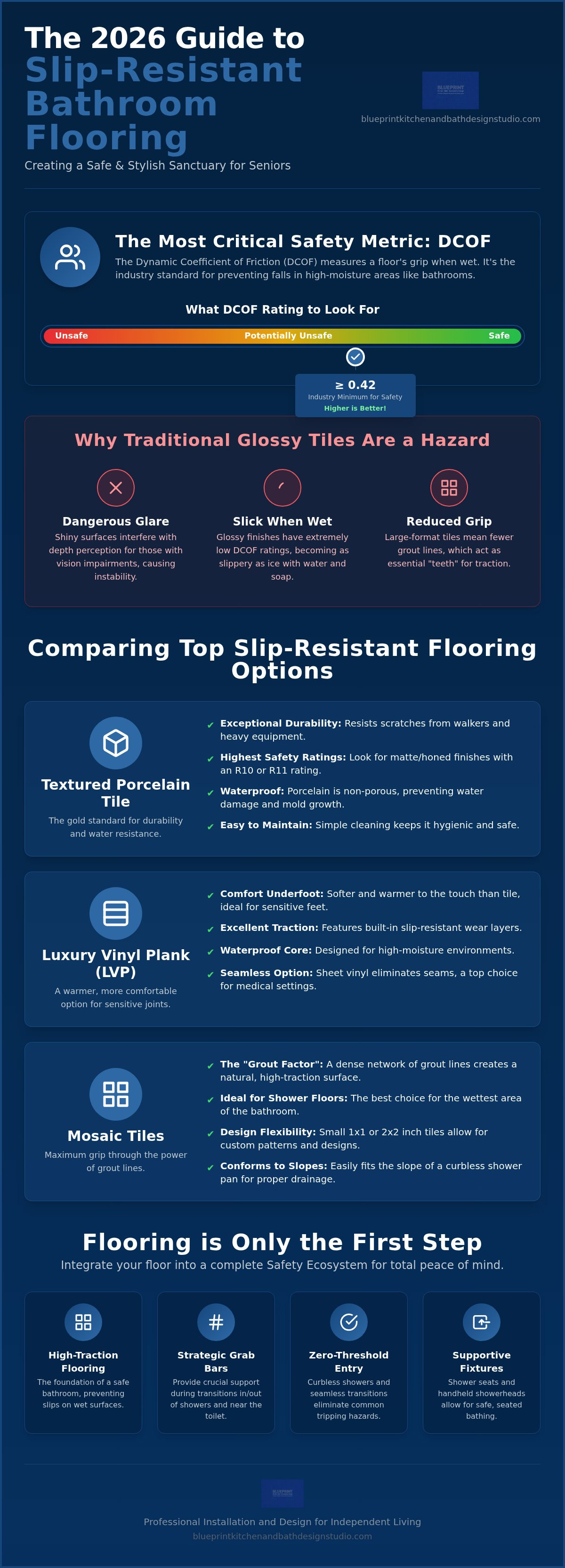
Selecting slip-resistant flooring for senior bathrooms requires a shift from purely aesthetic choices to technical precision. The primary metric used by professionals today is the Dynamic Coefficient of Friction (DCOF). This rating measures the amount of friction present on a surface when it's wet and in motion. For a bathroom to be considered safe for independent living, a DCOF rating of 0.42 is the industry's bare minimum. We often recommend materials that exceed this standard to account for the unique mobility challenges seniors face, ensuring a higher margin of safety during daily routines.
While a floor might feel secure under dry conditions, its performance changes the moment moisture is introduced. There's a significant difference between walking on a floor wet with plain water and one covered in soapy residue. Soap acts as a lubricant, dramatically reducing the grip between the foot and the floor. This is why we distinguish between slip-resistant and non-slip surfaces. No floor is truly non-slip in every possible scenario, but a high-quality material provides the necessary traction to prevent the majority of accidental falls. Understanding DCOF Ratings helps homeowners make informed decisions based on standardized testing rather than vague marketing claims.
Why Traditional Ceramic Tile Fails Seniors
Many older homes feature standard ceramic tiles with smooth, glossy glazes. These finishes are popular for their shine, but they become dangerously slick when wet. Beyond the lack of traction, glossy surfaces create glare that interferes with depth perception. For seniors with vision impairments, a shiny floor can look like a pool of water or a hole, leading to hesitation and instability. Additionally, many modern designs favor large-format tiles. While they look sleek, they require fewer grout lines. Grout provides essential "teeth" for a floor, and reducing these lines decreases the overall slip resistance of the room.
The Role of Texture in Preventing Falls
Texture is the physical foundation of stability. Tactile surfaces provide a necessary grip for both bare feet and slippers, helping the user maintain their balance during transitions. DCOF is the measure of friction on a wet surface. When we select materials, we look for a micro-texture that feels comfortable to the touch but offers high resistance under pressure. It's a delicate balance. Too much texture can make the floor difficult to clean or uncomfortable for those with sensitive skin or neuropathy. A professional selection ensures your slip-resistant flooring for senior bathrooms provides safety without compromising the ease of maintenance or the comfort of daily use.
The Best Slip-Resistant Flooring Materials for Aging-in-Place
Choosing the right slip-resistant flooring for senior bathrooms involves balancing technical safety with daily comfort. While DCOF ratings provide a baseline, the physical properties of the material determine how it feels underfoot and how it holds up over time. It's about finding a solution that supports mobility without making the home feel like a clinical facility.
Textured Porcelain and Ceramic Tiles
Porcelain is widely considered the gold standard for bathroom safety due to its extreme durability and water resistance. When you browse options, look for matte or honed finishes instead of polished surfaces. Many manufacturers now provide R-rated tiles, with R10 or R11 being ideal for wet areas. These tiles withstand the weight and friction of heavy medical equipment, such as shower chairs or walkers, without scratching. The Best Slip-Resistant Flooring Materials often include porcelain because it maintains its texture even after years of heavy use.
Luxury Vinyl Plank (LVP) and Sheet Vinyl
Luxury vinyl offers a softer and warmer alternative for seniors who prioritize joint comfort. Unlike tile, vinyl doesn't feel cold to the touch. This provides a significant benefit for those with sensitive feet or circulatory issues. Modern LVP comes with waterproof guarantees and slip-resistant wear layers designed specifically for high-moisture environments. Sheet vinyl is a frequent choice in medical settings because it lacks seams where water can seep in. It's an excellent option for a budget-friendly yet highly functional upgrade.
Mosaic Tiles for Maximum Grip
Small-format mosaics, typically 2x2 or 1x1 inches, provide exceptional traction through what professionals call the Grout Factor. These small tiles create a dense net of grout lines that act as natural grip points for the feet. This makes them the preferred choice for sloped floors in curbless shower installations. Using mosaic slip-resistant flooring for senior bathrooms allows for both superior drainage and maximum safety. Mosaics also offer incredible design flexibility. You can create modern patterns that look high-end rather than clinical.
Finding the perfect balance between safety and style is easier when you have an expert eye to guide you. If you're ready to explore these materials in person, our team can help you select the right aging-in-place flooring solutions for your specific needs.
Comparing Maintenance, Comfort, and Longevity
Choosing slip-resistant flooring for senior bathrooms involves more than just checking a safety rating. You must also consider how the material performs in your daily routine over several years. While high-traction surfaces are essential for stability, they often present unique challenges regarding hygiene and physical comfort. A floor that's difficult to maintain or painful to walk on can quickly become a source of frustration rather than a source of security.
The Maintenance Reality: Grout and Texture
There's often a direct trade-off between a floor's grip and its ease of cleaning. Highly textured surfaces are excellent at preventing slips, but those same microscopic peaks and valleys can trap soap scum and mineral deposits. To manage this, we recommend using epoxy grouts during installation. Unlike traditional cement-based grout, epoxy is non-porous and resists stains and bacteria growth. This makes it much easier to keep your bathroom hygienic without aggressive scrubbing. Additionally, choosing lighter-colored materials helps you spot spills or puddles immediately. This visual cue allows you to address liquid hazards before they lead to an accident.
Comfort and Temperature Regulation
Physical comfort is a vital component of mobility. For seniors living with neuropathy or circulatory issues, a cold, hard floor can be more than just an inconvenience; it can lead to numbness that affects balance. Luxury vinyl is naturally warmer and more resilient than stone or tile. It provides a slight "give" that's easier on the joints and can help cushion the impact if a fall does occur. If you prefer the durability of porcelain, consider integrating a radiant underfloor heating system. This addition keeps the surface at a consistent, comfortable temperature, which encourages steady movement throughout the space.
Longevity also plays a role in your long-term satisfaction. Porcelain tile is nearly indestructible and can last for decades in a high-use environment. Vinyl is highly durable but may need replacement sooner if it's subjected to heavy equipment like motorized lifts. Beyond durability, visual contrast is a critical design element. Using a floor color that contrasts sharply with the walls and fixtures helps those with low vision navigate the room safely. This simple choice defines the boundaries of the space, reducing the risk of missteps or collisions with bathroom furniture.
Professional Installation and Design in Redlands
Professional installation in Redlands requires more than just laying down new material. Many local homes utilize slab-on-grade foundations, which can present hidden moisture challenges that compromise adhesive integrity over time. Choosing slip-resistant flooring for senior bathrooms is a critical safety step, but an improper installation can create new, unseen hazards. DIY projects often result in uneven surfaces, "hollow" spots under tiles, or loose edges that catch on walkers and slippers. A professional installation ensures the subfloor is perfectly leveled and moisture-sealed, providing a foundation that remains stable for years. Precision matters when your safety is on the line.
Effective design integrates your floor into a broader aging-in-place remodeling strategy. This approach treats the bathroom as a unified environment where every element supports your independence and dignity.
The Importance of Level Transitions
The doorway is the most common site for transition-related falls. Traditional transition strips create a small but dangerous lip that can easily trip someone using a cane or walker. We focus on "Zero-Threshold" designs that provide a completely flush surface between the bedroom and bathroom. This seamless transition removes the physical barrier to entry, allowing for effortless movement. Achieving this requires precise height matching between your new slip-resistant flooring and existing bedroom carpet or wood. In wet rooms, the floor must be expertly sloped toward the drain. This ensures water moves away from the walking path without creating a steep incline that affects your balance.
Lighting and Visual Contrast
Visual cues are just as vital as physical grip for maintaining independence. Using a floor color that contrasts sharply with the walls and fixtures helps you identify the "safe" walking path at a glance. This design choice is particularly helpful for those navigating the bathroom during the night or those with low vision. We also prioritize finishes that minimize glare from overhead vanity lights. Bright reflections on a shiny floor can hide water spots or cause disorientation. A comprehensive bathroom safety upgrades plan uses these subtle visual details to guide your movement and build confidence.
Ensure your home is ready for the future with a professional flooring consultation in Redlands today.
The Safety Ecosystem: Why Flooring is Only the First Step
While slip-resistant flooring for senior bathrooms provides a critical foundation, it functions best as part of a comprehensive safety ecosystem. High-traction surfaces significantly reduce the risk of a slide, but they can't prevent every loss of balance. Real independence comes from a multi-layered approach where every element of the room works in tandem to support your movement. This means looking beyond the floor to the walls and structural transitions that define your daily routine. A safe bathroom isn't just about one product; it's about a unified design that anticipates your needs at every step.
Integrating Grab Bars and Seating
A secure floor needs a secure handhold. Even with the best traction, a sudden dizzy spell or a momentary lapse in balance requires a reliable point of contact. This is why professional grab bar installation is the essential partner to your new flooring. Standard placement ensures that a stable grip is always within reach as you move across the room or transition from a seated position. These bars must be anchored directly into the wall studs rather than just the tile surface to withstand significant weight in an emergency. The synergy between slip-resistant flooring for senior bathrooms and a secure handhold provides the physical confidence needed to use the space without assistance.
Blueprint’s Approach to Senior Safety
Total accessibility is achieved when your flooring flows seamlessly into a curbless shower. By removing the traditional tub wall or shower lip, you eliminate the single most common tripping hazard in the home. As a SHSS Certified Senior Home Safety specialist, we don't just look at the materials. We assess how you interact with the entire space. We examine lighting levels, doorway widths, and the specific distance between fixtures to ensure every modification serves your unique mobility needs. This holistic view prevents the "clinical" look while maximizing functional safety.
Our local assessment process serves homeowners throughout Redlands, Yucaipa, and Beaumont. We understand the specific architectural styles of Inland Empire homes and how to adapt them for long-term safety. We treat each project as a lifestyle upgrade that prioritizes your dignity and autonomy. By choosing a specialized partner, you're not just buying a floor. You're investing in a professionally designed environment that protects your well-being. Schedule your bathroom safety assessment with Blueprint today to begin creating a space that offers both beauty and lasting security.
Securing Your Independence through Specialized Bathroom Design
Creating a bathroom that balances high-end aesthetics with clinical safety is a manageable goal when you understand the technical standards. You now know that selecting slip-resistant flooring for senior bathrooms begins with verifying DCOF ratings and choosing materials like textured porcelain or resilient luxury vinyl. These choices don't just prevent falls; they provide the daily stability required to maintain your dignity and autonomy at home. A truly safe environment relies on the seamless integration of surfaces, lighting, and structural supports like curbless transitions.
As a SHSS Certified Senior Home Safety Specialist, Blueprint Kitchen and Bath Design Studio understands the unique architectural needs of homes in Redlands and the Inland Empire. We specialize in the expert integration of grab bars and curbless showers to ensure your renovation is both beautiful and functionally superior. Don't leave your safety to chance with a general contractor who lacks specialized training in mobility challenges. Book a Professional Bathroom Safety Assessment to transform your space into a secure sanctuary. You can move forward with confidence knowing your home is prepared for the years ahead.
Frequently Asked Questions
What is the highest slip-resistance rating for bathroom tile?
The highest slip-resistance rating for residential bathroom tile is typically R13 on the European Ramp Test scale, though R11 or R12 is more common for home use. These ratings indicate the material can maintain traction at steep angles even when wet. In the United States, professionals prioritize the Dynamic Coefficient of Friction (DCOF) rating. A score above 0.42 is the standard for safety, but higher scores provide an even greater margin of protection for seniors.
Can I make my existing bathroom floor non-slip without replacing it?
You can improve the traction of existing floors using topical anti-slip treatments or clear abrasive coatings. These solutions etch the surface or add a gritty texture to increase friction. While these methods are cost-effective, they are temporary measures that require reapplication over time. For a permanent solution, replacing the surface with dedicated slip-resistant flooring for senior bathrooms is the most reliable way to ensure long-term stability and peace of mind for your family.
Is vinyl flooring better than tile for seniors?
Vinyl flooring is often preferred for its warmth and resilience, which provides better impact reduction in the event of a fall. It's softer on the joints and feels more comfortable for those with sensitive feet. However, textured porcelain tile offers superior durability and can better withstand the weight of heavy medical equipment like walkers or motorized chairs. Both materials are excellent choices when they meet the necessary slip-resistance standards for aging-in-place safety.
What is DCOF and why does it matter for bathroom safety?
DCOF stands for Dynamic Coefficient of Friction, and it measures the amount of friction present on a wet surface when a person is in motion. This metric is critical because it reflects real-world conditions in a bathroom where water and soap are frequently present. A rating of 0.42 or higher ensures the floor provides enough "grip" to prevent the foot from sliding, which is essential for seniors who may have balance or mobility challenges.
Are small mosaic tiles harder to clean in a senior bathroom?
Small mosaic tiles do require more maintenance because the increased number of grout lines can trap soap scum and mineral deposits. However, these grout lines are exactly what provide the superior traction necessary for a safe shower floor. To make cleaning easier, we recommend using high-quality epoxy grout. Epoxy is non-porous and resists staining, which allows you to maintain a hygienic environment without the need for strenuous scrubbing or harsh chemical cleaners.
How much does it cost to install slip-resistant flooring in Redlands?
The total investment for installing slip-resistant flooring in Redlands depends on the square footage of your bathroom and the specific materials you select. Porcelain tile generally requires more labor than luxury vinyl plank, especially if the project involves creating a curbless transition. While we don't provide fixed pricing without an assessment, professional installation ensures the subfloor is properly sealed against moisture, which protects the structural integrity of your home for the long term.
Do non-slip floors help with wheelchair or walker use?
High-traction floors are vital for anyone using mobility aids like wheelchairs or walkers. These surfaces provide the necessary resistance for rubber tips and wheels to "bite" into the floor, preventing the equipment from sliding away during transitions. Slip-resistant flooring for senior bathrooms also supports the extra weight of these devices without cracking or shifting. This stability is essential for maintaining a consistent, predictable path of travel throughout the room, reducing the risk of accidental tips.
Should I use rugs on a slip-resistant bathroom floor?
We generally advise against using rugs in a senior bathroom, even if they have a rubber backing. Rugs create a slight change in elevation that can catch the edge of a slipper or walker, leading to a trip. The goal of installing slip-resistant flooring is to provide a consistent, high-traction surface across the entire room. If you need a soft surface for drying off, consider a low-profile, weighted mat that is removed immediately after use to keep the walking path clear.
Disclaimer
This article provides general educational information and design inspiration, not project-specific professional advice. Costs, timelines, permit requirements, building codes, and product suitability vary by property and jurisdiction. Final scope, pricing, and specifications are established only through a written proposal or contract. Consult qualified professionals and local building officials before beginning work. Unless expressly identified as a completed Blueprint project, images are illustrative and may include stock photography, design renderings, or AI-generated imagery.


