
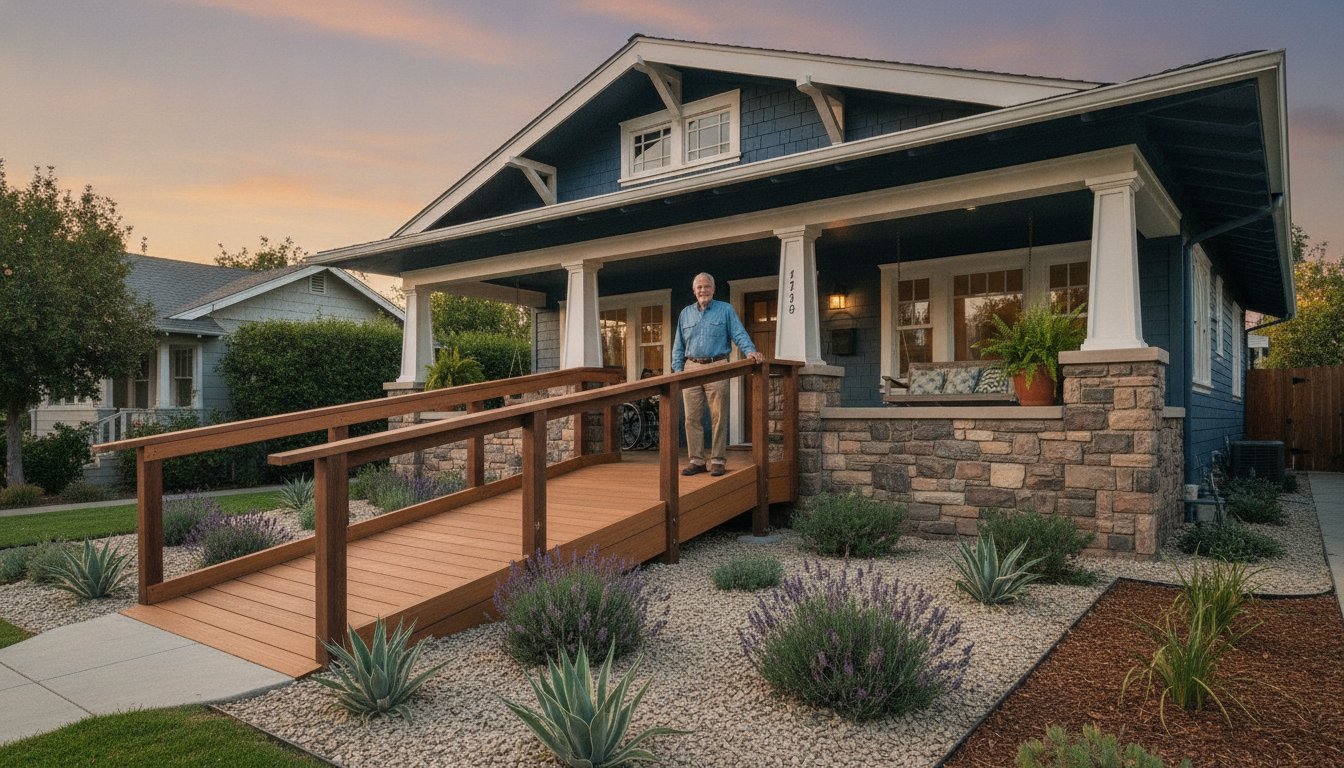

Article by
Jake Blasco, B-2 Licensed Contractor
Jake Blasco is the kitchen, bath, and accessibility specialist behind Blueprint Kitchen & Bath Design Studio. He helps homeowners create beautiful, functional spaces through thoughtful planning, practical design, and careful project coordination. His background in commercial production and set construction brings a strong eye for detail, organization, and finish quality to every project. Jake is a certified Senior Home Safety Specialist® and Grab Bar Specialist, allowing him to integrate aging-in-place and home-safety features without sacrificing style. He serves Huntington Beach, Orange County, and surrounding Southern California communities.
A wheelchair ramp should feel like a welcoming bridge to your front door, not a clinical intrusion that reminds you of a hospital corridor. For many homeowners, the need for wheelchair ramp installation in Redlands comes with a mix of relief and anxiety. You want the freedom of easy access, but you likely worry about "medicalizing" the look of a beautiful property or, worse, installing a structure that doesn't meet strict safety codes. It's a delicate balance between functional necessity and the aesthetic value of your home.
We understand that maintaining your independence shouldn't mean sacrificing the dignity of your living space. This article explores how a certified aging-in-place specialist navigates the complexities of the California Building Code, from the mandatory 1:12 slope ratio to the specific permit requirements of the City of Redlands. You'll discover how professional guidance ensures your new entry solution is structurally sound, fully compliant, and designed to blend seamlessly with your existing architecture. We'll walk through the technical standards and design choices that transform a simple ramp into a permanent investment in your long-term mobility.
Key Takeaways
- Learn why a Senior Home Safety Specialist (SHSS) offers more precise mobility solutions than a standard general contractor.
- Understand the specific technical requirements for wheelchair ramp installation Redlands homeowners must follow, including the essential 1:12 slope ratio.
- Compare modular systems and custom-built options to find a solution that balances quick installation with your home's unique aesthetic.
- Identify the local permit requirements and terrain challenges unique to San Bernardino County and the Redlands area.
- Discover how professional design can integrate safety features without compromising your property's visual appeal or long-term market value.
Why You Need an Aging in Place Specialist for Wheelchair Ramp Installation in Redlands
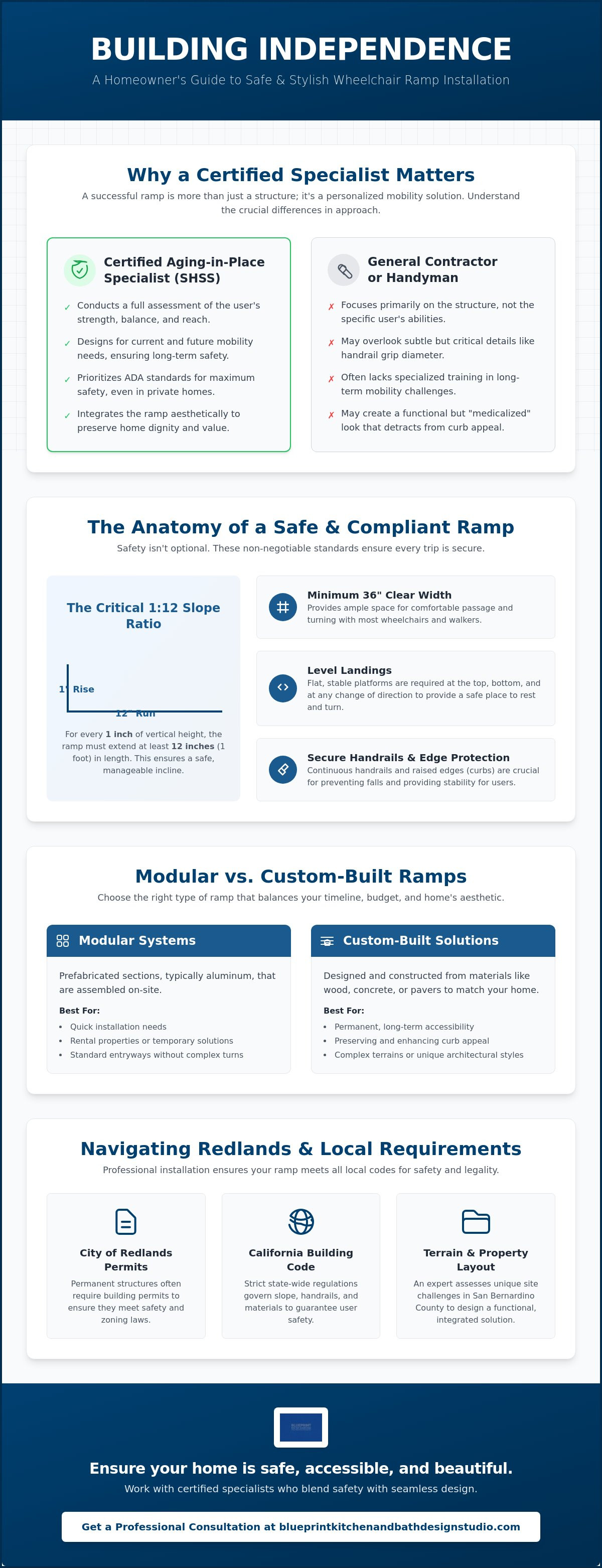
A Wheelchair ramp is often the first modification a family considers when mobility becomes a challenge. However, a successful wheelchair ramp installation in Redlands requires more than just pouring concrete or assembling aluminum parts. An Aging in Place Specialist is a professional specifically trained in Senior Home Safety (SHSS) to evaluate how a person interacts with their environment. While a general contractor might focus on the structural integrity of the ramp, a specialist looks at the user's specific strength, reach, and balance. This ensures the final product isn't just a path into the home, but a tool for independence.
To better understand how these systems are professionally integrated, watch this helpful video:
General contractors often overlook subtle but critical nuances. For instance, the diameter of a handrail grip can determine whether someone with arthritis can safely steady themselves during a descent. A specialist conducts a comprehensive home assessment before any materials are selected. This process balances medical necessity with the desire for residential comfort. The goal is to provide a solution that maintains the dignity of the home’s appearance while providing the clinical level of safety required for daily use.
The Difference Between a Handyman and a Certified Specialist
Handymen are excellent for general repairs, but they often lack the training to anticipate long-term mobility needs. A certified specialist understands that a user's condition may change over time. They design for the future, not just the present. This includes ensuring compliance with ADA standards, even in private residences where these codes aren't always legally mandated. By prioritizing these standards, specialists create a safer environment that significantly reduces the risk of falls or equipment failure.
The Role of SHSS Certification in Home Safety
The Senior Home Safety Specialist (SHSS) designation provides homeowners with peace of mind. This certification means the professional has mastered the technical aspects of home modification, from weight-bearing requirements to slip-resistance. This level of expertise is vital for senior home safety remodeling Redlands families rely on. It prevents common installation errors, such as incorrect slope angles or improper landing sizes, which can lead to secondary injuries. When you work with a certified expert, you're investing in a system designed by someone who understands the physical realities of aging.
The Anatomy of a Safe Residential Ramp: Slope, Width, and Materials
Designing a ramp involves more than finding a path from the driveway to the door. It requires a precise understanding of physics and ergonomics. The structural foundation of any wheelchair ramp installation in Redlands is the 1:12 slope ratio. This means for every one inch of vertical rise, you must have 12 inches of horizontal ramp. For a manual wheelchair user, this ratio ensures they can propel themselves without exhaustion or the risk of tipping backward. It also provides a manageable grade for caregivers who are assisting a loved one, making the entry process predictable and secure.
Beyond the slope, width and stability are paramount. A ramp should have a minimum clear width of 36 inches to allow for comfortable maneuvering. However, we often recommend slightly wider paths to accommodate various mobility device models and turning radiuses. Safety also depends on "landing" areas. These flat platforms are necessary at the top and bottom of every run, as well as at any change in direction. According to the ADA Standards for Accessible Design, landings at the top must be at least five feet wide, while bottom landings should extend six feet past the ramp's end. In Southern California, we also pay close attention to surface textures. High-traction surfaces are vital to prevent slipping during our occasional rainy season or even from heavy morning dew.
Calculating the Proper Ramp Length for Your Entryway
The math of a safe ramp is uncompromising. If your porch has a 24-inch rise, you'll need 24 feet of ramp to maintain a safe 1:12 slope. Attempting to shorten this length creates a steep incline that can be dangerous for everyone involved. In smaller Redlands yards, we often utilize switchback designs. These allow the ramp to zig-zag back and forth, providing the necessary length without extending deep into your lawn or driveway. It's a practical way to ensure safety while respecting the footprint of your property.
Choosing Materials: Aluminum vs. Wood vs. Composite
- Aluminum: These systems offer low maintenance and high durability. They often feature open-mesh surfaces that prevent water pooling and provide excellent grip in all weather conditions.
- Wood: Many homeowners prefer wood for its natural aesthetic. However, it requires significant upkeep. You'll need to regularly seal and stain the wood to prevent rot, splinters, and warping, which can create tripping hazards over time.
- Composite: This material provides a middle ground. It offers a deck-like look that blends with your home's siding but is engineered for longevity and slip resistance with much less maintenance than traditional lumber.
Selecting the right material is a balance between your home’s style and your ability to manage future maintenance. If you're unsure which layout fits your property, our team at Blueprint Kitchen and Bath Design Studio can help you visualize the most efficient and attractive design for your specific needs.
Modular vs. Custom Built Ramps: Choosing the Right Solution for Your Home
Deciding between a modular system and a custom-built structure is a pivotal choice in the process of wheelchair ramp installation in Redlands. This decision isn't merely about the budget; it's about how the modification aligns with your timeline, your home’s architecture, and your long-term goals for independence. While both options must strictly adhere to the ADA Accessibility Standards for ramps to ensure safety, they offer different functional and emotional benefits. Understanding these differences allows you to choose a solution that feels like a natural part of your daily routine rather than a temporary intrusion.
A common misconception among homeowners is that a permanent, custom-built ramp is always superior for property value. In reality, the "best" choice depends on the specific needs of the user and the layout of the property. A modular system offers flexibility that a permanent concrete structure cannot. Conversely, a custom-designed ramp can be integrated so thoroughly into your home's exterior that it enhances curb appeal. This choice is a central part of any comprehensive aging in place remodeling Redlands families undertake to ensure their homes remain safe and accessible for years to come.
When to Choose a Modular Aluminum System
Modular aluminum ramps are the ideal choice for immediate needs, such as when a loved one is returning home from a rehabilitation facility. These systems are pre-engineered and can often be installed in a single day. They feature an open-mesh surface that provides exceptional drainage and traction, which is particularly helpful during the damp morning hours in Southern California. Because they are semi-permanent, these ramps can be removed, reconfigured, or even sold if your mobility needs change or if you decide to move. For short-term recovery periods, some specialists even offer rental options, providing a high-quality safety solution without a permanent commitment.
The Aesthetic Advantage of Custom Built Ramps
Custom-built ramps offer a distinct aesthetic advantage by using materials that match your home’s current siding, trim, and landscaping. By utilizing a design studio approach, we can create a structure that blends seamlessly with your existing porch or driveway. This prevents the "medical facility" look that many people associate with home accessibility modifications. A custom approach allows for the integration of ramps into "curbless" entry designs or lush garden paths, treating the ramp as a high-end architectural feature. This ensures that your home remains a place of beauty and dignity while providing the clinical level of safety required for daily movement.
For homeowners who want to see how high-end design can transform outdoor areas into stunning, functional spaces, you can discover BigDecks and their portfolio of premium construction projects.
Navigating Local Requirements and Redlands Home Safety Standards
Redlands presents unique geographical challenges that general contractors often underestimate. The city's characteristic hilly terrain and sloped lots mean that a wheelchair ramp installation in Redlands requires sophisticated site leveling and precise grading. For those requiring expert concrete work to prepare their site, check out Born Integrated Construction to ensure a stable and level foundation. Without local expertise, you might end up with a ramp that technically meets the 1:12 slope ratio but fails to provide a perfectly level landing at the entryway. In San Bernardino County, permanent ramps typically require a building permit from the City of Redlands Building and Safety Department. This process involves a plan review and inspections to ensure the structure adheres to safety codes and local environmental factors.
Local knowledge is also vital for understanding the permit fee structure, which the city calculates based on the project's valuation. Navigating these administrative hurdles ensures that your modification is legally compliant and structurally sound. By partnering with a specialist who understands these regional nuances, you avoid the frustration of failed inspections or mid-project delays. Our role is to act as your pragmatic expert, handling the technicalities of the building code so you can focus on the comfort and safety of your loved ones.
Doorway Widening: The Often Forgotten Step
A professionally installed ramp provides effortless access to your porch, but it's only half the solution if the entrance itself remains a barrier. Many older homes in the Inland Empire feature standard 30-inch doorways, which are often too narrow for modern power chairs or even standard manual wheelchairs. We prioritize doorway widening for wheelchair users to ensure a minimum clearance of 32 to 36 inches. This modification allows for a smooth, stress-free transition from the ramp into the living space, preventing damage to door frames and providing the user with greater autonomy within their own home.
Addressing Redlands’ Historic Home Challenges
Our city is celebrated for its stunning Victorian and Craftsman architecture, particularly within our historic districts. However, modifying these properties requires a delicate touch to preserve their architectural integrity. Adding a standard industrial ramp to a 19th-century porch can clash with the neighborhood's aesthetic and may even conflict with local preservation guidelines. We specialize in designing accessibility solutions that utilize period-appropriate materials and integrated landscaping. By working within the constraints of narrow original walkways and ornate porches, we ensure your home remains a landmark of beauty while becoming a model of safety.
Navigating these local nuances is what defines a specialized guardian of your home’s safety. If you are concerned about how a ramp might affect your property's historic status or fit on a sloped lot, consult with our specialized design studio to discuss a tailored plan that respects both your home's legacy and your future mobility.
Blueprint Kitchen and Bath Design Studio: Your Certified Home Accessibility Partners
At Blueprint Kitchen and Bath Design Studio, we recognize that a home is more than just a structure; it's a sanctuary of memories and independence. Our approach as a specialized design studio ensures that your wheelchair ramp installation in Redlands is both a clinical success and an aesthetic improvement. We prioritize the balance between technical stability and high-end home design, treating every project as a lifestyle upgrade rather than a medical necessity. Unlike general equipment retailers who focus solely on hardware, we provide integrated architectural solutions that respect the dignity and visual harmony of your living space.
Our Senior Home Safety Specialist (SHSS) certification through Age Safe America serves as a key differentiator in the Redlands market. This designation confirms that we've mastered the nuances of mobility challenges and the precise structural requirements needed to address them safely. We maintain a whole-home perspective that extends far beyond the front door. We understand that a safe entry is only the first step in a larger journey of independence. This is why our expertise includes everything from the initial ramp to professional grab bar installation Redlands CA families trust for daily stability and peace of mind.
Beyond Ramps: A Comprehensive Safety Strategy
A truly accessible home functions as one connected system where every modification supports the next. We evaluate the entry, the kitchen, and the bathroom to ensure there are no weak links in your safety chain. For example, the bathroom safety upgrades Redlands CA residents often request are designed to match the same high standards as our exterior modifications. This cohesive strategy allows Inland Empire seniors to move through their homes with confidence. We focus on the practical impact each modification has on your daily routine, ensuring every inch of your space supports your long-term well-being and autonomy.
Start Your Mobility Transformation Today
Scheduling an on-site safety assessment is the best way to begin your home’s transformation. During this phase, our team evaluates your specific mobility goals and the unique layout of your property to determine the most efficient path forward. We provide a transparent planning process that outlines exactly how we'll bridge the gap between your current challenges and your desired outcomes. Our service area covers Redlands, Loma Linda, Yucaipa, and the surrounding communities. We invite you to a consultation to discover how the specialized expertise at Blueprint Kitchen and Bath Design Studio can help you age in place with comfort, safety, and dignity.
Securing Your Future with Expert Accessibility Solutions
A successful home modification is more than a structural addition; it's a commitment to your long-term safety and personal dignity. We've explored how technical precision and local expertise in navigating the unique terrain of the Inland Empire are vital for a reliable outcome. Whether you choose the flexibility of a modular system or the seamless integration of a custom-built design, the right solution should empower your daily movement without compromising your home's character.
Professional wheelchair ramp installation Redlands families rely on involves balancing strict safety standards with a deep respect for your property's architectural heritage. At Blueprint Kitchen and Bath Design Studio, we serve as your trusted advisors, bringing SHSS Certified expertise to every project. We specialize in ADA-compliant residential design that prioritizes both function and beauty, ensuring your home remains a place of comfort rather than a clinical environment.
Schedule Your Home Accessibility Assessment with Blueprint Kitchen and Bath Design Studio today to begin planning a safer, more accessible entry for your home. You deserve a living space that supports your independence and reflects your personal style for years to come.
Frequently Asked Questions
Do I need a permit for a wheelchair ramp in Redlands?
Yes, the City of Redlands typically requires a building permit for permanent wheelchair ramp installations. The city calculates permit fees based on the total valuation of the project, which includes a building permit fee, a plan review fee, and a state surcharge. It's best to consult with the city's One Stop Permit Center to ensure your design meets local zoning and setback requirements before construction begins.
How much space do I need for a wheelchair ramp?
You need 12 inches of horizontal length for every one inch of vertical rise to maintain the safe 1:12 slope ratio. For example, a 24-inch porch height requires a 24-foot ramp to be safe for manual wheelchair use. You must also account for flat landings at the top, bottom, and any turns to ensure there is enough room for a mobility device to maneuver safely.
Can a wheelchair ramp be installed over existing stairs?
Yes, modular aluminum ramps can often be installed directly over existing stairs if the layout allows for a proper slope. However, custom-built ramps may require removing or modifying the stairs to ensure structural stability and compliance with the 1:12 ratio. A professional assessment will determine if your stairs can safely support the new configuration or if a different path is necessary for your entryway.
What is the safest material for a ramp in the Inland Empire climate?
Aluminum is often considered the safest material for wheelchair ramp installation Redlands homes because it doesn't warp or rot in the Southern California heat. Many aluminum systems feature an open-mesh surface that provides excellent traction during morning dew or occasional rainy periods. Unlike wood, aluminum won't splinter or crack over time, ensuring a consistently stable and low-maintenance surface for years of daily use.
How wide should a residential wheelchair ramp be?
A residential ramp must have a minimum clear width of 36 inches between the handrails. While 36 inches is the standard requirement, some homeowners prefer a width of 48 inches to accommodate larger power chairs or to provide extra comfort for caregivers. Ensuring this width allows for safe passage and prevents the wheels of a mobility device from catching on the edges or handrail supports.
Is a modular ramp better than a custom wood ramp?
The best option depends on your specific timeline and aesthetic preferences. Modular ramps are superior for quick installation and can be removed or reconfigured if your needs change. Custom wood ramps offer a more traditional look that blends with your home’s existing architecture but require significant maintenance. You'll need to regularly stain and seal wood to prevent safety hazards like rot and warping.
What is an Aging in Place Specialist and why should I hire one?
An Aging in Place Specialist is a professional trained to evaluate home safety through the lens of mobility and aging. Hiring a certified specialist ensures your wheelchair ramp installation Redlands project meets clinical safety standards rather than just basic building codes. They understand how to balance your physical requirements with high-end design, ensuring your home remains both safe and beautiful as your needs evolve.
Does insurance or Medicare cover the cost of ramp installation?
Medicare typically doesn't cover the cost of a wheelchair ramp because it's considered a home modification rather than durable medical equipment. However, some long-term care insurance policies or veteran assistance programs may provide coverage for these modifications. It's important to check with your specific provider to see if they offer any financial support for medically necessary home accessibility upgrades before you begin your project.
Disclaimer
This article provides general educational information and design inspiration, not project-specific professional advice. Costs, timelines, permit requirements, building codes, and product suitability vary by property and jurisdiction. Final scope, pricing, and specifications are established only through a written proposal or contract. Consult qualified professionals and local building officials before beginning work. Unless expressly identified as a completed Blueprint project, images are illustrative and may include stock photography, design renderings, or AI-generated imagery.


