
Article by
Jake Blasco, SHSS, B-2 Licensed Contractor
Jake Blasco is the kitchen, bath, and accessibility specialist behind Blueprint Kitchen & Bath Design Studio. He helps homeowners create beautiful, functional spaces through thoughtful planning, practical design, and careful project coordination. His background in commercial production and set construction brings a strong eye for detail, organization, and finish quality to every project. Jake is a certified Senior Home Safety Specialist® and Grab Bar Specialist, allowing him to integrate aging-in-place and home-safety features without sacrificing style. He serves Huntington Beach, Orange County, and surrounding Southern California communities.
What if the most essential room in your home could protect your physical safety without sacrificing a single ounce of high-end style? Many homeowners feel a deep sense of anxiety when considering home modifications, fearing that necessary safety equipment will turn their private sanctuary into a cold, clinical environment that devalues their property. It's a common concern that choosing security means losing the aesthetic you've worked so hard to curate. However, the most effective accessible bathroom design ideas today prove that safety and luxury are not mutually exclusive; they are actually perfect partners in modern renovation.
You deserve a space that supports your mobility while reflecting your personal taste. We promise to show you how to transform your bathroom into a beautiful, accessible sanctuary that supports lifelong independence and provides total peace of mind for aging in place. In this article, we'll preview the essential elements of universal design, from curbless showers that eliminate trip hazards to stylish, reinforced hardware that offers stability without the hospital look. You'll discover how thoughtful layout changes and sophisticated material choices can create a room that is both a functional necessity and an empowering lifestyle upgrade.
Key Takeaways
- Learn the principles of universal design to create a space that is effortlessly usable for all ages while maintaining the look of a luxury renovation.
- Explore practical accessible bathroom design ideas like curbless showers and walk-in tubs that balance daily safety with a spa-like atmosphere.
- Discover how modern grab bars and lever fixtures provide essential stability while blending into your decor as stylish, dual-purpose accessories.
- Master the technical details of invisible safety, from slip-resistant flooring with high friction ratings to motion-activated lighting for nighttime navigation.
- Understand why a specialized design process is necessary to identify specific mobility needs and ensure your home remains a sanctuary of independence.
The Evolution of Accessible Bathroom Design: Beyond the Hospital Look
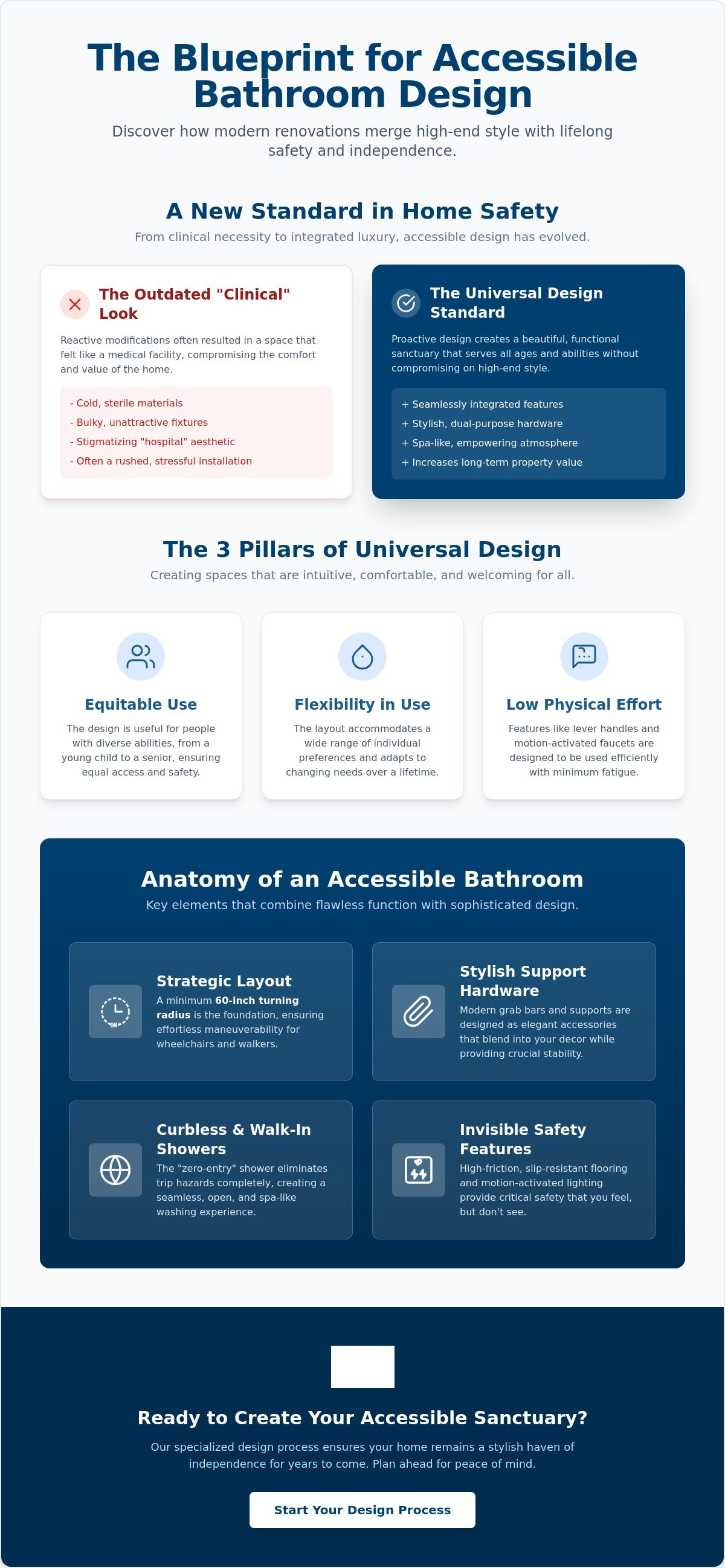
The concept of the "handicap bathroom" has undergone a radical transformation. In the past, safety modifications often felt like a clinical intrusion into the home, characterized by cold stainless steel and bulky plastic fixtures. Today, sophisticated Universal Design principles have replaced that medical aesthetic with a focus on seamless integration. This philosophy ensures that environments are usable by everyone, regardless of their age or physical ability, without making the space look like a care facility. It's about creating a room that works for a toddler, a busy professional, and a senior with equal efficiency.
Modern accessible bathroom design ideas prioritize the psychological well-being of the homeowner. When a space is truly barrier-free, it doesn't just prevent falls; it fosters a sense of dignity and autonomy. Investing in senior home safety remodeling Redlands is no longer seen as a concession to aging. Instead, it is a proactive lifestyle choice that enhances the comfort of your home today while securing your independence for the future. By removing physical obstacles, we remove the daily stress associated with personal care.
To better understand this concept, watch this helpful video:
What is Universal Design in the Modern Bathroom?
Universal Design relies on core principles to create a space that feels intuitive and welcoming. These principles include:
- Equitable Use: The design is useful and marketable to people with diverse abilities.
- Flexibility: The layout accommodates a wide range of individual preferences and functional needs.
- Low Physical Effort: Features are designed to be used efficiently and comfortably with minimum fatigue.
This broad appeal significantly increases property resale value because the home is already prepared for any demographic. We move the conversation from "medical necessity" to "empowered independence," treating high-end safety as a standard luxury feature that happens to provide lifelong stability.
Why Proactive Design Beats Reactive Modification
Waiting for a crisis often leads to the hidden costs of emergency remodels. When a renovation happens under the pressure of a hospital discharge, choices are limited and aesthetics are usually ignored. Integrating safety features during a standard home update allows for better material matching and structural integrity. Universal Design serves as the definitive standard for future-proofing homes by ensuring every architectural element remains functional for residents at every stage of life. This methodical approach results in a bathroom that looks intentional rather than retrofitted. Planning ahead ensures your accessible bathroom design ideas are executed with precision and high-end style.
Strategic Layouts: Curbless Showers and Walk-in Tub Innovations
A successful bathroom renovation begins with a sophisticated understanding of spatial logic. Integrating accessible bathroom design ideas into your home layout requires a balance of aesthetic vision and functional precision. One of the most critical technical requirements is the turning radius. To accommodate a wheelchair or walker comfortably, a minimum of a 60-inch turning radius, or a 5-foot circle, is necessary. This clear floor space allows for effortless maneuverability, ensuring that the room feels open and easy to navigate rather than cramped or restrictive.
Curbless Showers: The Ultimate Barrier-Free Solution
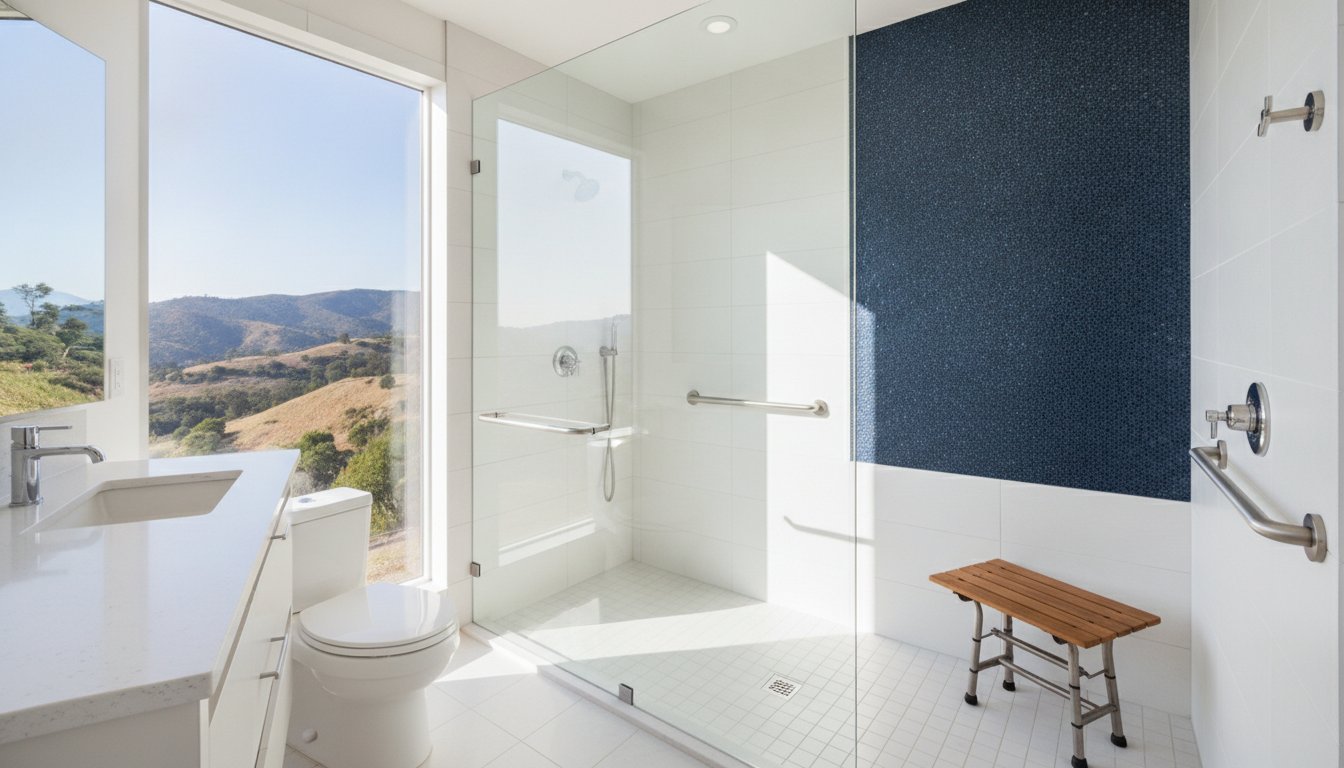
The curbless, or zero-entry, shower is the gold standard for modern safety and style. By removing the traditional threshold, you eliminate the primary trip hazard in the bathroom. This creates a seamless transition from the main floor into the bathing area. Linear drains are the secret to a functional, beautiful curbless layout. These sleek, recessed channels allow the entire shower floor to slope in a single direction. This design choice is far more stable for mobility aids than a traditional center drain, which requires a "bowl" shape that can cause instability. This is why curbless showers are a top choice for home modification after hip replacement, as they allow for a steady, level entry during the recovery process.
Homeowners can choose between different aesthetic approaches for these barrier-free spaces. A fixed glass partition offers a minimalist, spa-like appearance while containing water spray effectively. Alternatively, a full "wet room" concept waterproofs a larger portion of the bathroom, providing maximum flexibility and an expansive, high-end feel. Both options prioritize ease of movement and long-term utility.
Walk-in Tubs and Seated Bathing Options
For those who prefer a soaking experience, walk-in tubs offer a blend of therapeutic hydrotherapy and essential fall prevention. When selecting a tub, look for features that prioritize both comfort and efficiency. Low-entry thresholds, heated seats, and fast-drain technology are essential. Fast-drain systems are particularly important; they ensure the user doesn't have to sit in a cooling tub while waiting for the water to empty. This focus on practical comfort makes the bathing experience restorative rather than a chore.
If a full walk-in tub isn't the right fit, seated bathing can be integrated into a shower through built-in benches. Floating stone benches offer a modern, airy look, while tiled-in benches provide a sense of permanence and extra stability. Strategic placement of a handheld showerhead is also vital. Mounting the controls within easy reach of the seat allows for a relaxing, independent experience. When planning these structural changes, partnering with a specialist in aging-in-place remodeling ensures that every technical detail meets your specific lifestyle requirements.
Essential Safety Hardware: Integrating Grab Bars and Lever Fixtures
Hardware serves as the tactile foundation of bathroom safety. It's the physical point of contact that provides stability when surfaces are wet or when a momentary loss of balance occurs. Integrating accessible bathroom design ideas into your home doesn't require a compromise on style. Modern hardware manufacturers now produce safety components that mirror the aesthetics of high-end residential fixtures, allowing you to maintain a cohesive design theme throughout the space. The goal is to provide reliable support that feels like an intentional part of the decor rather than a clinical addition.
Strategic placement is essential for hardware to be effective. You need support at critical transition zones, such as entry points to the shower and "sit-to-stand" assist areas near the toilet. According to ADA standards, which serve as the gold standard for residential safety, side grab bars should be 42 inches long and mounted 12 inches from the back wall to ensure optimal leverage. Professional grab bar installation for seniors ensures these fixtures are anchored correctly to handle sudden force, providing the security you need for independent living.
The 'Invisible' Grab Bar: Style Meets Structural Support
The latest innovations in safety hardware include dual-purpose designs. These "invisible" grab bars function as elegant towel racks, soap dishes, or toilet paper holders while meeting rigorous weight-bearing standards. High-quality safety bars are engineered to support 250 lbs or more of sudden force, ensuring they won't pull away from the wall during a fall. You can find these bars in sophisticated finishes like brushed gold, matte black, and polished chrome to match your existing faucets and lighting.
Structural integrity is just as important as the finish. During a full renovation, we can reinforce the walls with solid wood blocking behind the tile. For retrofits in existing bathrooms, we use specialized heavy-duty anchors that provide a secure mount without requiring us to open the walls. This methodical approach ensures that every point of contact in your bathroom is a reliable source of stability.
Ergonomic Fixtures and Smart Technology
Fixtures should be as easy to operate as they are beautiful. Lever handles are the preferred choice for accessible spaces because they require no twisting or gripping of the wrist. Lever handles reduce joint strain for those with mobility challenges, making it simple to control water flow and temperature with a light touch. This is particularly beneficial for individuals managing arthritis or limited hand strength.
Smart technology further enhances this ease of use. Touchless faucets and thermostatic valves help prevent scalding by maintaining a consistent water temperature. Additionally, comfort-height toilets are a vital upgrade. By increasing the seat height to 17-19 inches from the floor, you reduce the distance the body must travel to sit or stand. These small, precise adjustments create a bathroom that is significantly more efficient and comfortable for daily routines.
Lighting and Surface Textures: Invisible Safety Upgrades
Some of the most powerful accessible bathroom design ideas are those you don't notice at first glance. While layout and hardware provide the structural framework for safety, lighting and surface textures provide the sensory support needed to prevent accidents. These "invisible" upgrades ensure that the environment remains predictable and secure, even when surfaces are wet or vision is compromised. By focusing on the technical specifications of materials, you can create a high-end aesthetic that functions with clinical precision.
Choosing the Right Non-Slip Flooring
Selecting the correct floor surface is a matter of physics. Homeowners should look for the Dynamic Coefficient of Friction (DCOF) rating. For indoor level spaces that are likely to be wet, a DCOF value of 0.42 or greater is the industry standard for safety. Small-format tiles, such as mosaics, are excellent for showers because the frequent grout lines provide natural traction for the feet. If you prefer the look of large-format porcelain, ensure the product has a textured finish specifically designed for wet environments.
Luxury Vinyl Plank (LVP) is another superior option for a modern home. Many high-end LVP products offer embossed textures that mimic wood grain while providing excellent slip resistance. These surfaces are warmer and softer than stone, which is gentler on the joints. By choosing the right material, you eliminate the need for traditional bath mats. These mats are often hidden trip hazards that slide or bunch up, creating more danger than they prevent.
Lighting for Vision and Fall Prevention
Lighting must be layered to be effective. A single overhead fixture often creates deep shadows in the shower or near the vanity, which can lead to missteps. We recommend combining ambient ceiling lights with dedicated task lighting at the mirror and inside the bathing area. Motion-activated toe-kick lighting is a transformative addition for nighttime safety. These low-level LED strips illuminate the path to the toilet without the harsh glare of a main light, preserving your night vision and preventing disorientation.
Reducing glare is equally important for aging eyes. High-gloss tiles and polished countertops reflect light in ways that can be blinding or confusing. Choosing matte or honed finishes creates a softer, more even distribution of light. Additionally, using color contrast can help define edges. For example, a dark vanity against a light wall or a contrasting border on the edge of a shower bench helps the brain quickly identify changes in level. Installing rocker-style light switches at a lower, accessible height ensures that everyone can operate the system with ease. If you are ready to enhance your home with these integrated features, explore our slip-resistant flooring and accessible remodeling services.
Transforming Your Inland Empire Home: The Professional Design Process
Executing high-end accessible bathroom design ideas requires more than a standard contractor's license. It demands a specialized understanding of how physical mobility interacts with the built environment. While a general contractor focuses on building to code, a Senior Home Safety Specialist (SHSS) focuses on building for the individual. This distinction is critical when you are modifying a home to support lifelong independence. A specialist looks beyond the blueprints to assess how you move, reach, and balance within your private space, ensuring every modification serves a specific functional purpose.
The process begins with a comprehensive home safety assessment. This is where we identify the specific mobility challenges in your current layout, such as narrow doorways or high tub walls. In the Inland Empire, navigating local Redlands building codes and residential ADA standards requires professional oversight to ensure every installation is both legal and safe. We help you prioritize your project by creating a phased plan. This allows you to address immediate safety fixes, like grab bar installation, while planning for a full aesthetic remodel, such as a curbless shower, as your budget and timeline allow.
The Blueprint Design Studio Approach
At Blueprint Kitchen and Bath Design Studio, we believe that clinical safety expertise and high-end design should always go hand in hand. We don't just install equipment; we curate environments that enhance your lifestyle. Our team serves the local community from Redlands to Loma Linda and Riverside, bringing a deep understanding of the unique architectural styles found in our region. Whether you live in a historic craftsman or a modern estate, we tailor our designs to the way you actually live and move. Our goal is to create a space that feels like a natural extension of your home's personality while providing the technical support you need for daily confidence.
Starting Your Accessibility Journey
Preparing for your first consultation is an empowering step toward future-proofing your home. We recommend making a list of daily routines that feel challenging or areas where you've experienced a "near-miss" slip. Gathering photos of styles you admire also helps us align our safety recommendations with your aesthetic preferences. A professional home safety assessment provides the data needed to make informed decisions about your renovation, moving you from uncertainty to a clear, actionable plan. This methodical approach ensures that your bathroom remains a sanctuary of dignity and ease for years to come.
Ready to blend safety with style? Book your design consultation with Blueprint Kitchen and Bath today to begin your transformation.
Securing Your Independence Through Thoughtful Design
Your home should be a place of comfort and absolute security, regardless of your stage in life. By integrating accessible bathroom design ideas, you're not just installing hardware; you're investing in your future autonomy. We've explored how modern universal design replaces clinical aesthetics with spa-like luxury, from the seamless entry of curbless showers to the sophisticated finishes of weight-bearing fixtures. These modifications ensure that your daily routine remains a source of relaxation rather than a series of obstacles.
As an SHSS Certified Senior Home Safety and Grab Bar Specialist serving Redlands and the Inland Empire, Blueprint Kitchen and Bath Design Studio specializes in the "Safety Meets Design" aesthetic. We understand that your home's value and your personal dignity are equally important. Whether you're planning a full renovation or looking for targeted safety upgrades, our methodical approach ensures every detail is handled with precision. It's time to transform your space into a sanctuary that supports your lifestyle for years to come.
Schedule Your Professional Bathroom Safety Assessment today to begin your journey toward a safer, more beautiful home. You deserve the peace of mind that comes with a professionally designed, barrier-free environment.
Frequently Asked Questions
Is an accessible bathroom remodel worth the investment for home resale?
Yes, an accessible bathroom remodel is a significant investment that often yields high returns. Universal design features appeal to a massive demographic of homebuyers, including those with young children and multi-generational families. By choosing high-end finishes that integrate safety seamlessly, you avoid the clinical look that might deter buyers. This proactive approach increases property value by making the home move-in ready for anyone regardless of their physical abilities.
What is the difference between an ADA-compliant and an accessible residential bathroom?
ADA-compliant bathrooms must follow strict legal standards for public accessibility in commercial buildings. In contrast, an accessible residential bathroom is tailored to the specific mobility needs of the individual homeowner. While private homes aren't legally bound by the ADA, we use these standards as the gold standard for safety. This ensures your accessible bathroom design ideas are rooted in proven technical specifications for maneuverability and weight-bearing support.
Can I make my existing shower curbless without a full remodel?
Creating a curbless shower usually requires a full remodel of the shower area. To achieve a zero-entry threshold, the floor must be recessed or the entire bathroom floor raised to allow for proper drainage and waterproofing. This involves structural changes to the subfloor and the installation of a linear drain system. Attempting a quick fix often compromises the waterproof barrier, leading to significant moisture damage over time.
What are the best non-slip flooring options that still look high-end?
Textured porcelain tile and mosaic designs are excellent high-end choices for slip resistance. Mosaics provide extra traction through frequent grout lines, while textured porcelain offers a sophisticated look with a high Dynamic Coefficient of Friction (DCOF) rating of 0.42 or greater. Luxury Vinyl Plank is another durable option that mimics natural wood while providing a softer, more slip-resistant surface underfoot. These materials ensure safety without sacrificing your home's aesthetic appeal.
How do I know where to place grab bars for maximum safety?
Grab bar placement should be determined by your specific movement patterns and balance needs. Standard safety protocols suggest mounting bars at entry points, inside the bathing area, and next to the toilet at a height of 33 to 36 inches from the floor. Side bars should be at least 42 inches long to provide adequate leverage. A professional assessment helps identify your natural reach to ensure the bars are exactly where you need them most.
What is a comfort-height toilet and do I really need one?
A comfort-height toilet features a seat height of 17 to 19 inches, which is about two to three inches higher than standard models. This slight increase makes a massive difference in daily comfort by reducing the distance your body must travel to sit or stand. It significantly lessens the strain on your knees and back. For most adults, especially those planning to age in place, this upgrade is a simple but essential component of accessible bathroom design ideas.
How can I widen a bathroom doorway for wheelchair access in an older home?
Widening a doorway in an older home often involves structural modifications to the wall framing. Most pre-1940s homes have narrow 28-inch doors, but wheelchair access requires a clear width of at least 32 to 36 inches. This process includes removing the existing frame, potentially adjusting load-bearing headers, and installing a wider door slab. It's a technical task that ensures your bathroom is truly navigable for mobility aids without feeling restricted.
Are walk-in tubs better than curbless showers for aging in place?
The choice between a walk-in tub and a curbless shower depends on your personal health goals. Walk-in tubs are superior for those who require therapeutic hydrotherapy for joint pain or circulation issues. However, curbless showers are often considered the safest long-term option for those using wheelchairs or walkers. Showers provide easier entry and exit with less risk of tripping. We help you evaluate your specific mobility challenges to choose the most empowering solution.
Disclaimer
This article provides general educational information and design inspiration, not project-specific professional advice. Costs, timelines, permit requirements, building codes, and product suitability vary by property and jurisdiction. Final scope, pricing, and specifications are established only through a written proposal or contract. Consult qualified professionals and local building officials before beginning work. Unless expressly identified as a completed Blueprint project, images are illustrative and may include stock photography, design renderings, or AI-generated imagery.


