
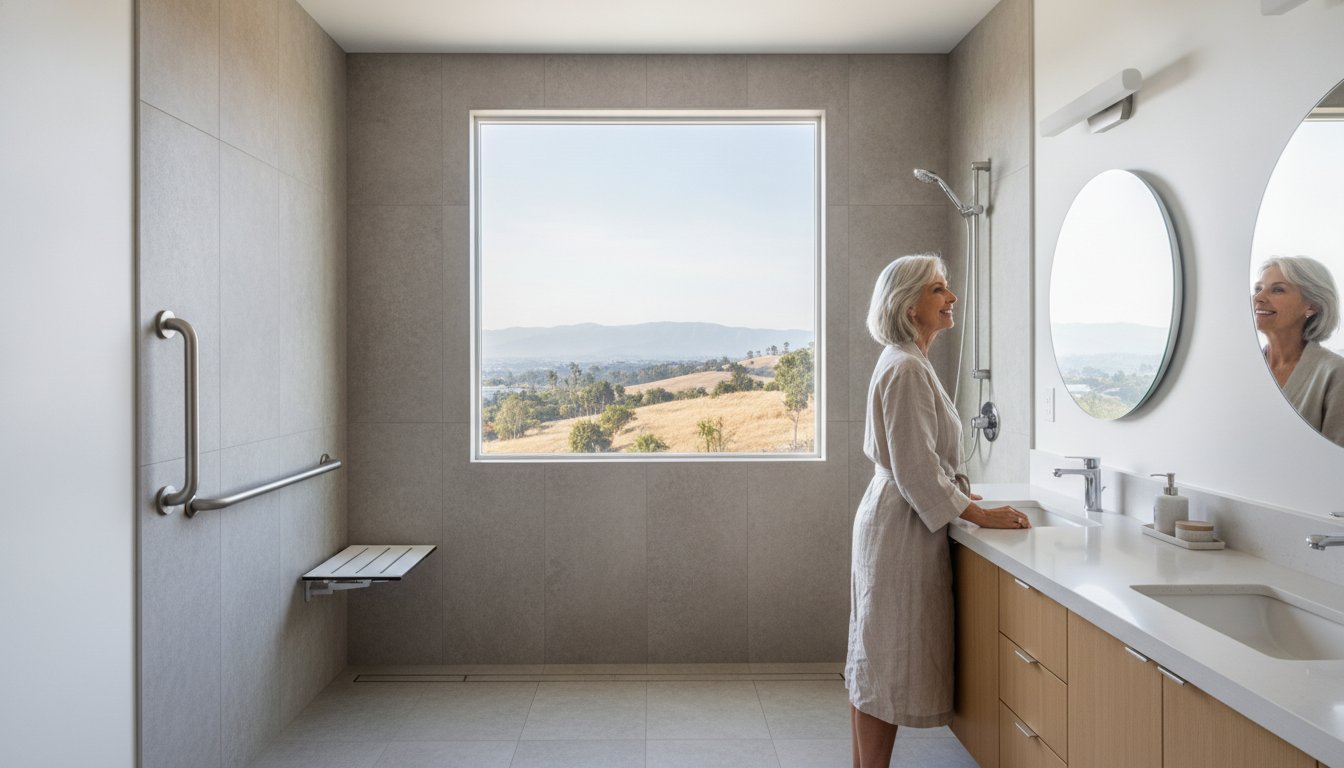

Article by
Jake Blasco, SHSS, B-2 Licensed Contractor
Jake Blasco is the kitchen, bath, and accessibility specialist behind Blueprint Kitchen & Bath Design Studio. He helps homeowners create beautiful, functional spaces through thoughtful planning, practical design, and careful project coordination. His background in commercial production and set construction brings a strong eye for detail, organization, and finish quality to every project. Jake is a certified Senior Home Safety Specialist® and Grab Bar Specialist, allowing him to integrate aging-in-place and home-safety features without sacrificing style. He serves Huntington Beach, Orange County, and surrounding Southern California communities.
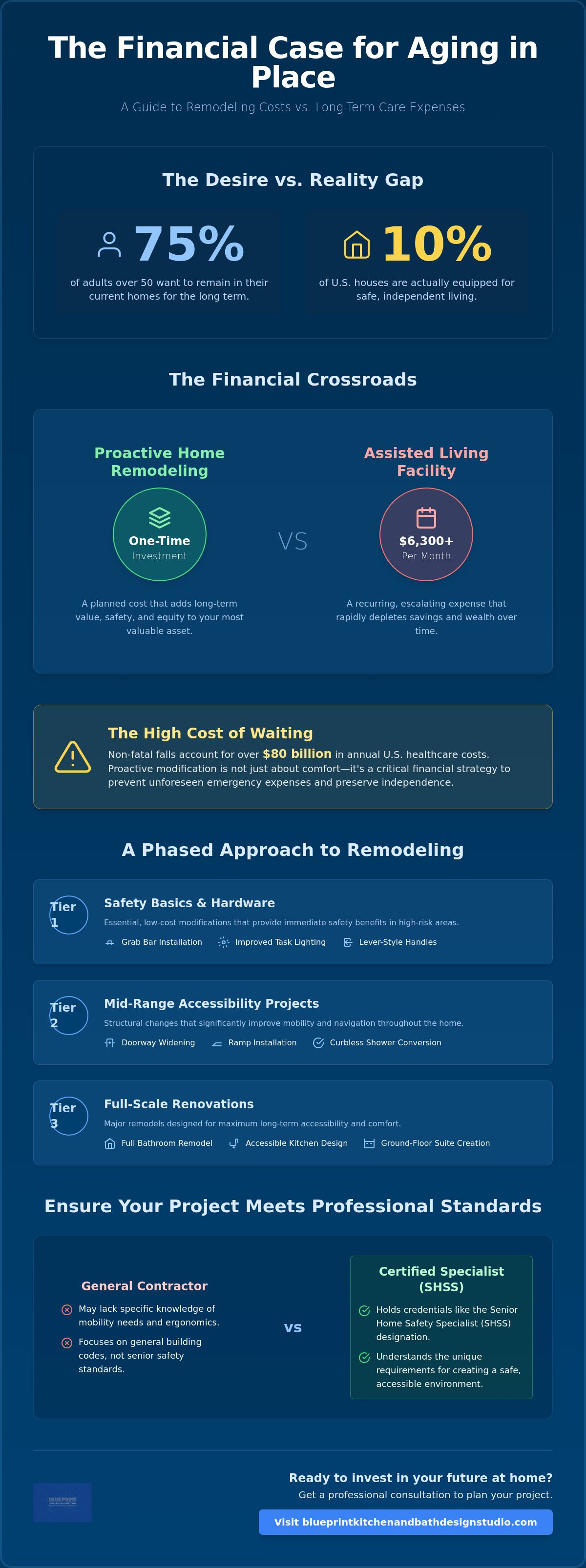
Did you know that while 75% of adults over age 50 want to remain in their current homes, only 10% of U.S. houses are actually equipped for safe, independent living? It's a sobering gap that often leads to deep-seated anxiety about the future. You might worry about losing your autonomy or feel overwhelmed by the varying quotes you receive when researching the aging in place remodeling cost. It's difficult to weigh the immediate investment of a home renovation against the daunting, recurring expense of assisted living facilities, which now average over $6,300 every month.
We understand that your home is more than just a building; it's the foundation of your dignity and comfort. This guide provides a transparent look at the real-world expenses of accessibility modifications, helping you justify the investment with clear financial data. You'll learn how to navigate project phases with confidence and discover how a stylish, mobility-focused home can actually preserve your wealth over time. We'll explore the comparison between one-time renovation costs and facility fees, while also highlighting federal grants and programs designed to support your goal of staying exactly where you belong.
Key Takeaways
- View home modifications as a proactive investment in your future autonomy rather than a medical necessity.
- Navigate the aging in place remodeling cost by categorizing your needs, from simple grab bar installations to complex structural doorway widening.
- Focus your budget on high-impact areas like the bathroom, where curbless showers and slip-resistant flooring provide the greatest safety benefits.
- Analyze the financial justification for remodeling by comparing one-time project costs to the escalating monthly fees of professional care facilities.
- Identify the specific credentials, such as the Senior Home Safety Specialist (SHSS) designation, required to ensure your Inland Empire remodel meets professional standards.
Understanding the Financial Landscape of Aging in Place Remodeling
Choosing to remain in your own home as you grow older is a powerful decision rooted in the desire for independence and familiar comfort. This choice is technically known as "aging in place," and it represents a proactive lifestyle strategy rather than a reactive medical necessity. To truly grasp What is Aging in Place?, one must look past simple home repairs and see it as a comprehensive plan to align your living environment with your future physical needs. By addressing potential obstacles now, you ensure that your home remains a sanctuary of safety and dignity for years to come.
To better understand this concept, watch this helpful video:
We typically categorize these projects into three distinct tiers to help families prioritize their needs. The first tier focuses on safety basics, such as grab bar installation and improved lighting. The second tier involves mid-range modifications like doorway widening or ramp installation. The final tier consists of full conversions, such as creating a primary suite on the ground floor or a complete accessible kitchen design. Many homeowners find that incorporating "Universal Design" principles adds significant value to their property. These features make a home more usable for people of all ages and abilities, which broadens the appeal to future buyers and preserves your home equity.
The Cost of Waiting vs. Proactive Modification
Waiting for an accident to happen is a high-risk financial gamble. In 2024, non-fatal falls accounted for $80 billion in annual healthcare costs in the U.S., a figure that underscores the hidden price of an unsafe home. When you plan modifications proactively, you have the luxury of time to source the best materials and schedule specialists during off-peak seasons. This unhurried approach prevents the "emergency premium" often charged for last-minute, urgent renovations. The cost of inaction is measured not just in dollars, but in the sudden loss of the lifestyle and independence you have spent decades building.
Variables That Influence Your Remodeling Budget
Your specific aging in place remodeling cost will depend on several structural and regional factors. Older homes in the Inland Empire, particularly in established areas of Redlands or San Bernardino, may require electrical or plumbing upgrades to support modern accessible fixtures. Your current mobility needs also dictate the scope; for example, widening a doorway for a walker is a different structural task than creating full clearance for a wheelchair. Finally, regional labor rates and the availability of specialized contractors in Southern California will influence the final budget, making it essential to work with experts who understand local building codes and senior safety standards.
Categorizing Costs: From Safety Hardware to Structural Renovation
Understanding the scale of your project is the first step in managing your aging in place remodeling cost effectively. Many homeowners initially view safety modifications as standard handyman tasks. However, there is a significant difference between a general contractor and a specialist who understands the ergonomic requirements of limited mobility. Specialized safety installations require a deep knowledge of load-bearing wall requirements and precise placement to ensure hardware doesn't fail when it's needed most. By following official guidance on aging in place, you can ensure that your home isn't just modified, but strategically adapted for long-term stability.
Professional-grade hardware offers a level of durability that off-the-shelf retail products simply cannot match. When we discuss the foundation of a safe home, professional grab bar installation is often the first priority. These are not merely accessories; they are critical safety components that must be integrated into the home's structure. Using high-quality materials ensures that these features remain secure for decades, providing a sense of calm and reliability that supports your daily routine. If you're ready to begin planning your space, a specialized aging-in-place consultation can help you identify which modifications will offer the highest return on safety for your specific layout.
Minor Safety Upgrades: The Low-Cost, High-Impact Tier
The first tier of remodeling focuses on "quick wins" that significantly reduce fall risks without requiring major construction. This includes the installation of heavy-duty grab bars in high-moisture areas and the application of anti-slip treatments to existing tile or wood floors. We also prioritize lighting improvements, such as adding motion-activated LED paths and replacing traditional toggles with easy-to-use rocker switches. Lever-style handles are another essential upgrade, as they allow for effortless doorway access even for those with limited grip strength. These modifications are highly effective at preventing injuries while remaining relatively non-invasive to your home's design.
Intermediate Modifications: Improving Daily Flow
As mobility needs evolve, intermediate modifications become necessary to maintain a seamless daily flow. This tier often involves widening doorways to accommodate walkers or wheelchairs and removing raised thresholds that create tripping hazards. If your home has multiple levels, we evaluate the necessity of ramps or stairlifts to ensure every room remains accessible. This level of planning is particularly important when considering a home modification for aging parents. By addressing these structural barriers now, you create an environment that supports independence and prevents the emotional and financial strain of a sudden, forced move to a care facility.
The High-Impact Priority: Bathroom and Kitchen Modification Costs
The bathroom and kitchen are the most vital areas to address when planning your home's future. They are also where the bulk of your aging in place remodeling cost will be allocated. The bathroom is statistically the most hazardous room due to slippery surfaces and confined spaces, making it the highest priority for safety upgrades. In contrast, the kitchen is the heart of your home's functionality. Modifications here ensure you can maintain your nutritional independence and social connections through cooking and shared meals. By focusing on these two rooms, you create a foundation for a home that supports your physical needs without sacrificing your personal style.
Many homeowners are moving toward the "wet room" concept, which involves waterproofing the entire bathroom floor to allow for a completely open layout. This design eliminates the need for shower curbs or partitions, creating a spacious environment that's easy to navigate with a walker or wheelchair. While this requires a more significant initial investment in subfloor preparation and drainage, the result is a sophisticated, spa-like space that offers unparalleled safety. Resources like the AARP HomeFit Guide emphasize how these structural changes can dramatically improve a home's long-term viability.
Bathroom Accessibility: Curbless Showers and Walk-in Tubs
Achieving a true curbless entry requires technical precision. We often need to recess the floor joists to ensure the shower floor slopes correctly toward the drain while remaining flush with the rest of the room. This structural work is why a curbless shower installation in Redlands is considered a specialized project. Alternatively, some families prefer a walk-in tub installation, which offers a low threshold and built-in seating. While walk-in tubs provide excellent therapeutic benefits for those with joint pain, they often require upgrades to your water heater and drainage system to handle the increased volume and speed of water flow.
Accessible Kitchen Design: Counters, Sinks, and Storage
Kitchen modifications prioritize ease of reach and ergonomic flow. We often install multi-height countertops to allow for comfortable food preparation whether you're standing or seated. Pull-down shelving systems bring items from high cabinets down to chest level, which reduces the risk of overreaching or losing balance. To create a truly functional space, we also modify plumbing to provide knee clearance under sinks. Investing in wheelchair accessible kitchen countertops delivers a high return on investment by preserving your ability to cook safely, which directly supports your cognitive health and daily routine.
Comparing the ROI: Remodeling Costs vs. Assisted Living Expenses
The decision to stay put also avoids the significant "hidden costs" associated with moving. Selling a home in Southern California often involves real estate commissions of 5 to 6 percent, closing costs, and the physical and emotional exhaustion of downsizing. There is a profound psychological value in maintaining your social network and familiar routine, which is often lost during a forced relocation. If you are ready to explore how these changes can fit your specific budget, you can request a professional accessibility assessment to begin your planning process.
The Monthly Cost of Facility Care in Southern California
In the Inland Empire, the financial pressure of senior care is substantial. As of May 2026, the national median cost for assisted living has reached $6,313 per month, with Southern California rates often trending higher. If you consider an investment of $20,000 for high-impact modifications like curbless showers and slip-resistant flooring, the "break-even" point is reached in just over three months. After that short window, every month you remain in your mortgage-free home represents thousands of dollars in direct savings. This financial freedom allows you to allocate your resources toward your own lifestyle and health rather than facility overhead.
Home Value and Equity Benefits
There is a persistent "Resale Myth" that accessibility features decrease a home's market appeal. In 2026, the reality is the opposite. Universal design principles, which emphasize ease of use for people of all ages and abilities, now appeal to a broad demographic of buyers looking for "forever homes." These features represent a sophisticated upgrade that signals quality and thoughtful design. Additionally, certain modifications may qualify for medical tax deductions if they are prescribed for health reasons; you should consult IRS Publication 502 to see if your project meets these criteria. Beyond the numbers, the peace of mind provided to family caregivers is an invaluable return on investment that supports the entire family's well-being.
Strategic Planning for Your Inland Empire Home Remodel
Executing a successful home modification in Southern California requires more than just a standard construction permit. National averages for an aging in place remodeling cost often fail to account for the specific labor markets and rigorous building codes found in the Inland Empire. When planning a project in Redlands, San Bernardino, or Loma Linda, you must ensure your contractor understands California's Title 24 requirements and local accessibility standards. Working with a local specialist ensures that your home isn't just compliant with the law, but truly optimized for your personal safety and long-term comfort.
Before your first meeting with a professional, it's helpful to document your daily routine and identify specific "friction points" in your home. Do you find yourself bracing against the wall in the hallway? Is the transition from the garage to the kitchen becoming difficult? Creating a list of these physical challenges allows a specialist to provide a more accurate aging in place remodeling cost tailored to your actual needs. This preparation moves the conversation from vague aesthetics to functional solutions, ensuring that every dollar of your budget is directed toward improvements that enhance your autonomy.
We highly recommend looking for the Senior Home Safety Specialist (SHSS) designation when vetting partners. This certification indicates that the professional has been trained to identify hidden home hazards that a general contractor might overlook. They view your home through a clinical lens, considering how lighting, floor transitions, and hardware placement impact your fall risk. By combining this specialized safety knowledge with high-end design, you can achieve a home that feels like a sophisticated residence rather than a clinical environment.
Why a Certified Safety Specialist Saves You Money
One of the most significant hidden expenses in remodeling is "re-work" caused by improper initial installations. If a grab bar is not anchored to proper structural blocking or a curbless shower is not sloped with precision, the cost to correct these errors can exceed the original price of the project. A certified specialist prioritizes a comprehensive safety assessment to identify exactly where structural reinforcements are needed before the walls are closed. This methodical approach is a hallmark of senior home safety remodeling in Redlands provided by Blueprint Kitchen and Bath Design Studio, where we focus on doing the job right the first time to preserve your budget and your peace of mind.
Starting Your Assessment in Redlands and Surrounding Cities
The first step toward a safer home is a professional evaluation of your current living space. During this initial phase, we walk through your home to analyze entryways, bathroom layouts, and kitchen accessibility. We'll discuss your goals and provide a transparent overview of the design and budgeting process. This unhurried consultation ensures that you understand the timeline and the structural requirements of your project before any construction begins. If you're ready to secure your future independence, Contact Blueprint Kitchen and Bath Design Studio for a safety-first remodeling consultation.
Secure Your Future Independence in the Inland Empire
Investing in your home today is a commitment to your long-term dignity and financial stability. By understanding the aging in place remodeling cost and prioritizing high-impact modifications like curbless showers and improved lighting, you create an environment that supports your mobility for years to come. This proactive approach doesn't just preserve your home equity; it provides a significant return on investment compared to the rising monthly costs of professional care facilities. It's a strategic move that ensures your living space remains a sanctuary rather than a source of stress.
At Blueprint Kitchen and Bath Design Studio, we offer a specialized focus on safety-first design that general contractors often overlook. As SHSS Certified Senior Home Safety and Grab Bar Specialists serving Redlands, Loma Linda, and the wider Inland Empire, we're dedicated to helping you stay in the home you love. Schedule Your Professional Home Safety Assessment Today to begin planning your empowering lifestyle upgrade. Your home should be a place where you feel completely secure, independent, and at ease.
Frequently Asked Questions
Is aging in place remodeling tax deductible as a medical expense?
Yes, certain home modifications are tax-deductible if their primary purpose is medical care for you, your spouse, or your dependents. According to IRS Publication 502, expenses like installing ramps, widening doorways, or adding grab bars can be included in medical expenses. If the modification increases your home's value, only the amount spent above that value increase is deductible. You should always consult with a tax professional to confirm how these rules apply to your specific financial situation.
How much does it cost to widen a doorway for a wheelchair in Redlands?
Doorway widening costs in Redlands are determined by the structural complexity of the wall and the presence of internal utilities like electrical wiring or plumbing. If the doorway is located in a load-bearing wall, the project requires additional structural support and labor. When calculating your total aging in place remodeling cost, it's essential to have a specialist evaluate the specific frame of your Inland Empire home to ensure a safe and compliant installation that meets all local building codes.
What is the average cost of a senior-friendly bathroom remodel?
The total investment for a senior-friendly bathroom remodel depends on the extent of structural plumbing and flooring changes required for your specific space. Converting a traditional tub into a curbless shower often involves recessing the floor joists, which is a more complex task than simple hardware updates. When you're estimating your aging in place remodeling cost, focusing on high-impact safety features like slip-resistant flooring and reinforced wall backing for grab bars ensures the most effective use of your budget.
Can I get financial assistance for home modifications in San Bernardino County?
Homeowners in San Bernardino County can access several financial assistance programs, including grants for veterans and low-income seniors. The VA offers SAH and HISA grants for eligible veterans, while the USDA Section 504 Home Repair program supports very-low-income homeowners in rural areas with grants up to $10,000. You can also contact the Eldercare Locator at 1-800-677-1116 to find local nonprofit organizations or HUD-funded programs that provide support for home safety improvements in your specific city.
How long does a typical aging-in-place renovation take to complete?
The timeline for an aging-in-place renovation varies from a single day to several weeks depending on the project's scale. Minor upgrades like grab bar installation or slip-resistant flooring treatments are often completed in just a few hours. More extensive projects, such as a full accessible kitchen design or a bathroom conversion, require a methodical approach to ensure structural integrity and typically span two to four weeks. We prioritize a steady, logical flow to minimize disruption to your daily routine.
Will adding grab bars and ramps decrease my home’s resale value?
No, professionally installed safety features do not decrease a home's resale value; they often make the property more attractive to a wider range of buyers. In 2026, "Universal Design" is a significant trend as more families look for "forever homes" that can accommodate multi-generational living. When grab bars and ramps are integrated seamlessly into a stylish, high-end renovation, they represent a premium upgrade that signals quality, stability, and thoughtful planning to future homeowners.
Does Medicare pay for any home accessibility modifications?
Standard Medicare Part A and Part B do not cover the cost of home accessibility modifications like ramps, walk-in tubs, or grab bars. Medicare generally classifies these as "home convenience" items rather than medically necessary durable medical equipment. However, some Medicare Advantage (Part C) plans have begun offering limited coverage for minor safety improvements. It's essential to review your specific plan's summary of benefits or speak with a representative to see if any safety-related home modifications are included in your coverage.
What is the difference between CAPS and SHSS certifications?
The CAPS and SHSS certifications differ in their core professional focus and training origin. The Certified Aging-in-Place Specialist (CAPS) designation is offered through the National Association of Home Builders and focuses heavily on technical construction and design standards. The Senior Home Safety Specialist (SHSS) certification through Age Safe America emphasizes a clinical and safety-first approach to home evaluations. We utilize the SHSS designation to ensure every modification priorities fall prevention and the practical, physical experience of moving through your home.
Disclaimer
This article provides general educational information and design inspiration, not project-specific professional advice. Costs, timelines, permit requirements, building codes, and product suitability vary by property and jurisdiction. Final scope, pricing, and specifications are established only through a written proposal or contract. Consult qualified professionals and local building officials before beginning work. Unless expressly identified as a completed Blueprint project, images are illustrative and may include stock photography, design renderings, or AI-generated imagery.


