

Article by
Jake Blasco, B-2 Licensed Contractor
Jake Blasco leads design and project planning at Blueprint Kitchen & Bath Design Studio, specializing in kitchen, bath, and whole home design in Huntington Beach and surrounding Orange County communities. His approach combines thoughtful layouts, quality materials, and practical construction knowledge to create spaces that look beautiful and work for everyday life.
Jake shares guidance on cabinetry, countertops, finishes, lighting, and renovation planning to help homeowners make informed decisions. As the qualifying individual for Blueprint’s California B-2 Residential Remodeling license (CSLB #1161570), he brings a construction perspective to every design.
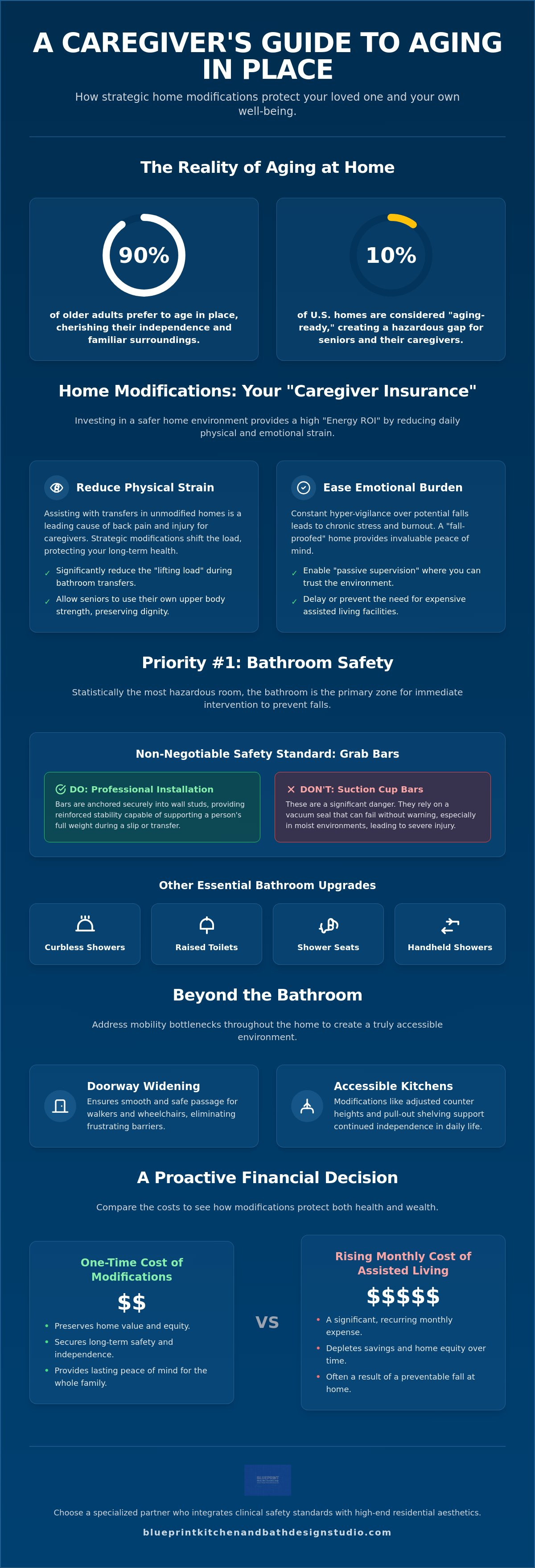
Over 90% of older adults prefer to age in place, yet only 10% of U.S. homes are considered aging-ready to support them. You're likely familiar with the quiet tension of watching a loved one navigate a steep step or the physical toll of helping them into a standard tub. It's a heavy burden to carry; you're often balancing the constant anxiety of a potential fall with the confusion of how to make meaningful changes without turning a sanctuary into a hospital ward.
This caregiver guide to home modifications offers a structured path to creating a fall-proof environment that protects your loved one's independence and significantly reduces your daily physical labor. We'll show you how to prioritize safety while maintaining the aesthetic value of your property. You'll learn how strategic upgrades, such as grab bar installation and curbless showers, provide essential stability and longevity. We will explore how to integrate these functional improvements seamlessly, ensuring the home remains a place of comfort, dignity, and peace of mind for everyone involved.
Key Takeaways
- Understand how proactive home modifications act as "caregiver insurance," reducing daily physical strain and preventing long-term burnout.
- Use this caregiver guide to home modifications to identify why professional grab bar installation is a non-negotiable safety standard in high-risk wet environments.
- Learn to address mobility bottlenecks beyond the bathroom, including doorway widening and accessible kitchen layouts that support walker and wheelchair use.
- Discover how to conduct a professional safety assessment to compare the one-time cost of modifications against the rising monthly expenses of assisted living.
- Gain criteria for selecting a specialized partner who integrates clinical safety standards with high-end residential aesthetics and design.
The Caregiver’s Perspective: Why Home Modifications are Essential for Your Well-being
Caring for a loved one is often viewed through the lens of the senior's needs, yet the physical and emotional sustainability of that care depends entirely on your own health. This caregiver guide to home modifications shifts the focus toward creating a supportive environment that acts as "caregiver insurance." By investing in structural changes, you aren't just protecting a parent; you're securing a high "Energy ROI" for yourself. Every hour saved from difficult manual transfers or constant monitoring is an hour you can reclaim for your own rest and recovery.
Adopting the CDC definition of aging in place means more than just staying at home; it means staying there safely and comfortably. For many family members, the home environment often becomes a workplace filled with hidden hazards. Transforming this space through Universal Design principles ensures the home remains a valuable asset in the Southern California market while becoming a functional tool for daily care. These upgrades allow you to maintain the home's aesthetic while prioritizing the practical necessity of accessible living.
To better understand this concept, watch this helpful video:
Protecting the Caregiver: Preventing Physical Strain
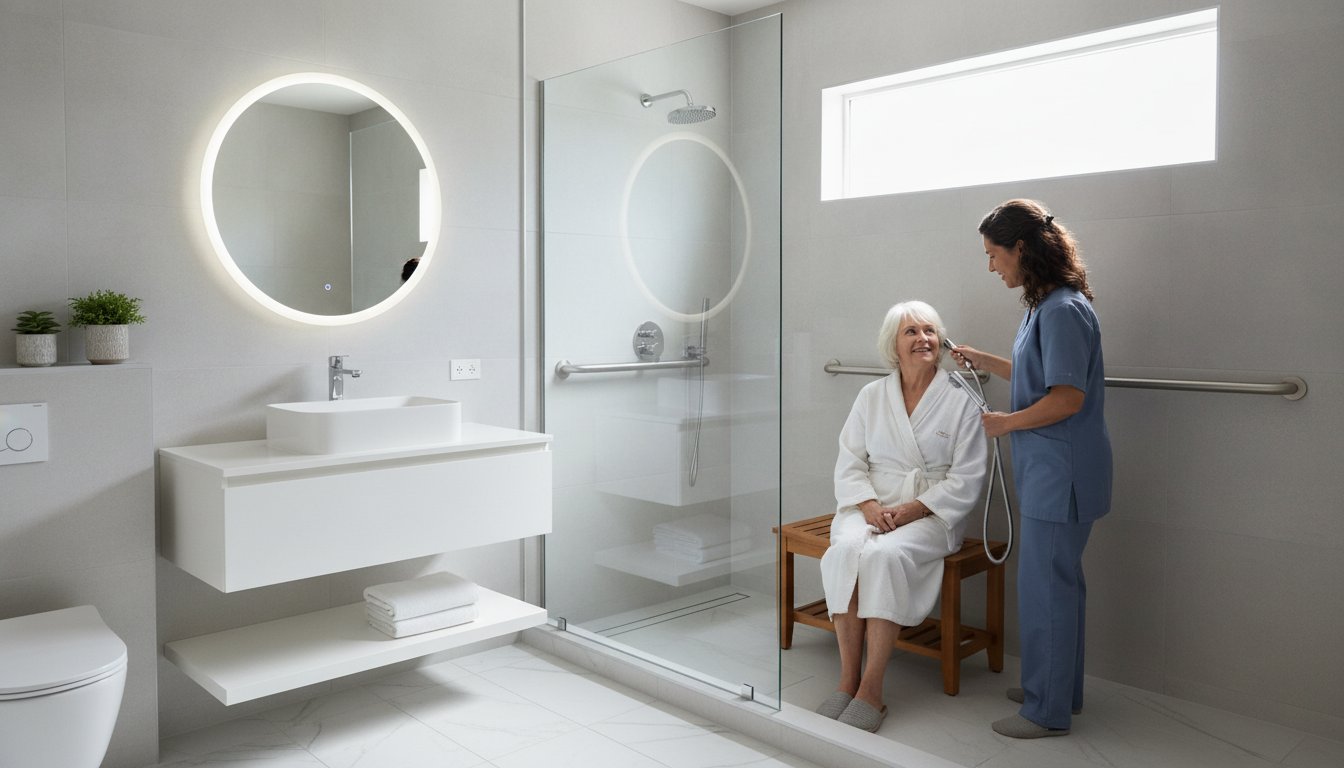
Assisting with bathroom transfers is a leading cause of back pain and musculoskeletal injury among family caregivers. When a home lacks proper support, you're often forced to use your own body weight to lift or steady a loved one. Modifications like raised toilets and professional grab bar installation significantly reduce this "lifting" load. These tools allow the senior to use their own upper body strength, which preserves their dignity and protects your spine. A professional assessment is the best way to identify these high-strain zones in older Redlands homes before a preventable injury occurs.
The Emotional Burden of Home Hazards
The mental tax of caregiving is often fueled by hyper-vigilance. You're constantly listening for a slip in the shower or a trip in the hallway, which leads to chronic stress and burnout. A "fall-proofed" home allows for passive supervision, where you can trust that the environment is working with you rather than against you. This peace of mind is invaluable. Proactive senior home safety remodeling in Redlands can delay or entirely prevent the move to an expensive assisted living facility. By modifying the family home now, you're choosing a path that respects your loved one's autonomy while protecting your own long-term health. Following a comprehensive caregiver guide to home modifications ensures no detail of safety or comfort is overlooked.
Bathroom Safety: The #1 Priority for Caregiver Support
The bathroom is statistically the most hazardous room in any residence, particularly for seniors with declining balance or strength. It's a high-stakes environment where moisture meets hard surfaces like porcelain and tile. This caregiver guide to home modifications identifies the bathroom as the primary zone for immediate intervention to prevent the falls that often lead to hospitalizations. While many families initially look for quick fixes, the reality is that safety requires structural integrity. For instance, suction cup bars are a significant danger because they rely on a vacuum seal that can fail without warning. Only professional grab bar installation provides the reinforced stability needed to support a person's full weight during a slip or transition.
Integrating safety doesn't mean your home has to look like a medical facility. Modern slip-resistant flooring now comes in a variety of high-end finishes that mimic natural stone or wood while providing a high coefficient of friction. This ensures stability underfoot even when the floor is wet. Referencing resources like the AARP HomeFit Guide can help you visualize how these aesthetic choices align with clinical safety standards.
Professional Grab Bar Placement
Effective safety depends on precise placement. Critical zones include the toilet transfer area, the shower entry, and a "resting" area within the stall. While ADA standards offer a baseline, a truly safe home requires personalized placement based on your loved one’s specific height, reach, and dominant side. This tailored approach reduces the physical reach required, which in turn minimizes the caregiver's need to provide manual stabilization. Consulting an expert on bathroom safety upgrades in Redlands, CA ensures your modifications meet both local code and the unique physical needs of your family.
The Transition to Curbless Showers and Walk-in Tubs
Eliminating the tripping hazard of a standard tub is a transformative upgrade for both the user and the caregiver. A curbless shower installation in Redlands creates a seamless floor transition, allowing for "roll-in" capability if a wheelchair or walker becomes necessary later. While walk-in tubs offer a deep-soaking benefit, curbless showers are often more ergonomic for caregivers who must assist with bathing. They provide more room to maneuver without the barrier of a high tub wall. If you aren't sure which option fits your layout, a professional aging-in-place consultation can help you weigh the long-term benefits of each modification.
Beyond the Bathroom: Enhancing Mobility in Kitchens and Living Spaces
While the bathroom is the most critical safety zone, the kitchen and living areas are where most daily activities occur. This caregiver guide to home modifications emphasizes that accessibility should extend throughout the entire floor plan to be truly effective. In many older Redlands homes, the layout reflects a design era featuring narrow corridors and high-reach cabinetry. These elements create unnecessary physical strain for both the senior and the caregiver. By addressing these structural bottlenecks, you create a home that supports movement rather than hindering it.
Accessible Kitchen Design for Caregivers
The kitchen requires a balance of safety and autonomy. Pull-out shelving and glide-out drawers are essential upgrades. They bring items directly to the user and prevent the need for over-reaching or deep bending. Implementing wheelchair accessible kitchen countertops allows a senior to participate in meal preparation comfortably. This fosters independence and dignity while reducing the caregiver's workload. A well-designed work triangle, the path between the sink, stove, and refrigerator, minimizes the number of steps required. This reduces fatigue and the risk of stumbles during a busy day of caregiving.
Entryways and Doorway Widening
Entryways often present the most significant structural barrier in a residential setting. A standard 30-inch door is typically too narrow for a walker or wheelchair to pass through safely without risking hand injuries. Widening these openings to 32 or 36 inches is a complex process. It must maintain the home's structural integrity, but it's one of the most impactful changes you can make for long-term mobility. Beyond internal doors, consider the primary entrance to the home. While ramps are a common solution, zero-threshold entries provide a more seamless, modern aesthetic. They eliminate the trip hazard entirely without changing the home's curb appeal.
Lighting and Flooring Transitions
Vision often declines with age, making lighting a safety priority. Upgrading to high-output, dimmable LED systems helps reduce the glare and deep shadows that can confuse a senior's depth perception. Consider these specific lighting improvements:
- Task Lighting: Brighten countertops and prep areas to prevent kitchen accidents.
- Motion Sensors: Install sensors in hallways to provide automatic light during night-time trips to the bathroom.
- Contrast: Use lighting to highlight changes in floor levels or doorway thresholds.
The Logistics of Modification: Costs, Assessments, and Inland Empire Resources
Transitioning from identifying hazards to implementing structural changes requires a methodical approach to logistics. This caregiver guide to home modifications emphasizes that professional planning is the most effective way to manage costs while ensuring long-term safety. While many families consider DIY "band-aid" fixes like adhesive strips or temporary ramps, these solutions often lack the durability required for daily caregiving. Professional remodeling ensures that every upgrade adheres to the 2025 edition of the California Building Code, which takes effect in early 2026. Navigating these requirements in San Bernardino County ensures that your home remains both a safe sanctuary and a compliant residential asset.
Maintaining a property as a compliant residential asset often requires professional oversight, especially if you are managing it as a rental to help cover caregiving expenses. For owners in the Sacramento region, Home Showings Property Management provides the specialized residential services needed to keep a property in top condition and fully compliant.
Professional Assessment vs. DIY Walkthrough
A professional home safety assessment typically costs between $150 and $350, providing a level of detail that a standard walkthrough cannot match. Specialists utilize a room-by-room audit to identify risks that are often invisible to the untrained eye, such as insufficient floor friction or improper lighting placement. The SHSS certification serves as a benchmark for local safety experts, ensuring they have mastered the intersection of clinical hazards and residential construction. This structured approach moves beyond a simple checklist to create a prioritized roadmap for your home's transformation.
Value and ROI of Aging in Place
Investing in aging in place remodeling in Redlands is a strategic financial decision. The average cost of assisted living in 2026 is approximately $64,200 per year, which translates to roughly $5,350 every month. In contrast, the one-time cost of home modifications is often recovered within the first year by avoiding these recurring facility fees. Beyond the direct savings, consider the "Avoidance Cost" of preventing a single hip fracture or emergency room visit. These incidents carry heavy medical expenses and significant emotional trauma for the entire family.
Local resale trends in the Inland Empire show a growing demand for homes that already feature accessible designs. In Redlands, the "unreasonable hardship" exemption threshold for accessibility regulations is currently $203,611, highlighting the significant scale of local residential investment. By choosing professional upgrades now, you preserve the home as a financial asset while securing your loved one's autonomy. If you are ready to move beyond temporary solutions, you can schedule a professional home safety assessment to begin your structured renovation plan.
Choosing the Right Partner for Your Aging-in-Place Renovation in Redlands
Selecting a partner for home modifications is a decision that impacts both the immediate safety of your loved one and the long-term integrity of your property. This caregiver guide to home modifications highlights that general contractors often lack the specialized training required for clinical safety standards. You need a team that understands the nuanced intersection of accessible design and residential construction. When interviewing potential partners, always ask about their specific certifications in senior safety and their experience applying ADA standards within a residential context. Local references in the Inland Empire are essential; they provide proof that the contractor understands the specific architectural challenges and permit requirements of homes in our region.
A "Design-First" approach is what separates a specialized expert from a medical equipment installer. Your home should function safely without sacrificing its high-end aesthetic or resale value. The goal is to create a space where grab bars look like designer hardware and curbless showers feel like a luxury spa feature. This seamless integration ensures that the home remains a place of pride and comfort, rather than a constant reminder of physical limitations. By choosing a partner who prioritizes both form and function, you protect the emotional well-being of the senior while securing the home as a financial asset. For those navigating the complexities of the healthcare industry from a business perspective, Healthcare Biz Brokers, Inc. offers the specialized brokerage services needed to value or sell care-related enterprises.
The Blueprint Advantage: Experience Meets Empathy
Blueprint Kitchen and Bath Design Studio is the preferred choice for senior home safety remodeling in Redlands because we bridge the gap between clinical necessity and beautiful design. Our team includes SHSS Certified Senior Home Safety & Grab Bar Specialists, a designation that ensures we've mastered the technical details of fall prevention. We serve a wide local area including Yucaipa, Riverside, and Beaumont. Being a local partner matters; it means we're available for follow-up care and deeply understand the specific building codes of San Bernardino County. Whether you need a full-scale accessible kitchen redesign or a quick, professional grab bar installation, we provide the same level of precision and empathy.
Next Steps for Caregivers
The first step in any successful modification project is a professional home safety assessment. This audit identifies immediate hazards and creates a prioritized plan for your renovation. During our consultation process, we move from an initial safety audit to a comprehensive design and installation phase. We handle the technical logistics so you can focus on providing care without the physical strain of an unoptimized home. If you're ready to transform your family home into a safe, accessible environment, Schedule your Home Safety Consultation with Blueprint Kitchen and Bath Design Studio today. This comprehensive caregiver guide to home modifications is your starting point, but expert execution is what guarantees lasting peace of mind.
Securing Your Loved One’s Future at Home
Transforming a family residence into a safe, accessible sanctuary is one of the most impactful ways to support a senior's independence and your own well-being. This caregiver guide to home modifications has outlined how strategic upgrades, from professional grab bar installation to doorway widening, act as essential insurance against physical burnout and preventable injuries. You've learned that a "design-first" approach allows you to maintain the home’s luxury aesthetic while meeting strict clinical safety standards.
Blueprint Kitchen and Bath Design Studio brings years of localized Inland Empire expertise to every project. As an SHSS Certified Senior Home Safety & Grab Bar Specialist, we understand the delicate balance between high-end residential design and the functional necessity of stability. We're committed to helping you navigate the complexities of aging in place with clarity and confidence. Take the first step toward a fall-proof home environment today. Schedule a Professional Home Safety Assessment in Redlands and gain the peace of mind that comes from a masterfully optimized space. You don't have to manage these transitions alone; the right modifications provide a foundation for dignity and comfort for years to come.
Frequently Asked Questions
How do I know if my parent’s home needs modifications?
You can identify the need for modifications by observing how a loved one interacts with their space. Watch for "furniture walking," where they touch tables or walls for stability, or an increased reluctance to use the stairs. These behaviors indicate that the current environment is no longer supporting their mobility. A professional assessment provides a structured way to catch these hazards before an injury occurs.
Will home modifications for seniors decrease my home’s resale value?
Professional modifications typically preserve or even enhance your home's market value by adding high-demand functional features. Modern curbless showers and slip-resistant flooring are viewed as luxury upgrades in the Southern California market. Universal Design ensures these changes are aesthetically pleasing, making the home more attractive to a wider demographic of buyers who value long-term accessibility and modern convenience.
What are the most critical modifications to make first on a budget?
Focus your initial budget on high-traffic, high-risk areas like the bathroom and the primary entrance. This caregiver guide to home modifications suggests starting with grab bar installation and improved lighting to yield the highest safety return. These essential upgrades address the most common fall risks without requiring the immediate expense of a full-scale remodel, providing immediate protection for your loved one.
Can I install grab bars myself, or should I hire a professional in Redlands?
Professional installation is essential because grab bars must be securely anchored into structural wall studs to be effective. A specialist in Redlands ensures that the hardware can withstand a sudden, high-force impact, which drywall alone cannot support. While DIY kits are available, they often don't have the specialized mounting systems required to guarantee stability and prevent the bar from pulling away during a slip.
How long does a typical aging-in-place bathroom remodel take?
The timeline for a remodel varies based on the scope of work, but a comprehensive bathroom conversion usually takes two to four weeks. Smaller projects, such as installing slip-resistant flooring or widening a single doorway, can often be completed in just a few days. We coordinate each phase of the project to minimize disruption to your daily routine while ensuring all structural changes meet safety standards.
Are there financial assistance programs for senior home modifications in San Bernardino County?
San Bernardino County offers several resources, including the VA's HISA grant for veterans and programs through the Office on Aging. Low-income homeowners may also qualify for assistance through Neighborhood Partnership Housing Services (NPHS) or Community Development Block Grants. These programs help seniors remove health and safety hazards, making essential modifications more accessible for families in the Inland Empire who need structural support.
What is the difference between ADA compliant and Universal Design?
ADA compliance refers to specific legal standards for public accessibility, whereas Universal Design is a design philosophy for creating homes that are usable by everyone. Universal Design goes beyond mere compliance by integrating safety features into the home's aesthetic. The goal is to make modifications like wider hallways or walk-in tubs feel like luxury lifestyle upgrades rather than clinical additions required for medical care.
How do I widening a doorway for a wheelchair without breaking the bank?
Installing swing-clear hinges is the most cost-effective way to widen a doorway, as they move the door entirely out of the opening to provide more clearance. If structural widening is necessary, prioritize the bathroom and main bedroom to maximize the benefit for wheelchair users. This focused strategy ensures you spend your budget where it has the greatest impact on daily mobility and caregiver ease.
Disclaimer
This article provides general educational information and design inspiration, not project-specific professional advice. Costs, timelines, permit requirements, building codes, and product suitability vary by property and jurisdiction. Final scope, pricing, and specifications are established only through a written proposal or contract. Consult qualified professionals and local building officials before beginning work. Unless expressly identified as a completed Blueprint project, images are illustrative and may include stock photography, design renderings, or AI-generated imagery.


