


Article by
Jake Blasco, B-2 Licensed Contractor
Jake Blasco leads design and project planning at Blueprint Kitchen & Bath Design Studio, specializing in kitchen, bath, and whole home design in Huntington Beach and surrounding Orange County communities. His approach combines thoughtful layouts, quality materials, and practical construction knowledge to create spaces that look beautiful and work for everyday life.
Jake shares guidance on cabinetry, countertops, finishes, lighting, and renovation planning to help homeowners make informed decisions. As the qualifying individual for Blueprint’s California B-2 Residential Remodeling license (CSLB #1161570), he brings a construction perspective to every design.
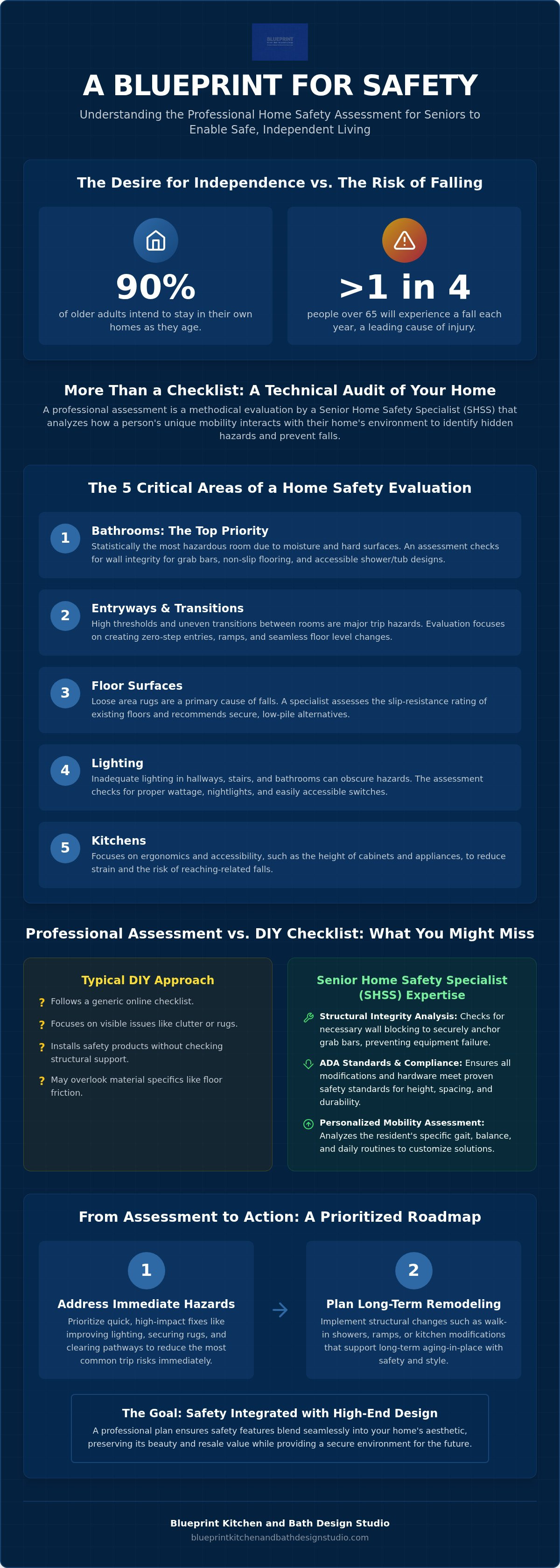
Did you know that while 90% of older adults intend to stay in their own homes as they age, more than one in four people over 65 will experience a fall this year? It's a sobering statistic that often leaves families in Redlands and Riverside feeling caught between the desire for independence and the fear of a sudden accident. You likely worry that necessary safety upgrades will make a home feel clinical or hurt its future resale value, yet you know that doing nothing is a risk you can't afford. A professional home safety assessment for seniors offers a path forward by identifying hidden hazards before they lead to a crisis.
We believe that a home should remain a sanctuary, not a medical facility. This guide explains how a specialized evaluation provides a clear, prioritized roadmap for maintaining dignity and physical stability. You'll learn how modern accessibility features can blend seamlessly with high-end design to create a space that supports long-term autonomy. We will walk through the essential areas of the home, from the bathroom to the entryway, and explain how expert recommendations transform a house into a secure environment that's built for your future.
Key Takeaways
- Understand how a professional evaluation moves beyond basic checklists to analyze the complex relationship between your physical mobility and your home's unique layout.
- Discover the five high-impact zones where a home safety assessment for seniors identifies structural risks that standard DIY inspections often overlook.
- Learn why evaluating structural integrity and hardware requirements is essential for ensuring that safety modifications are both secure and compliant with ADA standards.
- Gain a clear strategy for prioritizing home upgrades, addressing immediate hazards like lighting and trip risks before moving toward long-term aging-in-place remodeling.
- See how specialized expertise integrates essential safety features with high-end design to maintain your home's aesthetic appeal and long-term resale value.
What is a Professional Home Safety Assessment for Seniors?
A professional home safety assessment for seniors is a methodical evaluation of a living space designed to identify risks that could compromise an older adult's ability to live independently. It's much more than a casual walkthrough. Instead, it's a technical audit that examines how the environment interacts with a person's specific mobility levels and their ability to perform Activities of Daily Living (ADLs). By focusing on fall prevention and ergonomics, this assessment ensures that a home remains a safe haven rather than a series of obstacles.
This process is foundational to the concept of Aging in Place, which allows individuals to remain in their familiar surroundings as they grow older. A specialist looks at everything from the wattage of lightbulbs to the structural integrity of bathroom walls. They don't just see a room; they see a sequence of movements and potential hazards.
To better understand how these evaluations identify risks, watch this helpful overview of the assessment process:
The Role of an SHSS Certified Specialist
A Senior Home Safety Specialist (SHSS) brings a unique perspective that a standard general contractor often lacks. While a contractor might focus on the cosmetics of a remodel, an SHSS professional evaluates the home through a clinical and structural lens. For homeowners in Redlands, this designation provides peace of mind that the expert understands both ADA standards and the specific housing styles of the Inland Empire. These specialists identify "hidden" hazards, such as whether a wall has the necessary blocking to safely anchor a grab bar or if a floor's slip-resistance rating is appropriate for the user's gait. This precision prevents equipment failure and ensures that every modification provides genuine stability.
The Goal: Balancing Independence and Aesthetics
Many families worry that safety upgrades will result in an "institutional" or hospital-like appearance. However, a professional home safety assessment for seniors serves as a sophisticated roadmap for aging in place remodeling Redlands. The goal is to integrate safety features so seamlessly that they enhance the home's beauty rather than detract from it. By prioritizing high-end materials and modern design, an assessment ensures that a home supports long-term independence while preserving its market value. It's about creating a space that feels empowering and refined, where safety is a quiet, reliable background feature rather than a clinical necessity.
The 5 Critical Areas of a Comprehensive Home Evaluation
Entryways and flooring are often the first points of failure. High thresholds can become insurmountable barriers for those using mobility aids, while loose area rugs act as frequent trip hazards. A specialist evaluates the slip resistance of existing tile and suggests transitions that create a seamless, level flow between rooms. They also analyze the potential for ramps or zero-step entries, ensuring that coming and going remains an effortless experience. For homeowners looking to optimize their entry hardware for both ease of use and security, you can discover A Aable Locksmith as a resource for professional residential safety expertise.
The bathroom is statistically the most hazardous room in any home. According to guidelines on Fall-Proofing Your Home, moisture and hard surfaces create a high risk for serious injury. A specialist checks for proper toilet height and ensures there is enough clearance for walkers or wheelchairs. They also evaluate the structural feasibility of a curbless shower installation to eliminate tripping hazards at the stall entry. Most importantly, the assessment determines the exact placement for professional grab bar installation, ensuring they are anchored into wall studs rather than just the tile.
Kitchen Accessibility for Aging in Place
Kitchens require a balance of safety and functional ergonomics. An evaluator analyzes the "work triangle" to minimize the distance between the sink, stove, and refrigerator, which reduces physical strain. They look for fire hazards, such as flammable materials stored too close to heat sources, and suggest modifications like pull-out shelving to prevent overreaching. For those planning a long-term remodel, the assessment provides data for accessible kitchen design, including lowered countertop heights that allow for comfortable food preparation while seated.
Lighting and Navigation throughout the Home
Vision often changes with age, making consistent lighting a critical safety factor. A specialist identifies areas where deep shadows or harsh glare could lead to a misstep. They recommend high-lumen LED lighting and rocker-style switches that are easier for arthritic hands to operate. Beyond light, navigation depends on clear pathways. The assessment measures doorway widths to ensure they meet modern accessibility standards, which may require widening to accommodate mobility aids in the future. Evaluating your home's current layout through a home safety assessment for seniors is the first step toward a customized safety plan that respects your home's character.
Professional Assessment vs. DIY Checklist: What You Might Miss
Many families begin their journey by downloading a basic checklist from a health website. While these lists offer a starting point, they rarely account for the structural complexities of a home or the evolving health needs of the resident. A professional home safety assessment for seniors is a comprehensive evaluation that bridges the gap between a generic list and a functional living environment. It focuses on the "human-environment fit," analyzing how an individual’s specific physical capabilities interact with the physical barriers of their house. This professional approach ensures that every modification is rooted in data and ADA standards rather than guesswork.
The "Invisible" Hazards Laypeople Overlook
A layperson might look at a sturdy-looking grab bar and assume it's safe. However, a specialist evaluates the "blocking" behind the wall. Without internal structural reinforcement, a grab bar can pull away from the wall during a fall, leading to catastrophic injury. We also look at the technical "coefficient of friction" on tile surfaces. A floor that feels safe when dry can become a skating rink when slightly damp; only a professional can determine if a surface meets safety ratings for aging gait patterns. Additionally, we account for cognitive changes. For individuals experiencing the early stages of dementia, a dark rug on a light floor can appear as a deep hole, causing them to trip or freeze. A professional assessment identifies these subtle psychological triggers that a standard checklist would never mention.
Long-term Planning vs. Quick Fixes
DIY solutions are almost always reactive. They address a problem only after a near-miss or an actual accident occurs. In contrast, a professional home safety assessment for seniors acts as an investment in future-proofing. Specialists are trained to anticipate mobility changes that may occur 5 to 10 years down the line. We look for "band-aid" solutions that might provide temporary relief but actually increase the risk of secondary falls. For instance, a poorly installed threshold ramp might solve a tripping issue but create a slope that is too steep for future walker use. Our professional reports also provide the formal documentation often required by long-term care insurance or medical teams to certify that a home is safe for a patient's return from a facility. This level of thoroughness provides a clear, defensible plan for maintaining independence at home.
From Results to Action: Prioritizing Your Home Upgrades
Translating the findings of a home safety assessment for seniors into a physical renovation plan requires a methodical approach. We prioritize modifications based on immediate risk reduction and long-term utility. This hierarchy begins with "low-hanging fruit," such as upgrading to high-lumen LED lighting and securing loose flooring. Next, we address high-risk zones where falls are most likely to occur. As your needs evolve, the plan moves toward structural changes like doorway widening and ends with the integration of aesthetic design to ensure the home remains a beautiful, cohesive space. Regular re-evaluations every few years ensure the environment continues to support your mobility as health needs change.
Prioritizing Bathroom Safety Upgrades
Statistically, the bathroom is the first room requiring intervention. Many families start with temporary solutions, but bathroom safety upgrades should ideally be permanent to provide maximum stability. For example, a built-in shower bench offers significantly more security and aesthetic appeal than a plastic tension-fit chair. A professional assessment identifies the exact placement for grab bars, ensuring they are anchored into structural blocking to withstand high-pressure force. This immediate investment in safety prevents the most common domestic accidents while preparing the home for long-term use.
Smart Budgeting for Senior Safety Remodeling
Managing a remodel in Redlands’ historic or mid-century homes requires smart budgeting and strategic phasing. You don't have to complete every modification at once. By phasing the project, you can address the most critical hazards first while planning for larger structural changes like curbless shower installation for a later date. A specialized designer helps you identify which upgrades offer the highest "aging in place" value, ensuring your investment protects both your health and your home's equity. Integrating these features with matching finishes and custom cabinetry preserves the high-end feel of your residence. If you're ready to create a prioritized roadmap for your home, consulting with a professional design studio is the most reliable way to start.
Why Blueprint Kitchen and Bath Design Studio is Redlands’ Safety Specialist
Blueprint Kitchen and Bath Design Studio stands apart by treating a home safety assessment for seniors as a creative challenge rather than a medical necessity. While many contractors view accessibility through a purely functional lens, we approach it as an opportunity to enhance your home's luxury and longevity. Holding the SHSS (Senior Home Safety & Grab Bar Specialist) designation means we don't just guess where a support should go; we understand the physics of movement and the structural requirements of your specific residence. This clinical precision is balanced by our background in high-end kitchen and bath design, ensuring that every safety modification feels like a deliberate, stylish choice.
Our mission is rooted in the belief that maintaining autonomy shouldn't mean sacrificing the aesthetic joy of your home. Blueprint Kitchen and Bath Design Studio acts as a pragmatic expert, guiding families through the delicate transitions of aging with empathy and technical mastery. By choosing a design studio instead of a general contractor, you gain the advantage of seeing how safety features like slip-resistant flooring or curbless showers can become centerpiece elements of a modern, sophisticated space. We prioritize your long-term well-being and physical autonomy, treating your home with the respect it deserves.
Our Local Expertise in the Inland Empire
The architectural landscape of Redlands, Loma Linda, and Riverside is diverse, ranging from historic Victorian estates to mid-century modern ranch homes. Each of these styles presents unique structural hurdles for accessibility, such as narrow hallways or lath-and-plaster walls that require specialized anchoring techniques. We understand the local housing stock and the specific needs of the Senior Home Safety Remodeling Redlands community. Our team works closely with local families to navigate these transitions, providing a sense of calm authority and ensuring that your home supports your lifestyle for years to come.
The Blueprint Process: Assessment to Completion
We don't just hand you a report and leave you to find a contractor. Our process is a seamless journey that begins with a comprehensive home safety assessment for seniors and ends with a finished, high-end remodel. We translate the data from our evaluation into a detailed design plan that addresses every prioritized risk without making the space look clinical. Whether we’re widening a doorway or installing a custom-built shower bench, our focus remains on precision and long-term reliability. We manage every detail. This ensures that the final result is a beautiful, safe, and empowering environment. If you're ready to secure your future independence, schedule your professional home safety assessment today.
Secure Your Future with a Design-First Safety Plan
Transitioning from a list of hazards to a functional, beautiful living space is the ultimate goal of aging in place. We have detailed how a professional home safety assessment for seniors provides the data necessary to move beyond "band-aid" fixes toward permanent, structural solutions. By identifying risks in entryways, bathrooms, and kitchens early, you preserve both your physical autonomy and your home’s long-term market value. This clarity transforms a house from a place of potential risk into a secure environment that supports your daily routines.
At Blueprint Kitchen and Bath Design Studio, we are dedicated to ensuring that safety never comes at the expense of style. As an SHSS Certified Specialist serving the unique architectural landscape of Redlands and the Inland Empire, we bring a "Safety Meets Design" perspective to every project. We handle the technical complexities of ADA standards and structural anchoring so you can focus on enjoying your home with confidence. Book Your Professional Home Safety Assessment today to start building a home that is as safe as it is sophisticated.
Frequently Asked Questions
What is included in a home safety assessment for seniors?
A comprehensive evaluation includes a room-by-room audit of your living environment to identify potential hazards. It covers entryways, bathroom stability, kitchen ergonomics, and lighting levels. A specialist examines structural details like wall blocking for grab bars and the slip-resistance of flooring. The goal is to ensure the home supports daily activities while minimizing fall risks. You receive a prioritized report detailing necessary modifications to maintain long-term independence and safety.
How much does a professional senior home safety evaluation cost?
Professional assessments typically range from $199 to $399 depending on the location and the size of the residence. Some agencies may offer these evaluations for as low as $100; others might waive the fee if you purchase larger remodeling services. While costs vary by provider, the investment provides a professional roadmap for aging in place. It's best to verify current rates with local specialists in the Redlands and Inland Empire areas.
Does Medicare cover the cost of a home safety assessment?
Medicare Part B covers a one-time home safety assessment if it's performed as part of the "Welcome to Medicare" visit within the first 12 months of coverage. Medicare Advantage plans also typically include coverage for these evaluations. While standard Medicare may not cover a standalone assessment by a private contractor, it often supports those conducted by occupational therapists. You should consult your specific plan provider to understand your eligibility and any potential out-of-pocket requirements.
How long does a typical home safety evaluation take to complete?
A thorough home safety evaluation usually takes between 90 minutes and three hours to complete. The duration depends on the size of the home and the complexity of the resident's mobility needs. During this time, the specialist conducts a detailed walkthrough of all living areas, testing lighting, measuring doorways, and checking structural supports. This deliberate pace ensures that no hidden hazards are overlooked, resulting in a complete and trustworthy safety report.
What is an SHSS Certified Specialist and why should I hire one?
An SHSS Certified Specialist is a professional who has completed advanced training in senior home safety and grab bar installation. You should hire one because they understand the delicate intersection of medical mobility challenges and residential construction. Unlike general contractors, these specialists focus on ADA standards and functional ergonomics. They possess the technical mastery to ensure that safety modifications, such as grab bars, are anchored correctly into the home's structure for maximum reliability and stability.
What are the most common home hazards found during an assessment?
The most frequent hazards identified during a home safety assessment for seniors include loose area rugs, inadequate lighting in hallways, and the absence of secure bathroom grab bars. Evaluators also commonly find low toilet seats that cause physical strain and kitchen items stored in hard-to-reach areas. Other risks include high door thresholds and cluttered pathways that obstruct mobility aids. Identifying these specific issues is the first step toward creating a safer, more efficient living environment.
Can a home safety assessment help with insurance or VA benefits?
Yes, a professional assessment provides the formal documentation often required by long-term care insurance providers to justify claims for home modifications. If you're a veteran, this report can support applications for VA grants, such as the HISA grant, which funds medically necessary home improvements. Having a detailed, professional evaluation establishes a clear medical and structural need for upgrades. This documentation is essential for navigating benefit programs and ensuring you receive the support you're entitled to.
How often should a senior home safety assessment be updated?
It's best to update your home safety assessment for seniors every two to three years or immediately following a significant change in health or mobility. As physical needs evolve, a home that was safe last year might present new challenges today. Regular re-evaluations ensure that your environment continues to support your autonomy. This proactive approach allows for incremental upgrades, preventing a crisis and ensuring your home remains a secure, stylish sanctuary for the long term.
Disclaimer
This article provides general educational information and design inspiration, not project-specific professional advice. Costs, timelines, permit requirements, building codes, and product suitability vary by property and jurisdiction. Final scope, pricing, and specifications are established only through a written proposal or contract. Consult qualified professionals and local building officials before beginning work. Unless expressly identified as a completed Blueprint project, images are illustrative and may include stock photography, design renderings, or AI-generated imagery.


