

Article by
Jake Blasco, B-2 Licensed Contractor
Jake Blasco leads design and project planning at Blueprint Kitchen & Bath Design Studio, specializing in kitchen, bath, and whole home design in Huntington Beach and surrounding Orange County communities. His approach combines thoughtful layouts, quality materials, and practical construction knowledge to create spaces that look beautiful and work for everyday life.
Jake shares guidance on cabinetry, countertops, finishes, lighting, and renovation planning to help homeowners make informed decisions. As the qualifying individual for Blueprint’s California B-2 Residential Remodeling license (CSLB #1161570), he brings a construction perspective to every design.
What if the most important bathroom design choice isn’t the tile or vanity, but the order in which you make decisions? It’s easy to focus first on attractive finishes, yet a bathroom needs to support daily routines before its details can come together. A layout that works well can make storage, lighting, and cleaning feel more straightforward, while thoughtful material choices help the room look cohesive over time.
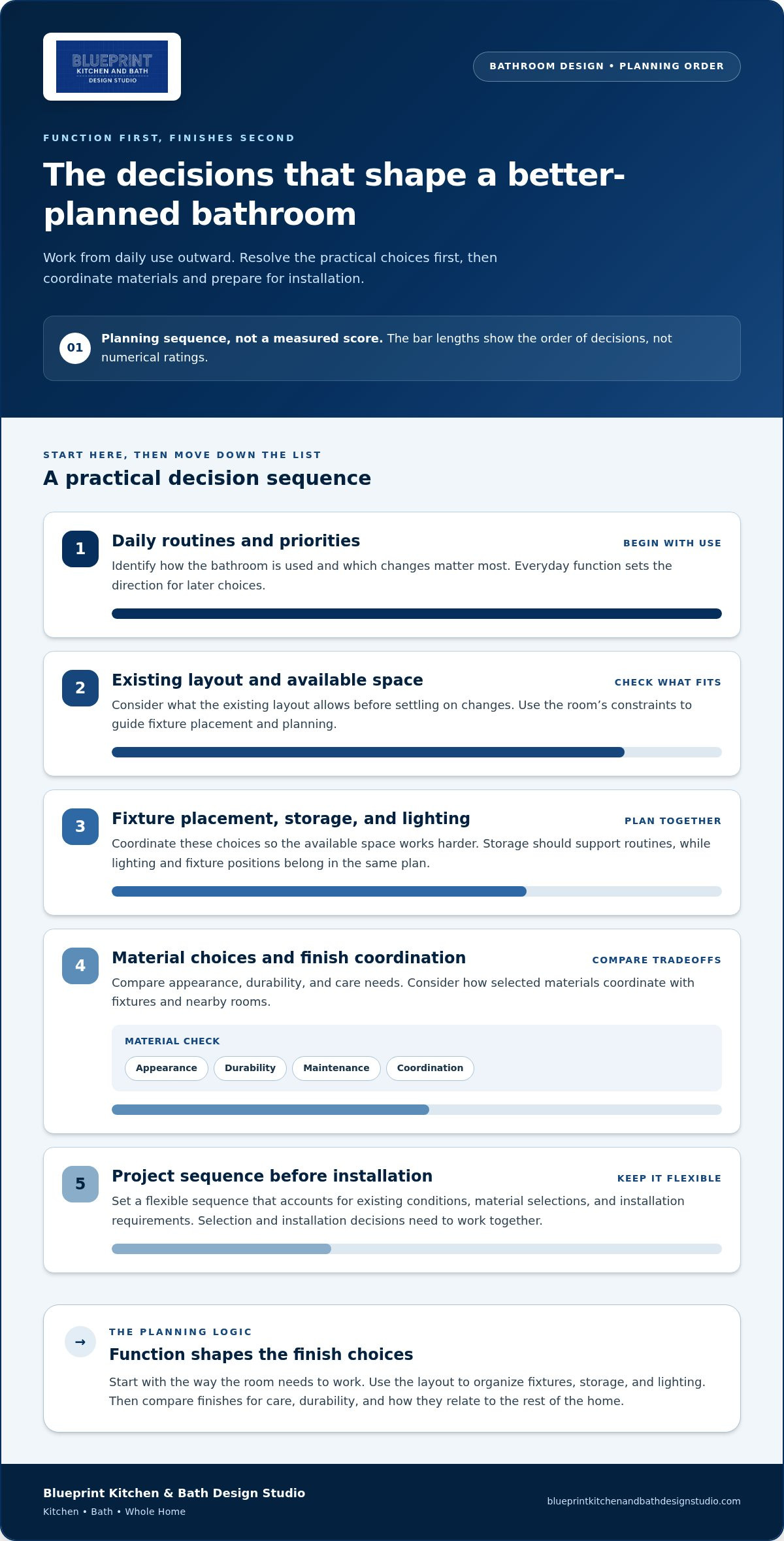
Planning from function outward gives you a clearer way to compare options and keep priorities in view. Consider how the bathroom is used, what the existing layout allows, and which changes matter most to your project. Then weigh materials for appearance, durability, maintenance, and coordination with fixtures and nearby rooms. This guide explains how to organize those decisions, compare finish tradeoffs, and sequence selections before installation, so your bathroom design feels considered rather than pieced together.
Key Takeaways
- Start with the bathroom’s daily routines and priorities before choosing finishes.
- Plan fixture placement, storage, and lighting together to make the available space work harder.
- Compare tile, countertop, cabinetry, and flooring options by durability, care, and how well they coordinate.
- Set a flexible project sequence, keeping existing conditions, material selections, and installation requirements in view.
Welcome to your comprehensive guide on planning a successful bathroom remodel with Blueprint Kitchen and Bath Design Studio. Whether you are updating a powder room or overhauling a master suite, proper planning ensures your project runs smoothly from concept to completion.
Frequently Asked Questions
Is quartz the same as quartzite?
No. Quartz surfaces are manufactured products, while quartzite is a natural stone, so their appearance, care needs, and product characteristics can differ. For example, a homeowner comparing two light-colored countertop samples should look beyond the color and ask how each specific product should be cleaned and maintained. Review the manufacturer’s guidance and intended use rather than assuming one material is universally better.
Does tile and grout alone waterproof a shower?
No. Tile and grout are finish materials, not a complete waterproofing system by themselves. The assembly beneath them also plays an important role in managing moisture. For example, attractive tile selections won’t answer questions about how a particular shower system handles water behind the visible surface. Consult reliable technical guidance for the products being considered, since requirements can vary by product and application.
Can bathroom finishes coordinate with the rest of a home?
Yes. Repeating selected colors, materials, or details can connect rooms without making them identical. For example, a hypothetical project that includes doorway widening for wheelchair accessibility and a bathroom update might repeat a nearby room’s cabinet finish or metal tone in the bathroom. The goal is a considered relationship between spaces, with choices that respect the home’s existing character and the homeowner’s preferences.
How should I prioritize a bathroom design when my budget is limited?
Start by identifying the room’s essential functional needs, then focus on decisions that affect everyday use most. Consider how a vanity’s storage will serve your routine, for instance, before choosing decorative details. Compare materials for maintenance and expected wear as well as appearance. Keep selections flexible, since actual project costs depend on scope, chosen materials, existing conditions, and specific project requirements.
Disclaimer
This article provides general educational information and design inspiration, not project-specific professional advice. Costs, timelines, permit requirements, building codes, and product suitability vary by property and jurisdiction. Final scope, pricing, and specifications are established only through a written proposal or contract. Consult qualified professionals and local building officials before beginning work. Unless expressly identified as a completed Blueprint project, images are illustrative and may include stock photography, design renderings, or AI-generated imagery.


