

Article by
Jake Blasco, SHSS, B-2 Licensed Contractor
Jake Blasco is a Senior Home Safety Specialist® (SHSS), B-2 Licensed Residential Remodeling Contractor, and Grab Bar Specialist serving homeowners throughout Southern California. He specializes in aging-in-place modifications, grab bar installation, bathroom safety upgrades, accessibility remodeling, fall prevention solutions, and ADA-inspired home modifications. Through Blueprint Kitchen & Bath Design Studio, Jake helps seniors, veterans, and individuals with mobility challenges remain safe, independent, and comfortable in their homes. His expertise includes bathroom safety assessments, walk-in shower conversions, accessible design, railings, ramps, and other home accessibility solutions that improve quality of life while supporting long-term independence.
What if the very modification you choose to ensure your safety actually creates a new barrier to your independence? When evaluating a walk-in tub vs curbless shower, many homeowners assume both options offer equal protection against the risk of a fall. However, the reality is that the "safest" choice depends entirely on your specific mobility needs. A walk-in tub still requires navigating a step-in threshold of three to seven inches, whereas a curbless shower provides a completely level entry. Choosing the wrong fit can lead to costly remodeling errors and a space that feels too clinical for a private home.
We understand that your bathroom should feel like a sophisticated retreat rather than a medical facility. You deserve a solution that protects your long-term autonomy without sacrificing the aesthetic or resale value of your property. This guide provides a comprehensive comparison to help you choose the safest, most functional bathing solution for your long-term independence. We'll examine the structural demands of each option and explain how these choices impact your home's future accessibility. By the end, you'll have the clarity needed to invest in a space that offers both professional-grade stability and genuine peace of mind.
Key Takeaways
- Understand the fundamental differences between the low-threshold entry of a walk-in tub and the seamless, zero-entry design of a curbless shower.
- Evaluate your current and future physical needs to determine if a walk-in tub vs curbless shower offers the most reliable long-term protection against falls.
- Identify critical structural considerations; such as water heater capacity for tubs and subfloor adjustments for curbless showers; before starting your renovation.
- Discover how universal design choices can protect your home's resale value while significantly reducing your daily cleaning and maintenance burden.
- Learn why a professional safety assessment is essential to ensure your bathroom modification balances clinical necessity with high-end aesthetic appeal.
Defining the Options: Walk-in Tubs and Curbless Showers
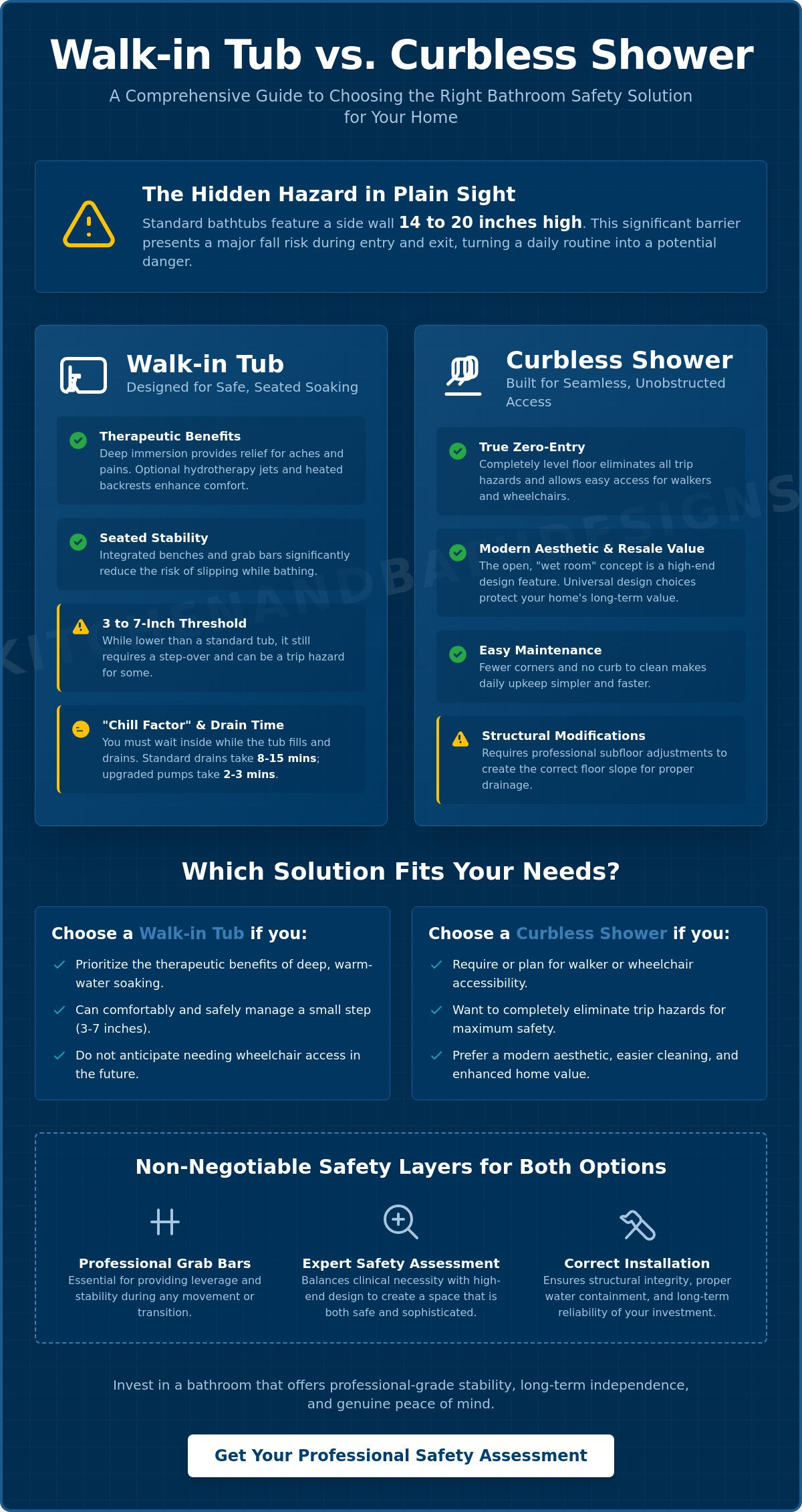
Standard bathtubs typically feature a side wall between 14 and 20 inches high. For many homeowners, this height represents a significant physical barrier that increases the risk of a fall during entry or exit. Both the walk-in tub and the curbless shower are engineered to eliminate this specific hazard, though they achieve safety through very different functional designs. Understanding Accessible bathtub designs helps you distinguish between a solution built for seated immersion and one designed for seamless, level-entry access. When evaluating a walk-in tub vs curbless shower, it's essential to consider how each modification integrates with your daily routine and long-term mobility goals.
To better understand how these two options compare in a real-world setting, watch this helpful video:
The Mechanics of a Walk-in Bathtub
A walk-in tub is a specialized fixture that allows you to enter through a side-opening door rather than stepping over a high rim. These doors utilize high-pressure seals to remain leak-proof while the tub is full. You can choose between inward-swinging doors, which use water pressure to stay shut, or outward-swinging doors that offer easier exit access for those with limited leg mobility. Beyond the door, these tubs prioritize stability through integrated benches and strategically placed grab bars. Many models also include therapeutic upgrades like hydrotherapy jets and heated backrests; these features turn a safety modification into a source of physical relief for chronic pain or circulation issues.
The Architecture of a Curbless Shower
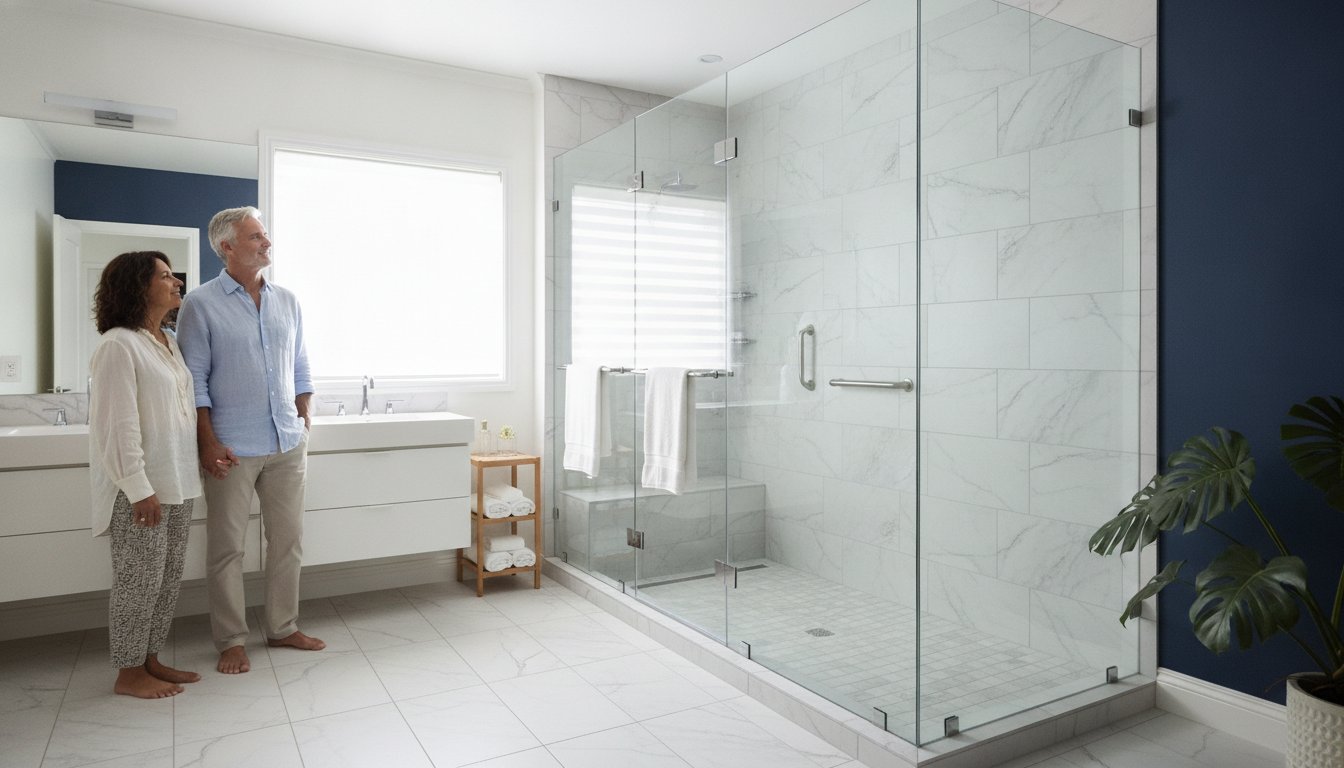
In contrast, a curbless shower, often referred to as a zero-entry or roll-in shower, removes the floor threshold entirely. This design requires precise architectural planning to ensure the floor slopes correctly toward a linear or center drain. This slope allows water to stay contained without the need for a raised curb. Because the floor remains level with the rest of the bathroom, these showers often follow a "wet room" concept, creating a spacious and modern aesthetic. This layout is particularly beneficial for those using mobility aids, as rolling walkers or wheelchairs can transition into the spray area without any obstruction.
The primary technical distinction in the walk-in tub vs curbless shower debate is the method of bathing. A walk-in tub is designed for deep, seated immersion, while a curbless shower focuses on standing or seated spray. Your choice will ultimately depend on whether you prioritize the therapeutic benefits of a soak or the unobstructed movement of a level floor. Both options represent a commitment to aging in place with dignity and grace.
Safety and Mobility: Which Solution Fits Your Physical Needs?
Your current level of physical independence and the likely progression of your mobility needs are the two primary factors that determine the right choice for your home. When comparing a walk-in tub vs curbless shower, it's helpful to look at how each design addresses specific fall risks. A walk-in tub significantly reduces the risk of slipping while standing, but it still presents a minor trip hazard due to the three to seven-inch threshold. Conversely, a curbless shower eliminates the trip hazard entirely, though it requires careful attention to floor texture to prevent slips while standing or transitioning. Professional grab bar installation Redlands CA is a non-negotiable safety layer for both options, providing the necessary leverage for secure movement.
One functional drawback of the tub is the "chill factor." Because you must remain inside the vessel while it fills and drains, you're exposed to the air as the water recedes. A standard gravity drain can take between 8 and 15 minutes to empty completely. While a quick-drain pump can reduce this to about 2 or 3 minutes, it's a practical reality that doesn't exist with a shower, where you can step out and dry off immediately. This difference is vital for those who are sensitive to temperature changes or have limited patience for the bathing process.
Best for Chronic Pain and Circulation
For individuals managing severe arthritis or fibromyalgia, the therapeutic value of a walk-in tub is often the deciding factor. Warm water immersion is a proven method for improving circulation and soothing inflamed joints. The built-in seating provides a stable, contoured environment that allows you to bathe without the physical strain of standing. This seated position is particularly beneficial if you experience dizziness or balance issues. It transforms a necessary hygiene routine into a restorative experience that helps maintain your long-term physical well-being.
Best for Wheelchair and Walker Users
A wheelchair accessible shower remodel remains the gold standard for those with paralysis or advanced MS. The zero-entry design allows for a true roll-in experience, removing every vertical barrier between the bathroom floor and the bathing area. This unobstructed path is essential for those who rely on rolling walkers or wheelchairs to navigate their space. This configuration also allows for a seamless transfer from a mobility device to a wall-mounted seat, preserving your dignity and autonomy. If you aren't sure which path fits your home, consulting with a specialist at Blueprint Kitchen and Bath Design Studio can help you visualize the most effective layout for your specific mobility device.
Installation Requirements and Structural Considerations
Beyond the immediate safety benefits, the physical structure of your home must be able to support your chosen modification. A walk-in tub, when filled with water and an occupant, can easily exceed 1,000 lbs. This concentrated weight often necessitates floor joist reinforcement to ensure long-term structural integrity. In contrast, the primary challenge of a curbless shower involves the subfloor. To achieve a zero-entry threshold, we must either notch the existing floor joists or raise the surrounding subfloor to create the necessary drainage slope. Evaluating a walk-in tub vs curbless shower requires a thorough inspection of your foundation to avoid unforeseen complications during the renovation process.
Homeowners in Redlands and the broader Inland Empire face unique challenges depending on the age of their property. Historic Craftsman or Victorian homes often feature raised foundations that provide easier access to plumbing but may require significant wood restoration to handle modern weight loads. Modern homes built on concrete slabs require a different approach; installing a curbless shower in these spaces often involves trenching into the concrete to relocate or deepen the drain line. These regional architectural nuances dictate which solution is most feasible for your specific floor plan and budget.
Plumbing and Electrical Upgrades
The mechanical requirements for these installations are quite rigorous. For a walk-in tub, we typically recommend upgrading to 3/4-inch supply lines. These larger pipes allow the tub to fill significantly faster, which minimizes the time you spend waiting in the cold. Additionally, hydrotherapy pumps and heated shells require dedicated electrical circuits to prevent overloading your existing system. For curbless showers, the focus shifts to drainage capacity. A 2-inch drain is essential to manage high water flow effectively; this prevents pooling and ensures the zero-entry design remains functional and safe.
Waterproofing and Slope Management
Preventing moisture migration is the most critical aspect of a curbless installation. We utilize a comprehensive "tanking" process, which involves applying a waterproof membrane across the entire bathroom floor and several inches up the walls. This creates a sealed environment that protects your subfloor and adjacent rooms from leaks. When choosing tile, linear drains are often superior for large-format selections because they only require the floor to slope in one direction. Point drains require a four-way slope, which can lead to more grout lines and potential trip hazards. We also ensure the "splash zone" is properly managed so that water stays within the intended area, even in an open-concept layout.
Lifestyle, Maintenance, and Home Resale Value
Choosing a modification for your bathroom is a central part of the "Forever Home" philosophy. This approach prioritizes long-term comfort and dignity through thoughtful aging in place remodeling Redlands. When you evaluate a walk-in tub vs curbless shower, you're deciding between a specialized therapeutic tool and a versatile, universal design feature. While a walk-in tub offers specific health benefits, a curbless shower often provides a more significant boost to your home's resale value. Most modern buyers view a zero-entry shower as a high-end, spa-like upgrade rather than a medical necessity; this ensures your home remains attractive to a broad range of potential owners.
Maintenance also plays a vital role in your long-term satisfaction. A walk-in tub requires regular attention to its internal plumbing and jet systems to prevent mineral deposits or biofilm from forming. In contrast, a curbless shower with large-format tile and high-quality glass is much simpler to clean. This reduction in physical labor is a benefit that grows in importance as you age, allowing you to spend more time enjoying your home and less time maintaining it. A well-planned bathroom should simplify your life, not add to your weekly chores.
Daily Use and Routine Efficiency
The time required for a daily routine varies significantly between these two options. A standard shower can be completed in about 10 minutes, whereas a walk-in tub experience often exceeds 30 minutes due to the fill and drain cycles we discussed previously. Showers also tend to use less water than the deep-soaking capacity of a walk-in tub, which can impact your monthly utility costs. For those who require assistance, a curbless shower offers superior access for caregivers. The open layout allows a helper to stand outside the spray zone while providing support; this is a task that is much more difficult within the confined space of a tub.
Aesthetic Integration
Modern accessibility design has moved far beyond the clinical look of hospital facilities. By utilizing designer hardware and custom tile patterns, you can create a space that feels like a luxury retreat. A curbless shower naturally creates the illusion of a much larger room by removing the visual break of a curb or tub wall. You can even integrate safety features seamlessly; many modern grab bars are designed to function as high-end towel racks or soap dishes. This ensures your bathroom remains a beautiful, cohesive part of your home's overall design. If you're ready to transform your space into a safe and stylish sanctuary, you can schedule a design consultation with our team of specialists.
Making the Decision: The Blueprint Expert Assessment
Deciding on a walk-in tub vs curbless shower is a significant commitment that impacts both your daily comfort and your home's long-term utility. While technical data provides a foundation, the most reliable way to ensure a successful outcome is through a professional evaluation. We recommend consulting with a SHSS Certified Senior Home Safety Specialist before you finalize your plans. These experts possess the clinical precision required to identify subtle environmental hazards that a general contractor might overlook. This specialized assessment ensures your bathroom modification is not just a structural change, but a tailored safety solution designed for your unique physical trajectory.
Before you sign a contract or purchase a pre-fabricated kit, ask yourself these five essential questions to ensure the project aligns with your goals:
- Does my current mobility allow for a four-inch step-in, or do I require a true zero-entry threshold for a walker or wheelchair?
- Can my home's existing floor joists and subfloor support the weight of a full tub, which can exceed 1,000 lbs?
- Will my water heater provide enough capacity for deep-soaking immersion, or will I need a tankless upgrade?
- Am I prioritizing the therapeutic benefits of hydrotherapy or the routine efficiency of a quick, level-access shower?
- Does the contractor have a documented plan for comprehensive waterproofing to protect the structural integrity of my home?
Our Specialized Guardian Philosophy
We view senior home safety remodeling Redlands as an empowering lifestyle upgrade rather than a medical necessity. Our "Blueprint" approach rejects the idea of one-size-fits-all kits that often result in a clinical, uninviting appearance. Instead, we focus on custom-tailored solutions that integrate seamlessly with your home's existing aesthetic. This philosophy prioritizes your dignity and autonomy, ensuring that every grab bar and slip-resistant surface feels like a natural part of a high-end renovation. We believe that a safe home should also be a beautiful home.
Next Steps for Your Remodel
Once you have determined which direction is right for your needs, the next step involves reviewing your budget and establishing a realistic project timeline. A professional bathroom conversion typically requires one to two weeks of active construction, depending on the complexity of the plumbing and structural adjustments. Residents in Redlands, Yucaipa, and Riverside can benefit from a local assessment that accounts for the specific architectural styles common in the Inland Empire. If you are ready to secure your independence, contact us today for a comprehensive bathroom safety assessment to begin crafting your personalized blueprint for the future.
Secure Your Future Independence with Professional Design
Selecting between a walk-in tub vs curbless shower is a decision that shapes how you interact with your home for years to come. Whether you prioritize the therapeutic warmth of a deep soak or the unobstructed, rolling access of a zero-entry shower, your choice should reflect both your current comfort and your future mobility. We have explored how structural needs and maintenance routines differ between these two options. By focusing on high-end materials and universal design, you can protect your home's value while eliminating the daily fear of a bathroom fall.
As an SHSS Certified Senior Home Safety and Grab Bar Specialist serving Redlands and the Inland Empire, I am dedicated to providing ADA-compliant solutions that never compromise on style. Your bathroom should be a sanctuary of stability and modern design. You can Schedule Your Professional Bathroom Safety Assessment today to ensure your remodel is handled with the precision and empathy it deserves. Taking this proactive step today ensures you can remain in the home you love with total confidence.
Frequently Asked Questions
Does a walk-in tub take a long time to drain?
A walk-in tub typically takes between 8 and 15 minutes to empty when using a standard gravity drain. This duration can be significantly reduced to approximately 2 or 3 minutes if you opt for a model equipped with a quick-drain pump. It's important to remember that you must remain seated inside the tub until the water level falls below the door threshold. This waiting period is a key consideration when comparing a walk-in tub vs curbless shower.
Is a curbless shower more expensive than a walk-in tub?
In most cases, a custom curbless shower is a more cost-effective choice than a high-end walk-in tub installation. While a walk-in tub involves significant expenses for the unit itself and necessary plumbing upgrades, a curbless shower primarily requires structural subfloor modifications and specialized waterproofing. However, if your project involves moving a drain or trenching into a concrete slab, the labor costs for a shower can increase. Every home requires a unique assessment to determine the final investment.
Can I install a curbless shower on a second floor?
You can certainly install a curbless shower on a second floor, provided the structural joists can be properly modified. This process involves either lowering the floor joists to create a slope or raising the rest of the bathroom floor to meet the shower entry. Professional waterproofing is even more critical on upper floors to prevent moisture from affecting the ceilings below. We use advanced membrane systems to create a completely sealed, leak-proof environment that protects your home's integrity.
Will a walk-in tub fit in my existing standard bathtub space?
Most walk-in tubs are specifically engineered to fit within the standard 60-inch alcove of a traditional bathtub. This design choice simplifies the transition by utilizing your existing footprint. However, some deeper or wider models may require minor adjustments to the surrounding drywall or doorway widening to accommodate the unit. We always measure the path from your front door to the bathroom to ensure the new fixture can be safely moved into place without structural damage.
Do curbless showers cause water damage to the rest of the bathroom?
A properly installed curbless shower won't cause water damage to your bathroom. Success depends on a precise floor slope and a comprehensive "tanking" process where the waterproof membrane covers the entire floor area. Linear drains are particularly effective at catching water along the entry line, preventing it from migrating into the dry zones. This professional approach ensures that the splash zone remains contained while maintaining a beautiful, open-concept aesthetic that's both safe and functional.
Are walk-in tubs covered by Medicare or insurance?
Medicare generally doesn't cover the cost of a walk-in tub because it's considered a home convenience rather than a medical necessity. However, some Medicare Advantage plans or Long-Term Care insurance policies may offer partial reimbursement for safety-related home modifications. Veterans may also qualify for HISA grants to assist with these expenses. It's best to consult with your insurance provider to understand your specific coverage options for aging-in-place upgrades before you begin your project.
How much maintenance do hydrotherapy jets in a walk-in tub require?
Hydrotherapy jets require consistent monthly maintenance to ensure the system remains sanitary and functional. You should run a cleaning cycle with a specialized antimicrobial solution to prevent the buildup of biofilm and mineral deposits within the internal plumbing. This routine maintenance is essential for preserving the therapeutic benefits of the water jets. If you prefer a lower-maintenance lifestyle, a curbless shower with high-quality tile may be a more suitable choice for your daily routine.
What is the best flooring for a curbless shower to prevent slips?
Small-format mosaic tiles are often the best choice for curbless shower floors because the frequent grout lines provide natural slip resistance. You should also look for porcelain tiles with a high Dynamic Coefficient of Friction (DCOF) rating of 0.42 or greater. These textured surfaces offer superior stability even when the floor is wet. Choosing the right flooring is a vital part of the walk-in tub vs curbless shower debate, as it directly impacts your daily safety and independence.


