


Article by
Jake Blasco, B-2 Licensed Contractor
Jake Blasco leads design and project planning at Blueprint Kitchen & Bath Design Studio, specializing in kitchen, bath, and whole home design in Huntington Beach and surrounding Orange County communities. His approach combines thoughtful layouts, quality materials, and practical construction knowledge to create spaces that look beautiful and work for everyday life.
Jake shares guidance on cabinetry, countertops, finishes, lighting, and renovation planning to help homeowners make informed decisions. As the qualifying individual for Blueprint’s California B-2 Residential Remodeling license (CSLB #1161570), he brings a construction perspective to every design.
Can you actually install a grab bar on a fiberglass shower without it ripping out of the wall or cracking the surround? Many homeowners worry that the thin, flexible material of a fiberglass unit isn't strong enough to support their weight during a slip. You're right to be cautious. A standard installation that works for tile can lead to costly water damage or structural failure in a fiberglass setting. Professional methods for installing grab bars in fiberglass shower walls require bridging the hollow gap between the decorative surface and the wooden framing of your home.
In this guide, we'll walk you through the professional techniques used by SHSS Certified specialists to ensure a rock-solid fit. You'll learn about the specific structural requirements and the high-grade anchors that provide peace of mind for aging in place. We'll show you how to secure your safety without compromising the integrity of your bathroom or risking hidden leaks behind the wall. From locating hidden studs to sealing every drill point, you're about to discover how to transform a vulnerable space into a stable, supportive environment.
Key Takeaways
- Learn why the "flex factor" of fiberglass makes standard mounting dangerous and how to identify the structural void behind your shower wall.
- Discover why direct stud mounting is the gold standard for safety and how specialized anchors provide a secure alternative when framing isn't perfectly aligned.
- Master the professional techniques for installing grab bars in fiberglass shower units to prevent surface cracking and ensure long-term water resistance.
- Understand the critical precision needed for ADA-compliant height assessment to ensure your grab bar provides maximum support and comfort.
- See how an SHSS Certified specialist uses specialized equipment to bridge the gap between your shower surround and the home's framing for a rock-solid finish.
The Unique Challenges of Installing Grab Bars in Fiberglass Showers
Fiberglass is a mainstay in modern bathrooms because it's lightweight, cost-effective, and easy to maintain. However, its structural profile is remarkably thin. Unlike tile installed over a heavy cement board, fiberglass is essentially a decorative shell. When you're installing grab bars in fiberglass shower units, you aren't just drilling into a wall; you're interacting with a material designed for aesthetics rather than load-bearing support. This creates a unique set of technical hurdles that must be cleared to ensure the user's safety.
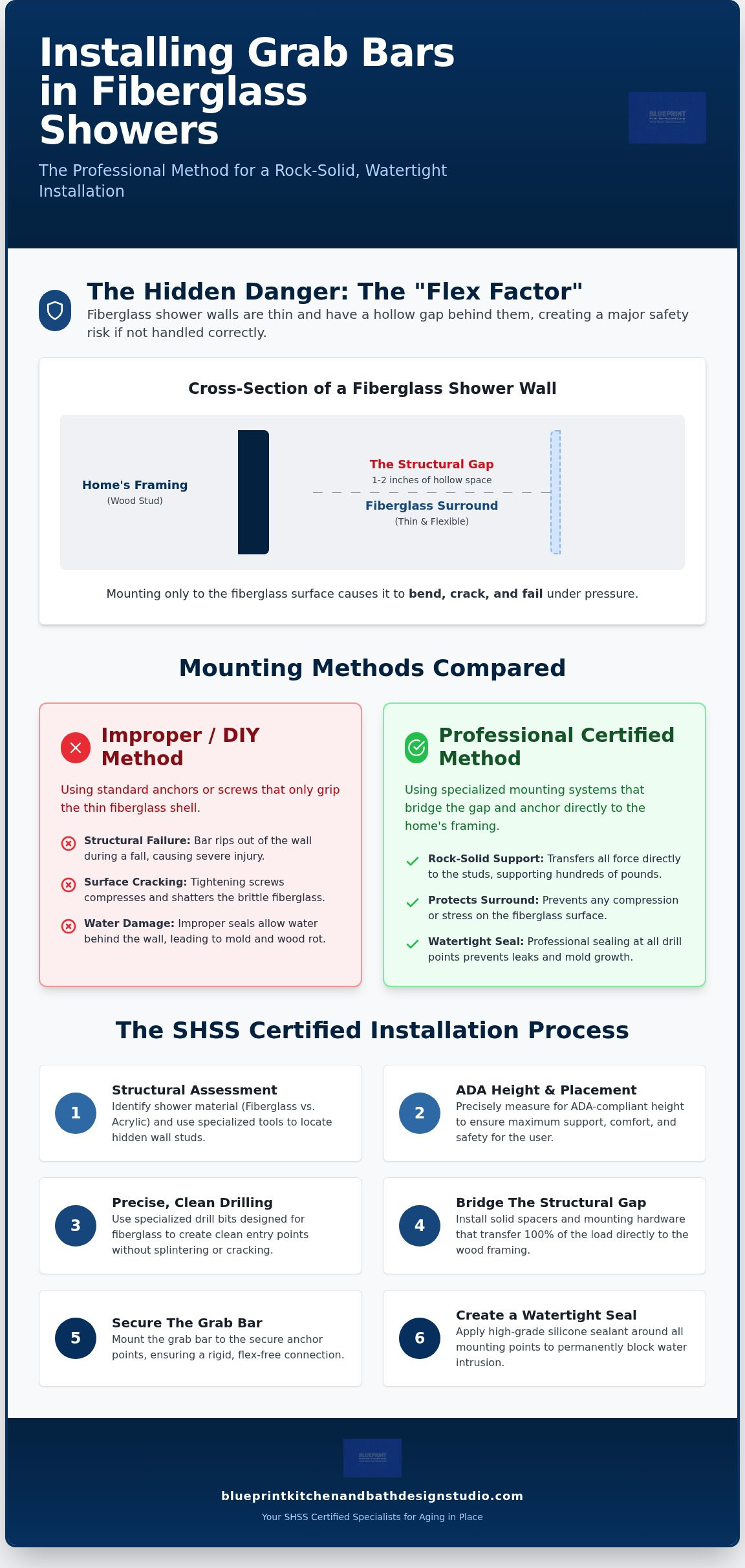
The most significant hurdle is the "flex factor." Most fiberglass surrounds are installed with a hollow gap between the material and the wooden studs of the home. If a bar is mounted only to the surface, the fiberglass will bend and bow under pressure. This movement isn't just unsettling for the user, it's a mechanical failure waiting to happen. Standard drywall anchors or simple screws can't handle this tension in a wet environment, often leading to the bar pulling completely out of the wall during a slip.
To better understand the relationship between the shower surface and the structural framing, watch this helpful video:
Fiberglass vs. Acrylic: What is in Your Bathroom?
Identifying your shower material is the first step toward a safe installation. Fiberglass reinforced plastic (FRP) often has a slightly porous feel and may show tiny "spider-web" cracks as it ages. Acrylic is usually smoother, warmer to the touch, and more consistent in color. Because fiberglass is more brittle than acrylic, using the wrong drill bit or applying uneven pressure can cause the surface to shatter or splinter. Professional installers use specialized bits to ensure clean, precise entries that maintain the surround's integrity and prevent costly cosmetic damage.
The Safety Risks of Improper Mounting
A grab bar that feels "mostly secure" is a hidden hazard. If the mounting hardware isn't anchored directly into the framing or a specialized reinforcement system, the bar can pull away during a fall. This sudden failure often leads to a more severe secondary injury. This is why suction cup bars are never a permanent solution. Beyond the immediate risk of injury, improper drilling creates paths for water to seep behind the surround. This moisture leads to mold growth and wood rot in your home's framing. Utilizing Grab bar safety devices correctly requires a deep understanding of these structural risks. Our SHSS Certified specialists evaluate every wall to ensure the final result is both watertight and rock-solid.
Bridging the Structural Gap: Physics of Support Behind the Wall
The most significant technical hurdle when installing grab bars in fiberglass shower units is the "structural gap." Most pre-fabricated surrounds are set 1 to 2 inches away from the wooden wall studs. This hollow space creates a leverage problem. If you tighten a screw directly against the fiberglass, you'll crush the material before the screw even bites into the wood. This compression is the primary cause of spider-web cracks and long-term water damage in many Inland Empire homes.
Understanding the physics of a fall is essential for a secure installation. A person losing their balance creates two distinct types of stress on a safety bar:
- Shear Force: This is the downward pressure as weight pulls the bar toward the floor.
- Pull-out Force: This occurs when a user yanks the bar away from the wall to regain their center of gravity.
Without a solid bridge across that structural gap, the thin fiberglass shell absorbs all that energy. Professional spacers act as a rigid conduit. They transfer the weight directly to the home's framing, protecting the surround from inward crushing and ensuring the bar doesn't flex during use. This mechanical connection is what provides the rock-solid feel of a professional installation.
Locating Studs Through Fiberglass
Finding a solid anchor point is notoriously difficult behind a thick surround. Standard stud finders often give false readings because they can't penetrate the density of the fiberglass and the air gap simultaneously. While the "tap and listen" method can provide a general idea, specialists often use high-density deep-scan sensors to find the exact center of the wood. This precision is especially critical in older Redlands homes where stud spacing may not follow the modern 16-inch on-center standard. Missing the stud by even a half-inch can compromise the entire safety system.
The Importance of Solid Blocking
Sometimes, the ideal ergonomic position for a safety bar doesn't align with a wall stud. In these cases, you can't just settle for a less-than-ideal location. Professional installers utilize specialized mounting plates or heavy-duty toggle systems designed specifically for hollow fiberglass environments. These tools distribute the load across a wider surface area, allowing the bar to meet or exceed the ADA weight-bearing requirement of 250 pounds. Ensuring your installation is both safe and aesthetically pleasing requires a technical eye. If you're unsure about your wall's hidden structure, a professional grab bar installation assessment can identify the best mounting strategy for your specific bathroom layout.
Mounting Methods Compared: Stud-Anchoring vs. Hollow Wall Solutions
Choosing the right hardware is the most critical decision when installing grab bars in fiberglass shower units. You have two primary paths: anchoring directly into the wooden framing or using specialized hollow wall fasteners. While both aim to provide stability, they function differently under the daily stress of usage. A professional installer evaluates the wall density and the user's specific mobility needs before selecting a mounting strategy.
The "Solid Mount" technique is often the preferred professional approach. This method uses a structural spacer to bridge the gap between the fiberglass surround and the wall stud. It allows for a secure metal-to-wood connection without requiring you to remove the shower unit. In contrast, hollow wall solutions like Moen SecureMount or WingIts are designed to grip the fiberglass itself. While these are engineered for safety, they rely on the integrity of the fiberglass shell; this can lead to material fatigue over years of constant use.
When to Use Stud-Anchored Systems
Stud-anchored systems are the gold standard for high-weight capacity and bariatric safety. If you're installing vertical or diagonal bars, a direct connection to the home's framing is essential. These orientations often involve more intense pulling forces than a standard horizontal bar. A stud-mounted bar offers superior long-term durability because the wood framing absorbs the energy of a fall. This prevents the fiberglass from bowing or cracking under sudden pressure, ensuring the bar remains rock-solid for the life of the home.
Evaluating Hollow Wall Anchors
Hollow wall anchors serve as an effective solution when a stud isn't located in the ideal ergonomic position. However, they shouldn't be used indiscriminately. There are strict criteria for using toggle-style anchors in fiberglass, including minimum thickness requirements for the surround. Most certified installers view these as a "Plan B" because they require drilling larger holes in the decorative surface. If you choose this route, you must ensure the surround is free of existing "spider-web" cracks. Proper sealing is also vital; any moisture that bypasses a hollow wall anchor can cause significant hidden damage to the drywall and studs behind the shower.
Professional Installation Steps for a Secure Result
Installing grab bars in fiberglass shower units is a methodical process where precision matters more than speed. Unlike quick DIY videos suggest, a professional installation ensures the surround remains watertight and structurally sound for decades. Every step must account for the unique flexibility of the fiberglass and the hidden framing behind it. Taking the time to prepare the surface and the structural gap correctly is what separates a temporary fix from a permanent safety solution.
Step 1: Layout and Height Strategy
We begin by assessing the user's specific movement patterns and physical needs. While ADA standards generally recommend a horizontal bar height of 33 to 36 inches from the shower floor, individual height and reach often dictate minor adjustments for comfort. We use painters tape to mark these positions. This protects the surround's finish and provides a clear surface for marking without leaving permanent stains. We typically plan for two distinct zones: an entry-point bar for balance while stepping in and a bathing-zone bar for stability while seated or standing.
Step 2: The Drilling Process
Drilling into fiberglass is the most high-stakes part of the job. To avoid the dreaded "spider-web" cracks mentioned earlier, we use diamond-tipped or carbide-tipped hole saws rather than standard twist bits. A "slow and steady" approach is vital here. High-speed drilling generates excessive heat that can melt the resin or cause the decorative gel coat to flake and chip. Once the hole is clean, we carefully remove any fiberglass dust and debris from the structural gap. This ensures the mounting hardware seats perfectly against the framing or the specialized anchor system without any interference.
Step 3: Waterproofing and Final Assembly
This is where many standard installations fail, leading to hidden mold and wood rot. To prevent moisture from reaching the wall studs, we apply a generous amount of 100% silicone sealant behind the mounting flange. As the flange is tightened, the sealant creates a "gasket" effect, forming a permanent, flexible barrier against steam and splashing water. Managing torque is a delicate balance. We tighten the fasteners enough to ensure a rock-solid grip but stop before the pressure begins to bow or crush the fiberglass shell. A final load test confirms the bar doesn't flex or move under pressure, providing the user with immediate confidence. If you're ready to secure your bathroom with a certified expert, you can schedule a professional grab bar installation today.
Why Professional Certified Installation Outperforms DIY
While the internet is full of quick tutorials, the technical reality of installing grab bars in fiberglass shower units involves high stakes. A single error during the drilling process can lead to a shattered surround or a bar that detaches when someone needs it most. An SHSS Certified Senior Home Safety Specialist brings a clinical understanding of both mobility and structural engineering. We know how to identify the exact center of a stud through thick fiberglass, avoiding the "oops" moments that often lead to costly bathroom repairs.
Professional installation also means looking beyond the single bar. We evaluate the entire environment, including lighting levels, threshold heights, and flooring slip-resistance. This holistic approach ensures that your safety modification isn't just a piece of hardware, but a comprehensive lifestyle upgrade that fosters independence. Our specialists use professional-grade sensors and specialized bits to ensure the fiberglass remains intact while the bar becomes a permanent, rock-solid part of your home.
Liability and Peace of Mind
Choosing a certified expert protects your home and your health. Professional installation ensures that your home insurance standing remains secure, as modifications are performed to industry safety standards. Unlike a DIY attempt, our work is backed by a professional commitment to quality and longevity. We also ensure the bar is positioned for your actual mobility needs. We don't just install "by the book"; we adjust for your specific reach and grip strength to ensure the bar is where you need it, when you need it.
Blueprint’s Local Expertise in Redlands
We are proud to serve Redlands, Yucaipa, and Riverside with specialized mobility tools and techniques. Our team understands the unique construction styles found in Inland Empire homes, from historic properties to modern builds. We don't just install hardware; we integrate these changes into a broader bathroom safety upgrade. By choosing a local specialist, you gain a partner who prioritizes your long-term well-being and physical autonomy. If you are ready to enhance your home's accessibility, you can request a professional grab bar installation in Redlands to ensure your project is handled with precision and care.
Securing Your Independence with Professional Precision
Ensuring safety in your bathroom doesn't have to mean compromising the look or integrity of your shower. We've explored how the hollow space behind fiberglass surrounds creates unique structural risks, and why bridging that gap to the framing is essential for a rock-solid result. By choosing professional methods for installing grab bars in fiberglass shower units, you avoid the common pitfalls of surface cracking and hidden water damage that often follow DIY attempts.
At Blueprint Kitchen and Bath Design Studio, we bring over 20 years of local remodeling expertise and specialized hardware to every project in the Inland Empire. As an SHSS Certified Senior Home Safety Specialist, we ensure your modifications are both clinically safe and aesthetically seamless. You deserve a bathroom that supports your lifestyle with dignity and peace of mind. Schedule Your Professional Safety Assessment with Blueprint Today and take the first step toward a safer home environment. We're here to help you age in place with confidence and comfort.
Frequently Asked Questions
Can you install a grab bar on a fiberglass shower without a stud?
Yes, you can install a bar without a stud by using specialized hollow-wall anchors designed specifically for fiberglass. Standard toggle bolts are insufficient because they can crush the delicate material. Professional installers use systems that distribute the load across a much wider surface area to prevent the fiberglass from flexing or bowing. While anchoring into a stud remains the gold standard for stability, these heavy-duty systems provide a reliable alternative for safe movement.
Will drilling into my fiberglass shower cause it to crack or leak?
Not if the correct tools and sealing techniques are used. Using a diamond-tipped or carbide-tipped hole saw prevents the "spider-web" cracking common with standard twist bits. To prevent leaks, apply 100% silicone sealant behind the mounting flange during assembly. This creates a watertight gasket that protects the wall cavity from moisture and mold growth. Professional precision ensures the surround remains beautiful while providing the stability you need for daily bathing.
What is the best type of anchor for a fiberglass shower wall?
The best option is a structural bridge like the Solid Mount or a specialized toggle-style anchor like WingIts. These are specifically engineered for the 1 to 2 inch structural gap between the shower surround and the framing. They provide a rigid connection that transfers weight to the studs or distributes it across the surround without causing the fiberglass to collapse inward. These professional-grade anchors are far superior to standard plastic wall plugs.
How much weight can a grab bar in a fiberglass shower actually hold?
A correctly installed bar should hold at least 250 pounds to meet ADA standards. When installing grab bars in fiberglass shower units using stud-anchored systems, the capacity often exceeds this minimum requirement. However, if the bar is only surface-mounted with improper hardware, it may fail under significantly less weight. This can lead to a dangerous secondary injury during a fall. Professional installation ensures the bar handles the physics of a sudden slip.
Do I need to hire a plumber or a specialist to install grab bars?
While plumbers handle pipes, a Senior Home Safety Specialist is the ideal choice for safety bars. These professionals understand the physics of falls and the structural requirements of bathroom surrounds. An SHSS Certified specialist ensures the bar is positioned for your specific reach and strength while protecting the integrity of your fiberglass unit. This specialized focus provides a higher level of security and peace of mind than general contracting or plumbing services.
What is the standard ADA height for a shower grab bar?
The ADA standard height for horizontal grab bars is between 33 and 36 inches from the finished floor. While this is the baseline, professional installers often adjust this slightly to match the user's specific height and mobility needs. A bar placed at the wrong height can actually become a hazard if it forces the user into an unstable posture. Customizing the placement ensures the bar provides maximum leverage and support during every transition.
How do I know if my shower is fiberglass or acrylic?
Look for visual cues like small spider-web cracks or a slightly porous texture, which are common in fiberglass. Fiberglass often feels thinner and more flexible when pressed. Acrylic is usually thicker, smoother, and warmer to the touch. Knowing the material is vital because fiberglass is more brittle. It requires specialized bits and unhurried drilling to avoid shattering the decorative gel coat. A professional assessment can confirm your material before the first hole is drilled.
Can I use suction cup grab bars on fiberglass as a temporary fix?
Suction cup bars are never recommended for safety, even as a temporary measure. These devices rely on a perfect vacuum seal that can fail without warning on porous fiberglass surfaces. They aren't designed to support a person's full weight during a fall. For reliable protection, installing grab bars in fiberglass shower walls requires a mechanical connection to the home's framing. Don't risk your safety on a device that can detach when you need it most.
Disclaimer
This article provides general educational information and design inspiration, not project-specific professional advice. Costs, timelines, permit requirements, building codes, and product suitability vary by property and jurisdiction. Final scope, pricing, and specifications are established only through a written proposal or contract. Consult qualified professionals and local building officials before beginning work. Unless expressly identified as a completed Blueprint project, images are illustrative and may include stock photography, design renderings, or AI-generated imagery.


