
Article by
Jake Blasco, SHSS, B-2 Licensed Contractor
Jake Blasco is a Senior Home Safety Specialist® (SHSS), B-2 Licensed Residential Remodeling Contractor, and Grab Bar Specialist serving homeowners throughout Southern California. He specializes in aging-in-place modifications, grab bar installation, bathroom safety upgrades, accessibility remodeling, fall prevention solutions, and ADA-inspired home modifications. Through Blueprint Kitchen & Bath Design Studio, Jake helps seniors, veterans, and individuals with mobility challenges remain safe, independent, and comfortable in their homes. His expertise includes bathroom safety assessments, walk-in shower conversions, accessible design, railings, ramps, and other home accessibility solutions that improve quality of life while supporting long-term independence.
The most significant threat to your home's resale value isn't an accessibility upgrade; it's an outdated design that limits who can comfortably live there. You might worry that installing a roll in shower means choosing between your physical independence and your bathroom's high-end aesthetic. It's a common anxiety, as no one wants their private sanctuary to feel like a clinical environment or a compromise in style.
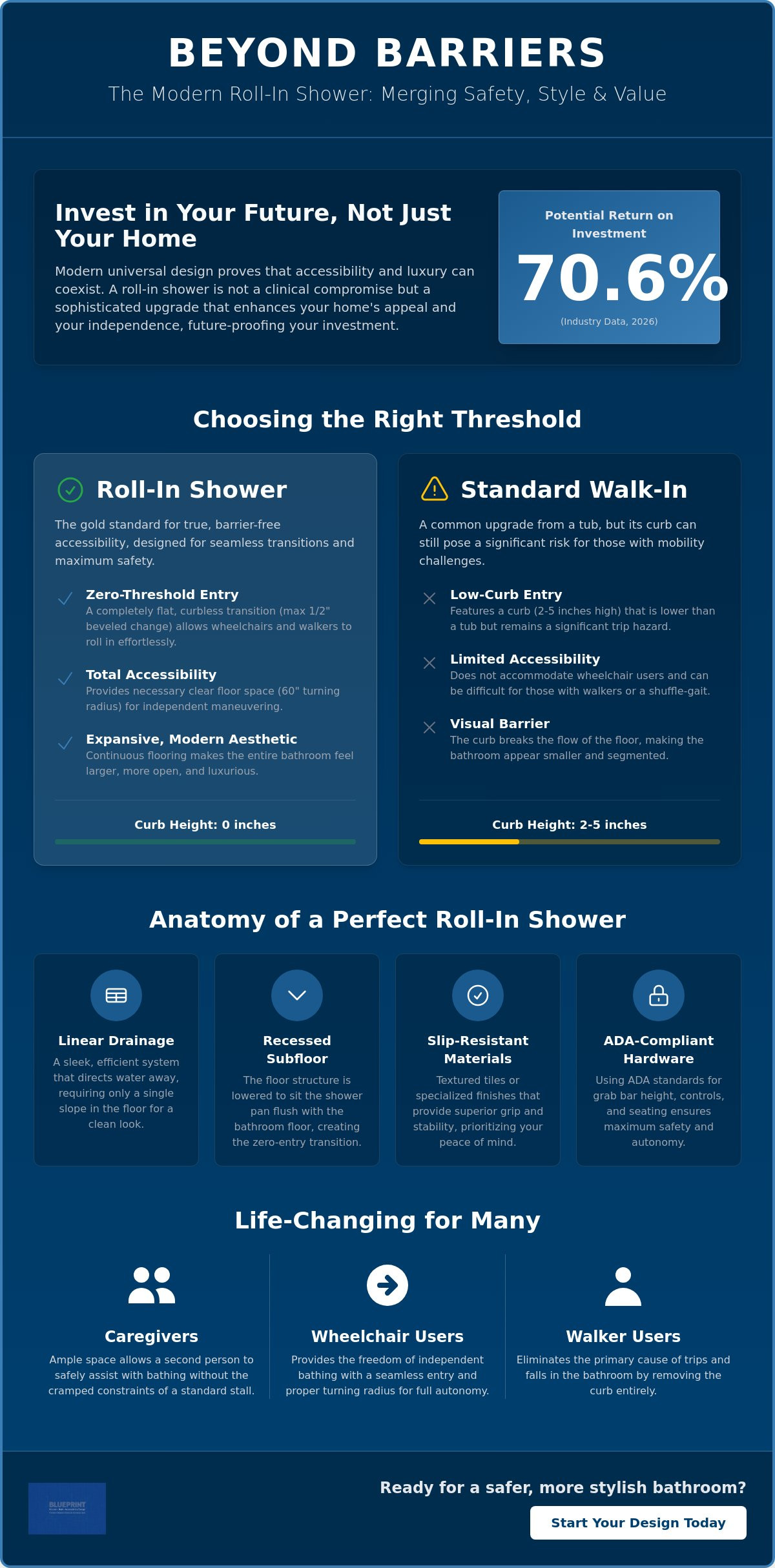
The good news is that modern universal design has bridged the gap between safety and luxury. You can achieve a safe, barrier-free bathing experience that actually increases your home's appeal. In fact, industry data from 2026 shows that accessibility-focused remodels can offer a return on investment as high as 70.6%. This article will help you discover how to combine clinical precision with warm, domestic comfort through expert design examples. We'll preview the essential standards for curbless transitions, ADA-compliant hardware, and sophisticated finishes that ensure your bathroom remains a place of dignity, stability, and lasting beauty.
Key Takeaways
- Identify the fundamental differences between walk-in and roll in shower designs to ensure your bathroom provides the zero-threshold entry required for total wheelchair accessibility.
- Explore sophisticated design techniques, such as continuous flooring and frameless glass, that transform safety modifications into a luxury spa-like retreat.
- Master the technical essentials of curbless environments, including linear drainage systems and slip-resistant materials that prioritize your stability and peace of mind.
- Learn why specialized expertise and SHSS certification are vital for navigating the structural complexities of a high-stakes home modification.
What is a Roll-In Shower? Defining True Barrier-Free Accessibility
A roll in shower is a floor-level bathing area with a maximum 1/2 inch beveled change, designed to eliminate the standard curb that often acts as a physical barrier. While most people are familiar with the basic concept of What is a Shower?, a true roll-in design removes the threshold entirely to provide a seamless transition for wheelchairs, walkers, or shower chairs. This zero-threshold entry isn't just a technical specification; it's a fundamental shift in how you experience your home. Removing that four-inch hurdle provides immediate psychological relief. It replaces the anxiety of a potential trip with the confidence of a flat, predictable surface.
To visualize the calming atmosphere a well-designed space can provide, watch this helpful video:
The Anatomy of a Zero-Entry Shower
Creating a seamless floor requires more than just removing a curb. It involves precise structural planning. In many aging-in-place remodeling projects, the subfloor must be recessed to allow the shower pan to sit flush with the bathroom tile. Alternatively, if the floor can't be lowered, a gentle ramping system is used to bridge the height difference. This zero-entry approach is the gold standard because it accommodates future mobility changes without requiring further construction. Reliability depends on specialized waterproofing membranes that wrap from the shower floor out into the main bathroom area. This ensures that water stays where it belongs even without a physical barrier.
Who Benefits Most from a Roll-In Design?
While anyone can enjoy the open feel of a curbless space, certain individuals find it life-changing. These modifications are especially helpful for:
- Full-time wheelchair users: These designs provide the necessary 60-inch turning radius and clear floor space required for independent maneuvering.
- Individuals using walkers: Eliminating the lip removes the primary cause of trip and fall accidents in the bathroom.
- Caregivers: The extra space allows a second person to assist with bathing safely without the cramped constraints of a standard stall.
In a residential setting, it's helpful to distinguish between barrier-free and ADA compliant. While your private home doesn't legally have to follow the Americans with Disabilities Act, using those standards as a blueprint ensures your renovation meets the highest safety benchmarks. A barrier-free design focuses on the lack of obstacles. However, an ADA-compliant roll in shower follows strict measurements for grab bar height and control placement to maximize your autonomy.
Roll-In vs. Walk-In Showers: Choosing the Right Threshold
Selecting the right entry for your bathroom involves more than just picking a style; it's about evaluating the physical height of the threshold. A standard walk-in shower usually features a curb between two and five inches high. While this is lower than a traditional tub wall, it still presents a significant obstacle for anyone with limited mobility. In contrast, a roll in shower offers a true 0-inch threshold. This design doesn't just improve safety; it expands the visual footprint of the room. By removing the physical divider of a curb, the bathroom floor appears continuous. This makes even small bathrooms feel significantly larger and more open.
Choosing a roll-in design involves more intensive labor during the initial construction phase. Contractors must often recess the subfloor to ensure the shower pan sits perfectly flush with the rest of the room. While this structural work increases the initial labor cost, it effectively future-proofs your home. You won't have to worry about another costly remodel if mobility needs shift in the future. It's a proactive choice that ensures your home remains a safe haven for decades, protecting both your independence and your home's long-term value.
When a Walk-In Shower Isn’t Enough
For individuals with a shuffle-gait or progressive mobility challenges, even a minimal two-inch curb becomes a dangerous trip hazard. This is where the distinction between a walk-in tub vs curbless shower becomes critical. While a walk-in tub offers a low step-in, it doesn't allow for wheelchair entry. In the modern real estate market, "curbless" has become the preferred term for these designs. It signals high-end luxury rather than a clinical necessity. This terminology appeals to a wide range of buyers who value seamless transitions and open-concept layouts, ensuring your investment pays off during a future home sale.
Space Requirements for Wheelchair Maneuverability
True independence requires enough room to move freely without feeling restricted. The guidelines found in the Essential Technical Features for bathing rooms highlight the importance of the "60-inch circle." This space allows for a full rotation within the bathroom, which is essential for independent living. Without this clearance, a wheelchair user may require constant assistance just to exit the shower area. To achieve this level of flow, professional aging-in-place remodeling often involves adjusting the entire room's layout, ensuring every element works in harmony with your daily routine.
Inspiring Roll-In Shower Design Ideas: Combining Style with Safety
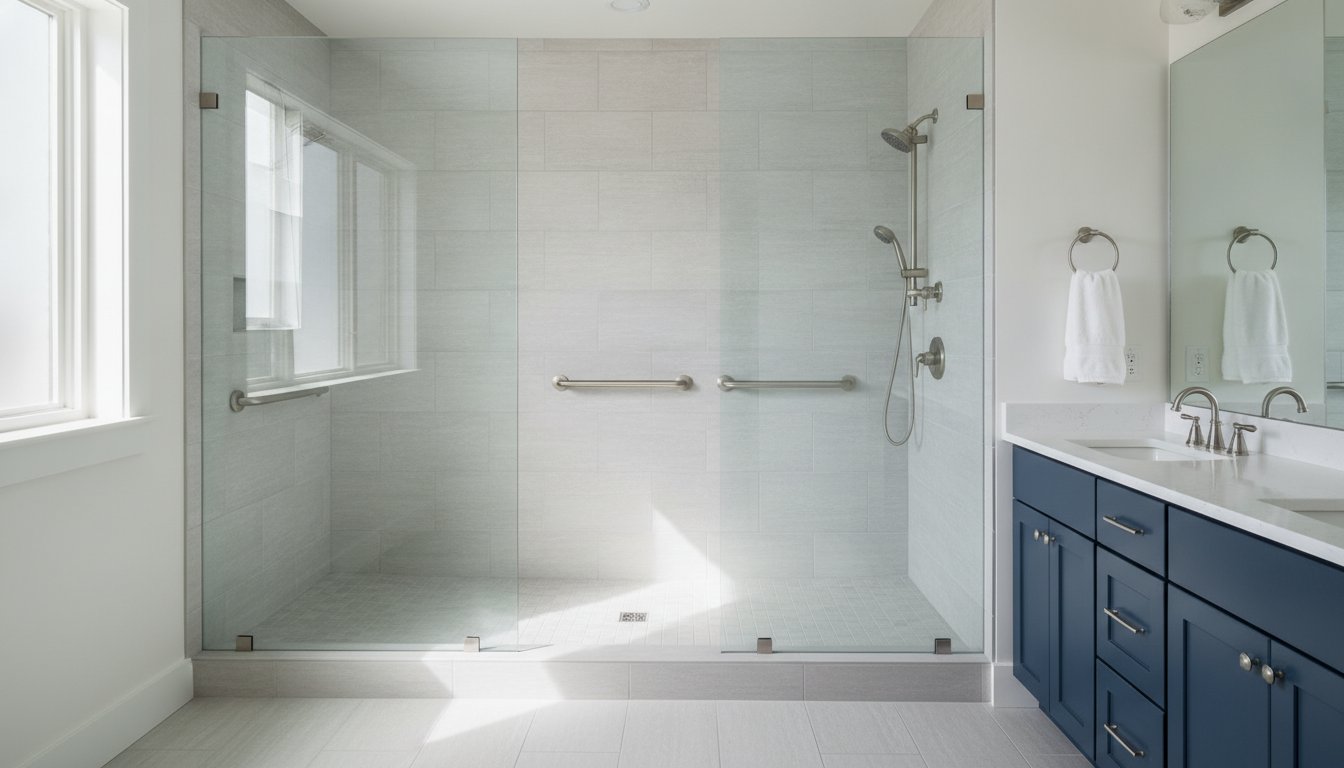
A common misconception is that a roll in shower must look like a hospital installation. In reality, modern design allows you to create a high-end spa environment that happens to meet the highest safety requirements. One of the most effective ways to achieve this is through the "continuous floor" look. By using the same tile from the main bathroom area into the shower, you eliminate the visual break of a curb. This design choice creates a seamless, expansive feel while ensuring there is no physical lip to navigate. When paired with frameless glass enclosures, the space remains open and airy. Glass panels contain water effectively without closing off the room, maintaining the visual flow that defines a modern luxury bathroom.
Integrated lighting serves both safety and style. Recessed LED strips along the floor or within wall niches provide better visibility for those with low vision while creating a sophisticated ambiance. Choosing the right material is equally important. Natural stone and textured porcelains offer the necessary friction to prevent slips, but they also provide a rich, tactile aesthetic that one-piece plastic units can't match. For seating, you might choose a built-in stone bench that feels like a permanent part of the architecture, or a fold-down teak option that adds a warm, organic touch to the space. Each choice balances your personal style with the practical need for a stable, comfortable bathing experience.
The Modern Spa Aesthetic
The modern spa aesthetic thrives on simplicity. Large-format tiles minimize grout lines, which reduces maintenance and creates a sleek, uninterrupted surface. This approach pairs beautifully with floating vanities. By keeping the floor clear, you don't just improve wheelchair maneuverability; you also enhance the room's open-concept feel. Soft, neutral color palettes like warm grays, sand tones, or muted blues help create a therapeutic environment that promotes relaxation and peace of mind. These choices ensure your bathroom feels like a retreat rather than a medical necessity.
Functional Accents: Grab Bars that Don’t Look Clinical
Safety hardware doesn't have to ruin your design. You can select designer grab bars in high-end finishes like matte black, brushed gold, or polished chrome. These pieces often serve dual purposes, acting as towel racks or soap ledges while providing essential stability. Following ADA Accessibility Standards for roll-in showers ensures these elements are placed for maximum utility. Coordinating these with professional grab bar installation in Redlands, CA during the initial tile layout ensures the blocking is structurally sound and the aesthetic is perfectly integrated into your roll in shower design.
Essential Technical Features for a Functional Roll-In Shower
While the visual appeal of a barrier-free bathroom is undeniable, the true success of a roll in shower lies in its invisible engineering. Designing a space that is both beautiful and functional requires a deep understanding of water management and surface physics. Unlike standard showers that use a four-way slope toward a center drain, a professional curbless installation typically utilizes a "one-way pitch." This means the entire floor tilts gently toward a single point, usually the back wall. This precise slope ensures that water flows away from the bathroom floor without the need for a physical curb, protecting your home from moisture damage while providing a perfectly level entry for mobility aids.
The Magic of Linear Drains
Linear drains are the preferred solution for modern curbless environments because they allow for a single, consistent slope. Traditional circular drains require a "bowl" effect that can make a wheelchair or walker feel unstable. By placing a high-capacity linear drain along the back wall or across the entry point, you create a flat, predictable surface. Maintenance is straightforward; most high-end models feature a removable grate and an integrated hair strainer. Keeping these clear ensures the system can handle high volumes of water, maintaining the safety and integrity of your roll in shower for years to come.
Safe Flooring Materials for Seniors
The foundation of a safe bathroom is the floor's grip. When selecting materials, professionals look at the Dynamic Coefficient of Friction (DCOF) rating. For wet areas, a DCOF of 0.42 or higher is the benchmark for safety. Small-format mosaic tiles are an excellent choice because the frequent grout lines provide natural "micro-traction" for bare feet and rubber tires alike. If you prefer a modern look, textured porcelain tiles can mimic the warmth of wood or the elegance of stone while maintaining a high-friction surface. Investing in a slip resistant bathroom flooring installation is the most effective way to reduce the risk of falls and ensure long-term peace of mind.
Hardware choices also play a vital role in your daily autonomy. Thermostatic mixing valves are essential because they maintain a precise water temperature, preventing accidental scalding if someone else in the house turns on a faucet. Pair this with a handheld showerhead on a sliding bar. This setup is a requirement for seated bathing, allowing you or a caregiver to direct water exactly where it's needed without having to stand or reach uncomfortably. If you're ready to transition your home into a safer, more accessible space, you can explore our specialized curbless shower solutions today.
Professional Roll-In Shower Installation in Redlands: The Blueprint Difference
Executing a successful roll in shower project requires more than standard construction skills; it demands a specialized understanding of both structural engineering and human mobility. While a general contractor might be capable of a standard bathroom update, a wheelchair accessible shower remodel involves high-stakes modifications that leave no room for error. At Blueprint Kitchen and Bath Design Studio, we manage the entire lifecycle of your project. This includes everything from the initial subfloor modification to the final, precise placement of safety hardware. Our "Design-First" philosophy ensures that your accessibility upgrades never feel like a compromise. We select materials and hardware that enhance your home's beauty while providing the physical support you need for long-term independence.
The Value of a Certified Senior Home Safety Specialist
Our team includes professionals with SHSS Certification (Senior Home Safety Specialist). This credential means we look beyond basic building codes to design for your specific physical limitations and progressive needs. A standard inspection might miss the subtle hazards that lead to falls, but our assessment process is designed to identify these risks before construction begins. We consider how you move, your reach range, and your future requirements. This comprehensive approach gives families peace of mind, knowing that every structural change is sound, safe, and tailored to the individual. It's about creating a space where you feel empowered rather than restricted.
Serving Redlands and the Inland Empire
We have deep roots in the Inland Empire, specifically serving homeowners in Redlands, Loma Linda, and Highland. This local expertise is vital when we navigate the specific permitting and ADA requirements of San Bernardino and Riverside counties. Many homes in our area, particularly older ranch-style residences, present unique structural challenges for curbless transitions. We understand these local home styles and have successfully completed numerous projects involving senior home safety remodeling in Redlands. Whether you live in a historic property or a modern build, we ensure your roll in shower integrates seamlessly with your existing architecture.
If you're ready to combine high-end aesthetics with life-changing accessibility, contact Blueprint Kitchen and Bath Design Studio for a professional safety assessment. Our team is here to help you navigate this transition with dignity, expertise, and a commitment to your home's lasting value.
Secure Your Independence with Purposeful Design
Transitioning your home for better accessibility shouldn't feel like a compromise on your personal style. By prioritizing a true roll in shower design, you create a space that supports your physical autonomy while maintaining a sophisticated, high-end aesthetic. This modification ensures that every technical detail, from the seamless linear drainage to the slip-resistant textures, works in harmony to protect your stability and your home's long-term value. It's a proactive step that treats your bathroom as an empowering lifestyle upgrade rather than a medical necessity.
As SHSS Certified Senior Home Safety and Grab Bar Specialists, we focus on the intricate structural requirements and waterproofing standards that general contractors often overlook. We specialize in curbless and roll-in shower design for families in Redlands, Loma Linda, and across the Inland Empire. You can Schedule Your Professional Bathroom Safety Assessment Today to begin planning a space that offers both dignity and peace of mind. Your home is your sanctuary; with the right design, it can remain a safe, beautiful environment for years to come.
Frequently Asked Questions
Will a roll-in shower cause water to leak into the rest of my bathroom?
A properly installed roll in shower will not leak into the rest of your bathroom when designed with the correct slope. The system relies on a precise one-way pitch toward a high-capacity linear drain and specialized waterproofing membranes that extend beyond the immediate bathing area. This professional approach ensures all water is managed effectively within the wet zone, even without a physical curb to contain it.
Do I need to widen my bathroom door for a roll-in shower to be useful?
Widening your bathroom door is often a necessary step to ensure your new shower is truly useful and accessible. Standard interior doors are frequently too narrow for a wheelchair or walker to pass through comfortably. Increasing the doorway width to at least 32 to 36 inches allows for a seamless transition from the hallway, ensuring you can navigate the entire space with total independence.
How much does a roll-in shower conversion typically cost in Redlands?
The cost of a conversion depends on the structural complexity of your home and the materials you select. While national industry data for standard projects often falls between $2,900 and $4,600, custom projects in Redlands can vary based on subfloor requirements and luxury finishes. We recommend a professional safety assessment to provide an accurate estimate that reflects the specific needs of your Southern California home.
Can I install a roll-in shower on a second floor?
You can install a roll in shower on a second floor, though it requires a careful structural evaluation by a specialist. The process involves ensuring the floor joists can be safely recessed or the floor height adjusted to accommodate the necessary slope and waterproofing. Professional installation is vital in these cases to prevent moisture issues and ensure the structural integrity of your home's upper level remains intact.
Are roll-in showers ADA compliant for residential homes?
While private residences aren't legally required to meet ADA standards, these designs use those benchmarks to ensure maximum safety. Following ADA guidelines for dimensions, grab bar height, and control placement provides a reliable framework for aging-in-place. This approach ensures your bathroom meets the highest recognized standards for accessibility, providing you with a safe and predictable environment for your daily routine.
What is the best tile for a wheelchair accessible shower floor?
Small-format mosaic tiles are the best choice for an accessible shower floor because the frequent grout lines offer natural slip resistance. If you prefer a more modern, large-format look, choose porcelain tiles with a Dynamic Coefficient of Friction (DCOF) rating of 0.42 or higher. These materials provide the essential stability needed for both bare feet and wheelchair tires, especially in wet conditions.
How long does a roll-in shower remodel usually take?
A typical roll-in shower remodel takes between one and three weeks to complete from start to finish. This timeline covers the structural work of recessing the subfloor, installing advanced waterproofing systems, and laying the final tile. While the process is more intensive than a standard shower replacement, this methodical pace ensures a durable, waterproof result that provides peace of mind for years to come.
Can a roll-in shower increase my home’s resale value?
An accessible bathroom can significantly increase your home's resale value and market appeal. Data from April 2026 indicates that accessibility-focused remodels can offer a return on investment of up to 70.6%. As more buyers prioritize homes that support aging-in-place, a high-end, curbless design becomes a valuable asset that distinguishes your property while offering a modern, spa-like aesthetic for all users.


