

Article by
Jake Blasco, SHSS, B-2 Licensed Contractor
Jake Blasco is a Senior Home Safety Specialist® (SHSS), B-2 Licensed Residential Remodeling Contractor, and Grab Bar Specialist serving homeowners throughout Southern California. He specializes in aging-in-place modifications, grab bar installation, bathroom safety upgrades, accessibility remodeling, fall prevention solutions, and ADA-inspired home modifications. Through Blueprint Kitchen & Bath Design Studio, Jake helps seniors, veterans, and individuals with mobility challenges remain safe, independent, and comfortable in their homes. His expertise includes bathroom safety assessments, walk-in shower conversions, accessible design, railings, ramps, and other home accessibility solutions that improve quality of life while supporting long-term independence.
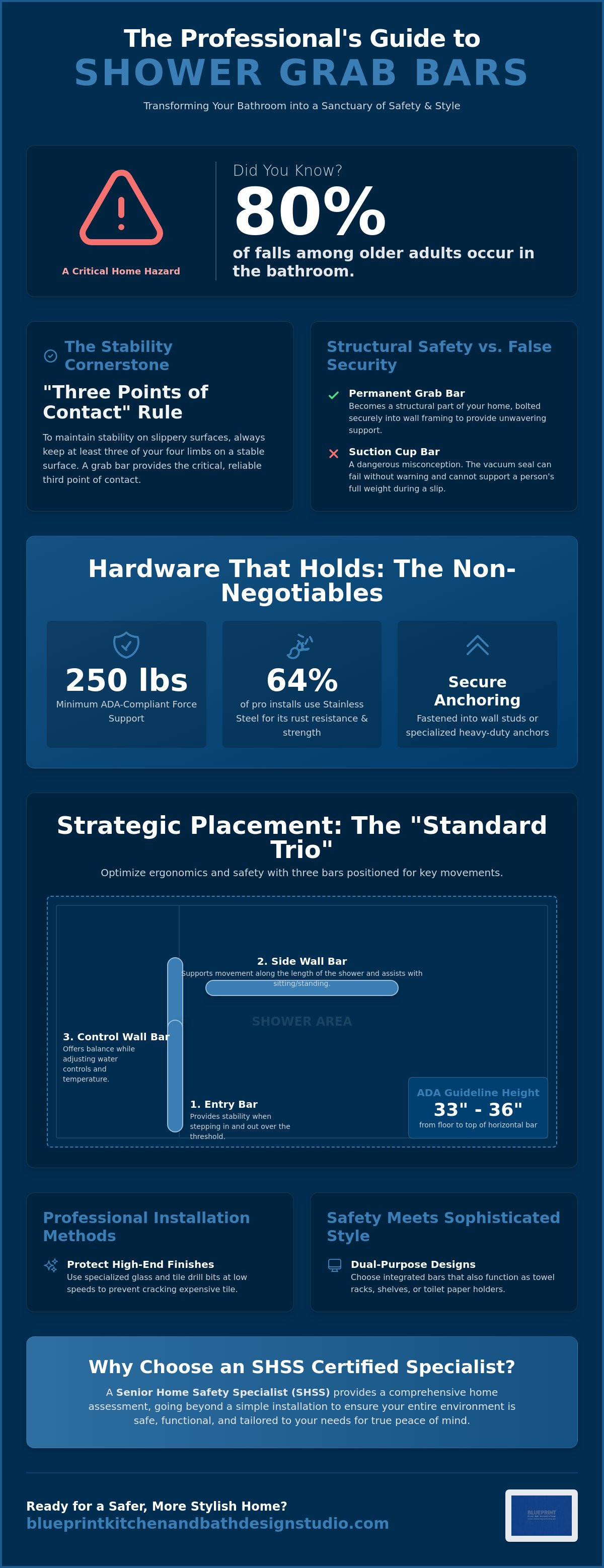
Did you know that 80% of falls among older adults occur in the bathroom? This single statistic transforms a simple home improvement project into a vital safeguard for your long-term independence. Most homeowners feel a genuine sense of hesitation when they consider a shower grab bar installation. You might worry about cracking expensive porcelain tile or choosing an anchor that won't hold when it matters most. It's natural to feel anxious about whether a safety feature will actually perform its job during a sudden slip.
We understand that maintaining your dignity and autonomy shouldn't mean compromising your home's design. This guide provides the professional clarity you need to move forward with confidence. You'll learn the expert methods for ensuring structural integrity and ADA compliance while preserving the beauty of your space. We'll explore the precise standards for height and clearance, the technical requirements for load capacity, and the specialized steps required to secure hardware into different wall types. By the end of this article, you'll have a clear roadmap for creating a safer, more supportive environment that offers true peace of mind.
Key Takeaways
- View grab bars as a permanent structural modification rather than a cosmetic addition to maintain the "Three Points of Contact" for maximum stability.
- Ensure your shower grab bar installation meets ADA load requirements by selecting stainless steel hardware capable of supporting at least 250 pounds of force.
- Optimize bathroom ergonomics by placing the "Standard Trio" of bars, including entry, sidewall, and control walls, at specific heights to match your unique mobility needs.
- Protect high-end bathroom finishes by using specialized glass and tile drill bits at low speeds to prevent cracking during the mounting process.
- Discover why working with an SHSS Certified specialist provides a comprehensive home assessment that goes beyond simple point-and-install services.
Understanding the Critical Role of Shower Grab Bar Installation
Shower grab bar installation is far more than a simple bathroom accessory; it's a permanent structural safety upgrade that fundamentally changes how you interact with your home. Professional installation ensures that the bar becomes an extension of the building's framing, providing a reliable anchor that can withstand significant force. This modification is built on the "Three Points of Contact" rule. This safety principle requires that at least three of your four limbs are in contact with a stable surface at all times during movement. By providing a fixed, secure point to grip, a grab bar allows you to maintain this stability while navigating the slick, wet surfaces of a shower.
Beyond the physical support, there's a profound psychological benefit to having professional hardware in place. Knowing that a support system is physically bolted into the wall creates a sense of confidence in movement. This mental reassurance reduces the hesitation and anxiety that often lead to stumbles. For a general overview of grab bars and their role in modern accessibility, it's clear that these tools are essential for maintaining long-term independence.
To better understand how these systems integrate into a safe bathroom, watch this helpful video:
It's vital to distinguish between a permanent shower grab bar installation and temporary suction-cup alternatives. Suction bars are a dangerous misconception. They rely on a vacuum seal that can fail without warning, especially on textured tile or over grout lines. They aren't designed to support a person's full weight during a fall. A true safety upgrade requires mechanical fastening into the wall studs or specialized heavy-duty anchors that provide unwavering support.
The Statistics of Bathroom Falls in 2026
Current data from 2026 reveals that 80% of falls involving older adults occur within the bathroom. The highest risk zones are the entry and exit points, where the transition between wet and dry surfaces creates a significant hazard. Implementing these safety features early is a core tenet of the "Aging in Place" movement. This proactive strategy focuses on modifying the home environment before an injury occurs, ensuring your space remains a sanctuary rather than a source of risk.
Safety Meets Style: Beyond the Hospital Look
Modern safety modifications don't have to look clinical. You can choose from sophisticated finishes like brushed nickel, matte black, or oil-rubbed bronze to match your existing fixtures. Stainless steel remains the gold standard, accounting for nearly 64% of product usage in 2026 because of its durability and rust resistance. Many homeowners now opt for integrated grab bars that serve dual purposes, such as towel bars or shelving units that are secretly rated for high weight capacity. If you're considering a more comprehensive approach to your home, exploring bathroom safety upgrades Redlands CA can help you visualize how these elements blend into a high-end, accessible design.
Selecting the Right Hardware and Anchoring Systems
A successful shower grab bar installation begins with hardware that exceeds basic safety thresholds. The primary benchmark for residential safety is the ADA Standards for Accessible Design, which requires that any installed bar must support at least 250 lbs of force. This weight-bearing capacity is non-negotiable; it ensures the hardware won't buckle or tear away from the wall during a sudden slip. While some retail options use plastic or aluminum, these materials often fail to provide the long-term structural integrity required for high-moisture environments. Stainless steel remains the industry standard, utilized in approximately 64% of professional installations because of its exceptional rust resistance and tensile strength.
Texture is another critical factor that impacts your daily safety. A "peened" or textured surface provides a slip-resistant grip even when the bar is covered in soapy water. This specialized finish creates friction, allowing your hand to maintain a firm hold when you need it most. You should also consider the diameter of the bar itself. Most professionals recommend a 1.25-inch diameter for a standard grip, while a 1.5-inch diameter provides a larger surface area that may be more comfortable for those with arthritis or limited hand strength. Choosing the right materials ensures your bathroom remains both beautiful and secure, a balance we prioritize at Blueprint Kitchen & Bath Design Studio.
Matching Anchors to Your Wall Type
Modern bathrooms often feature high-end ceramic or porcelain tiles that require a delicate touch. To prevent cracking these expensive surfaces, professionals use diamond-tipped bits at controlled speeds. If your shower has a fiberglass or acrylic insert, you cannot simply screw into the thin material. These installations require specialized mounting plates that distribute the weight across a larger surface area, preventing the bar from pulling through the surround. While mounting directly into wooden studs is the gold standard for stability, modern bathroom layouts often place the studs in locations that don't align with where you actually need support.
The Toggle vs. Stud Debate
When studs aren't available at the ideal mounting point, heavy-duty hollow wall anchors like Wingits provide a reliable solution. These specialized fasteners expand behind the wall board to create a massive footprint of support. However, you should never rely on standard drywall anchors for safety hardware, as they lack the structural capacity to handle lateral force. A safe installation requires hardware with a pull-out strength that significantly exceeds the maximum potential force of a falling adult. This methodical approach to anchoring ensures that your support system remains immovable for years to come.
Strategic Placement: ADA Standards and Personal Ergonomics
Strategic placement is the bridge between a high-quality product and a truly safe environment. While the hardware provides the necessary strength, its location determines whether you can actually reach it during a moment of instability. A professional shower grab bar installation follows a structured layout known as the "Standard Trio." This configuration includes an entry bar, a sidewall bar, and a control wall bar to ensure you're never more than a few inches away from a secure grip. These positions are informed by the 2010 ADA Standards for Accessible Design, which provide the technical foundation for safety that we adapt for residential comfort.
Every home requires a slightly different approach based on the primary user's height, reach, and mobility level. We don't just follow a checklist; we analyze how you move. For instance, a taller individual may require bars mounted at the higher end of the standard range to avoid stooping. Conversely, those utilizing a wheelchair or shower bench need hardware placed significantly lower to remain within a comfortable "strike zone." This personalized approach is a core part of a successful ADA bathroom remodel residential project, ensuring the space feels like a custom home rather than a medical facility.
Optimal Heights for Entry and Exit
The transition into the shower is the highest-risk moment. A vertical bar at the entry point is the most critical first step, typically mounted with the bottom at 38 inches and the top at 54 inches from the floor. For horizontal bars, the standard height is 33 to 36 inches. However, we often deviate from this range for seated users. If you use a shower chair, the bars should be lowered to allow for a natural pull-up motion without straining the shoulders. This careful calibration prevents the fatigue that can lead to secondary slips.
The Angled Bar: Support for Rising and Lowering
An angled bar, usually set at 45 degrees, is superior for assisting with the transition from sitting to standing. We typically position this bar on the sidewall, often near the shower valve, where it can provide a continuous grip as you change elevation. This placement allows the hand to slide up or down the bar while maintaining a secure hold, accommodating different stages of the standing motion. The angled grip aligns with the natural biomechanics of the human wrist to provide maximum leverage with minimal joint strain. By placing this bar thoughtfully relative to the controls, we ensure you can adjust the water temperature while remaining fully supported.
Step-by-Step Guide to Professional-Grade Installation
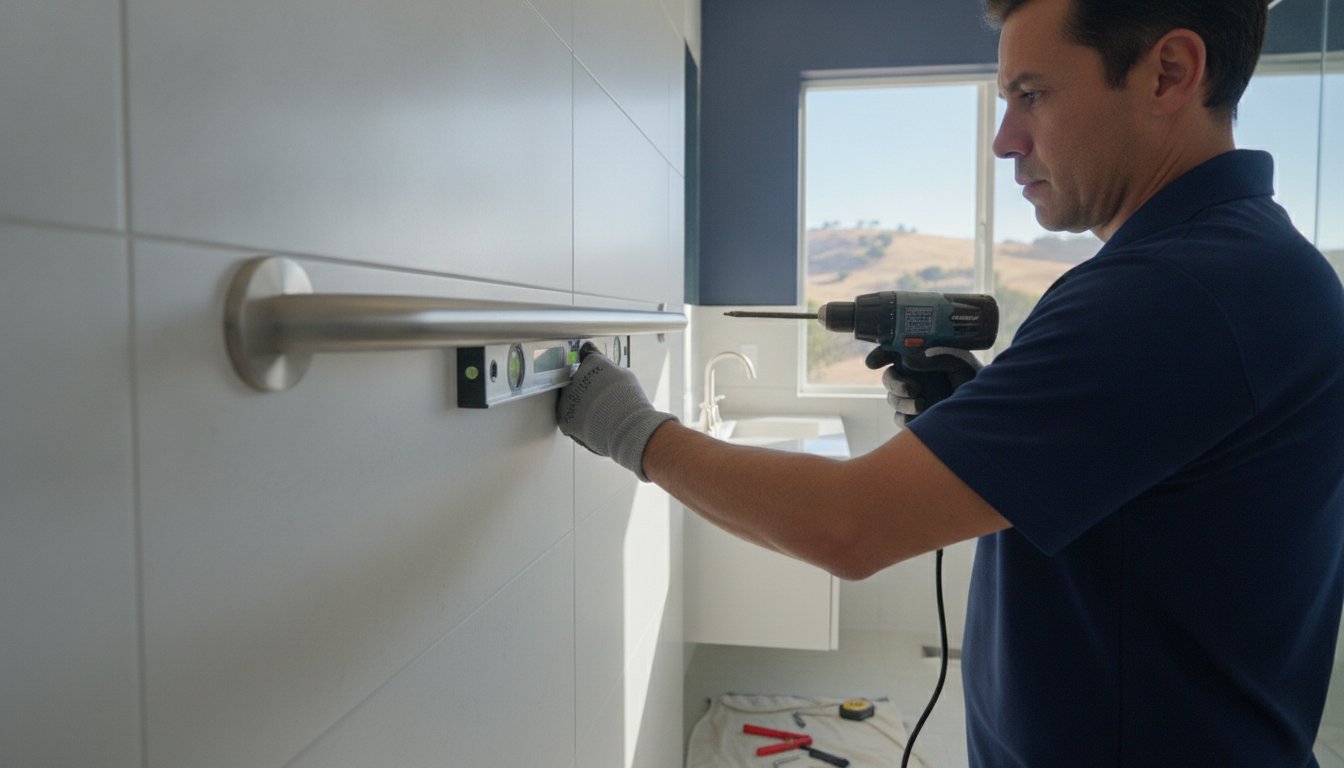
A professional-grade shower grab bar installation requires a methodical approach that prioritizes both structural strength and the preservation of your bathroom's aesthetic. The process begins with precision. First, you must locate the wall studs using a high-quality sensor and mark the intended placement with painter’s tape. This tape serves a dual purpose: it provides a clear visual guide for the drill and protects the surrounding tile from accidental scuffs or scratches during the mounting process.
Once your marks are set, the second step involves drilling with specialized diamond-tipped or carbide glass and tile bits. You should operate the drill at a low speed with consistent pressure. High speeds generate excessive heat which can shatter porcelain or burn out your tools. Third, secure the mounting flange using 2.5-inch or 3-inch stainless steel screws. These lengths are necessary to penetrate through the tile, backer board, and drywall to find a solid purchase in the center of the wooden stud.
The fourth step is arguably the most overlooked: waterproofing. Apply a generous bead of 100% silicone sealant to the pre-drilled holes and the back of the flange before tightening it against the wall. This prevents moisture from seeping into the wall cavity where it can cause hidden damage. Finally, snap on the decorative cover and perform a rigorous "load test." This involves applying firm downward and outward pressure to ensure the bar is immovable. If you prefer the peace of mind that comes with expert execution, our team provides professional grab bar installation services tailored to your home's unique structure.
Protecting Your Tile During Drilling
Drilling through porcelain requires more patience than natural stone because of its extreme density. You should never use the hammer setting on your drill; the rapid percussion will almost certainly crack the tile surface. To extend the life of your expensive drill bits, use the "water cooling" trick. Periodically dipping the bit in cool water or having a partner apply a light mist on the work area prevents the diamond tip from overheating and losing its cutting edge.
Ensuring a Watertight Seal
A common mistake in DIY projects is forgetting to seal the area behind the mounting flange. Without a proper barrier, water intrusion will eventually rot the wooden studs behind the bar. This compromise leads to structural failure exactly when you need the support most. Selecting a color-matched silicone ensures a professional finish that blends seamlessly with your grout or tile, maintaining the high-end look of your renovation while providing essential protection against mold and structural decay.
Why Professional SHSS Certified Installation Matters
Choosing a professional for your shower grab bar installation involves more than just hiring someone with a drill. An SHSS Certified Senior Home Safety & Grab Bar Specialist brings a level of clinical precision that general handymen often lack. This certification ensures the installer understands the specific biomechanics of aging and mobility challenges. While a standard contractor might simply mount a bar where you point, a specialist conducts a comprehensive home assessment to identify hidden risks. This methodical evaluation considers your unique gait, balance, and reach, ensuring the final placement provides maximum support exactly when your body needs it most.
Professional installation also provides essential peace of mind through structural guarantees. When a specialist handles the work, you receive an assurance that the hardware is anchored to withstand significant force over the long term. This professional accountability removes the anxiety of potential hardware failure. By partnering with an expert for grab bar installation in Redlands, CA, you're investing in a permanent safety solution that prioritizes your physical autonomy and home's integrity.
The Blueprint Approach to Bathroom Safety
Our process begins with a deep understanding of your daily routine. We don't believe in a "one size fits all" solution for our neighbors in Yucaipa, Beaumont, and the wider Inland Empire. Instead, we assess how you interact with your space to recommend hardware that enhances your lifestyle. Whether we're installing a single entry bar or integrating safety features into a comprehensive aging in place remodeling Redlands plan, our focus remains on creating a seamless blend of high-end design and clinical safety. This holistic strategy ensures your bathroom remains a beautiful, functional sanctuary for years to come.
When to Call a Professional Instead of Going DIY
There are several critical scenarios where a DIY approach becomes high-risk. If your home features metal studs, crumbling plaster, or a complete lack of accessible wood studs behind the tile, specialized anchoring techniques are required. Attempting to drill in these environments without professional tools often leads to cracked tile or unstable mounts. You also face the risk of hitting electrical lines or plumbing pipes hidden directly behind the shower wall. A professional uses advanced sensors and industry experience to navigate these obstacles safely. To ensure your home modifications are handled with the care and expertise they deserve, schedule your professional safety assessment today.
Empowering Your Independence at Home
Choosing to enhance your home's safety is a proactive step toward a life of dignity and continued freedom. We've explored how professional hardware selection and strategic ADA placement transform a high-risk bathroom into a truly supportive sanctuary. A proper shower grab bar installation is more than a simple weekend project; it's a structural commitment to your long-term physical autonomy. By prioritizing high-grade materials and precise anchoring, you eliminate the fear of sudden slips and protect your bathroom's beautiful finishes from unnecessary damage.
As an SHSS Certified Senior Home Safety & Grab Bar Specialist, we bring clinical expertise and practical empathy to every home we visit. We've spent years serving Redlands and the Inland Empire, specializing in the delicate nuances of aging-in-place modifications. Our team understands that every mobility transition is unique, requiring a specialized approach that respects both your health and your home's aesthetic. You deserve the unshakeable peace of mind that comes with a secure, professionally verified environment.
Secure Your Bathroom with Professional Grab Bar Installation. Your home should always be a place where you feel confident, empowered, and safe in every movement.
Frequently Asked Questions
How much does professional shower grab bar installation cost?
Professional installation costs vary depending on your wall material and the specific hardware you choose. Industry data from 2026 indicates that the national average for professional installation ranges between $158 and $398 per bar. This investment covers the specialized tools and expertise required to ensure the mounting is structurally sound and watertight.
Can grab bars be installed on existing tile or fiberglass showers?
Yes, grab bars can be safely installed on almost any existing shower surface. Specialists use diamond-tipped drill bits to penetrate ceramic or porcelain tile without causing unsightly cracks. For fiberglass or acrylic shower inserts, we utilize specialized mounting plates that distribute weight across the material to prevent the bar from pulling through the surround.
Where is the best place to put a grab bar in a walk-in shower?
The most effective placement follows a three-point strategy tailored to your movement. We recommend a vertical bar at the entry for balance while stepping in, a horizontal bar on the sidewall for stability, and a bar near the shower valves. Every shower grab bar installation should be customized to your specific height and reach to ensure maximum safety.
Do I need a permit for grab bar installation in Redlands?
In most cases, installing grab bars in a private residence does not require a building permit in Redlands. These are typically classified as minor safety modifications rather than significant structural changes. If your project is part of a more extensive remodel involving plumbing or electrical work, you should check with the local building department for specific requirements.
What is the difference between a grab bar and a towel bar?
The fundamental difference is structural capacity and the way the hardware is anchored. A towel bar is designed only to hold the weight of fabric and will likely fail if grabbed during a fall. A true grab bar must meet ADA standards and support a minimum of 250 pounds of force to ensure it remains fixed to the wall.
Can I install grab bars if I have metal studs in my bathroom walls?
Yes, but metal studs require specialized hardware and professional techniques. Standard wood screws don't have enough material to bite into for a secure hold in thin metal. Professionals use heavy-duty toggle anchors or specialized fasteners that grip the metal flange securely to ensure the installation can handle the necessary weight capacity.
How long does a typical professional installation take?
Most professional installations are completed within one to three hours per bathroom. The exact time depends on the number of bars and the density of your wall material. Harder surfaces like porcelain tile require a slower, more methodical drilling process to protect the finish and ensure the holes are precisely placed for the anchors.
What weight capacity should a shower grab bar have for a senior?
A shower grab bar must have a minimum weight capacity of 250 pounds to meet professional safety standards. This ensures the hardware can withstand the sudden, high-impact force of a person's full body weight during a slip. For those with bariatric needs, specialized bars are available that provide even higher levels of weight support.


